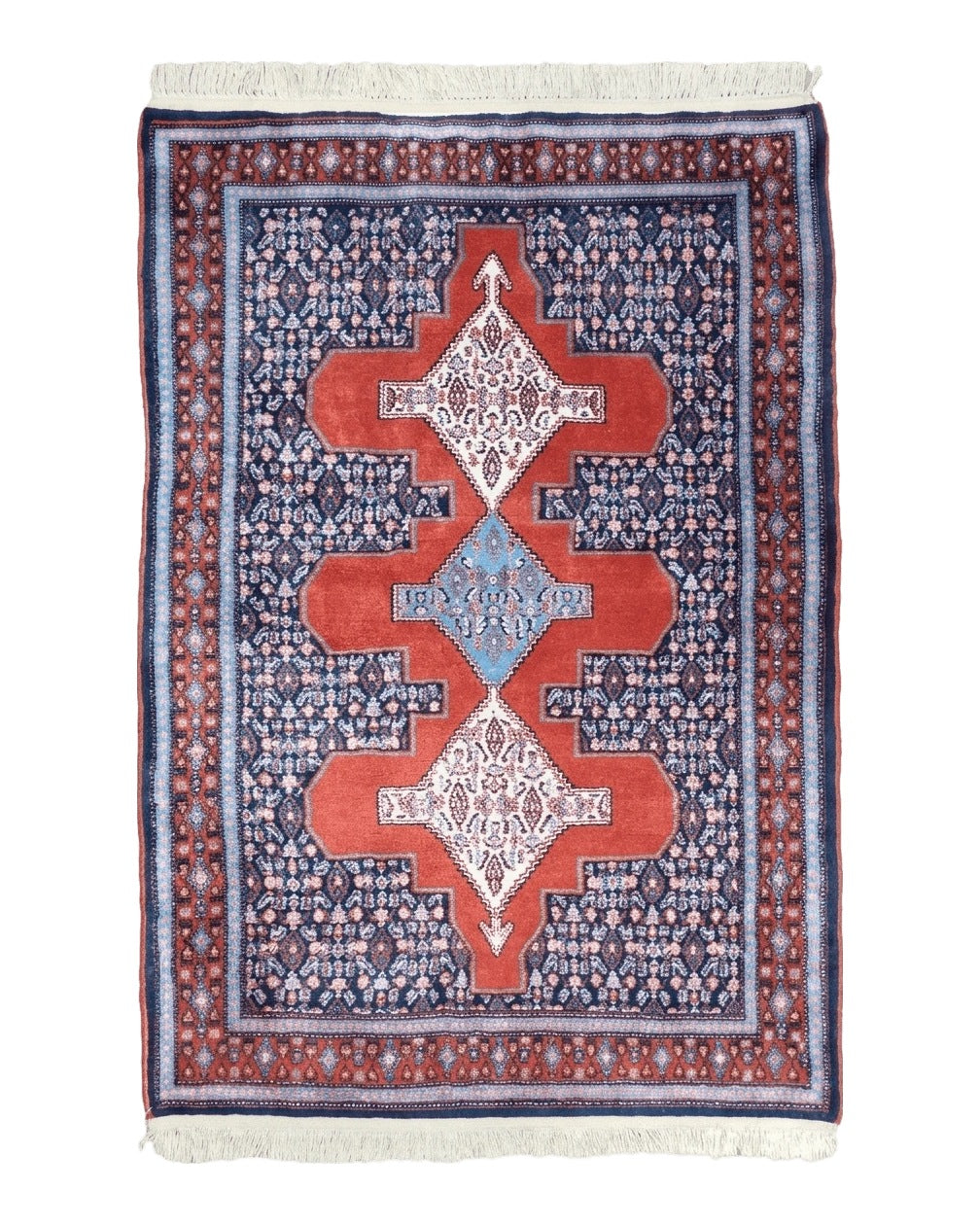
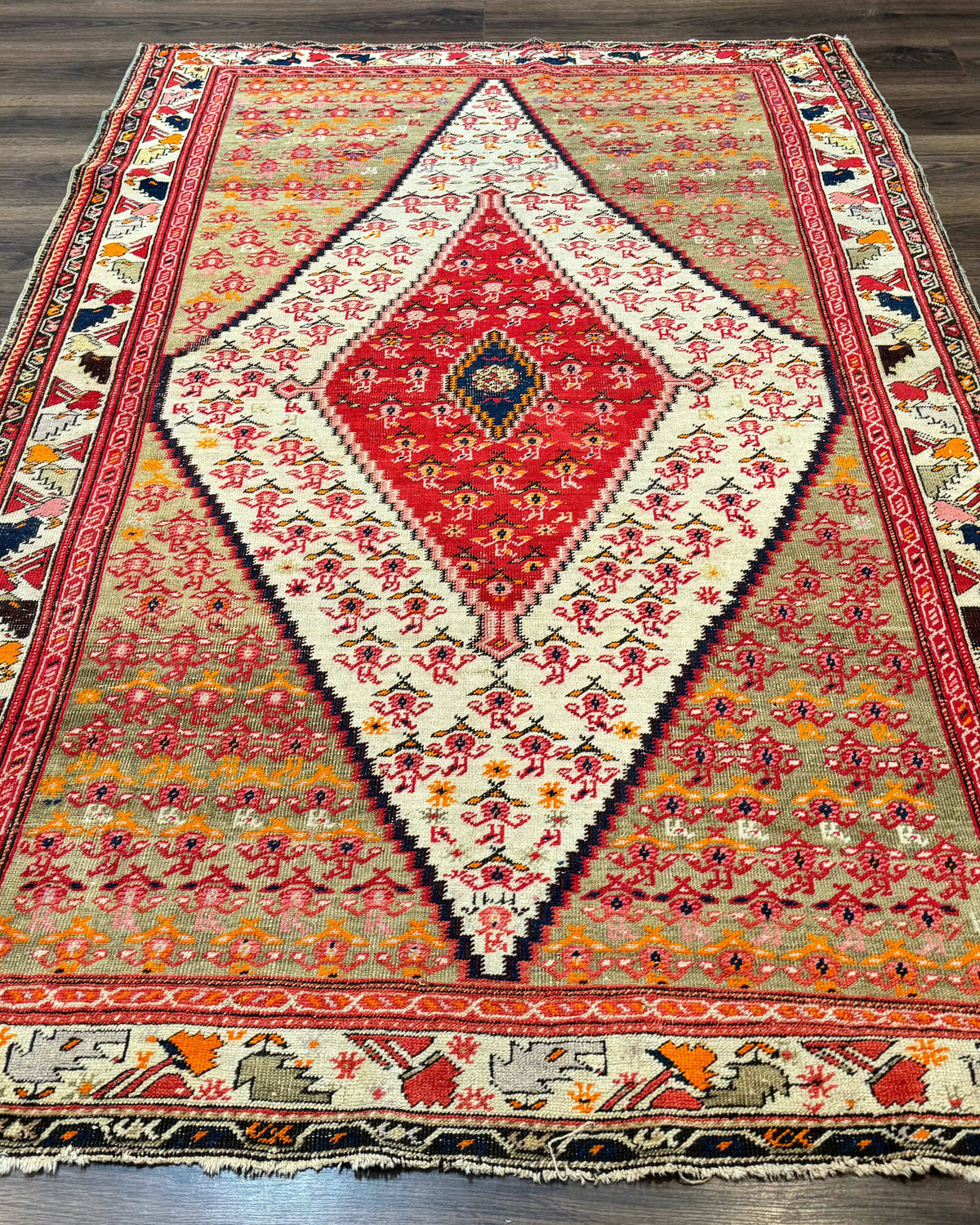
The Kurds live across a wide mountainous region shared by Iran, Turkey, Iraq and Syria, and they have one of the richest weaving traditions in the Middle East. In Iran, Kurdish weaving is found mainly in the west, in Kurdistan and Kermanshah provinces, and in Khorasan in the north-east, where Kurdish communities were moved centuries ago. Kurdish rugs are known for bold designs, strong colors and robust construction, and they range from rustic tribal pieces to the refined rugs of Senneh and Bidjar.
| Regions in Iran | Kurdistan and Kermanshah (west); Quchan and Bojnurd in Khorasan (north-east) |
|---|---|
| Tradition | Tribal, village and town rugs |
| Knot | Symmetric (Turkish) |
| Materials | Lustrous wool; wool foundations in tribal pieces, cotton in many village rugs |
| Typical designs | Geometric medallions, Herati, Mina Khani, boteh, lattice designs |
| Common colors | Strong reds, deep blues, gold, green and ivory, often with abrash |
| Best-known types | Bidjar, Senneh, Koliai, Songhor, Quchan |
Western Iran
The best-known Kurdish rugs come from western Iran:
- Bidjar: the extremely dense "iron rugs of Persia," woven by Kurdish and Afshar villagers.
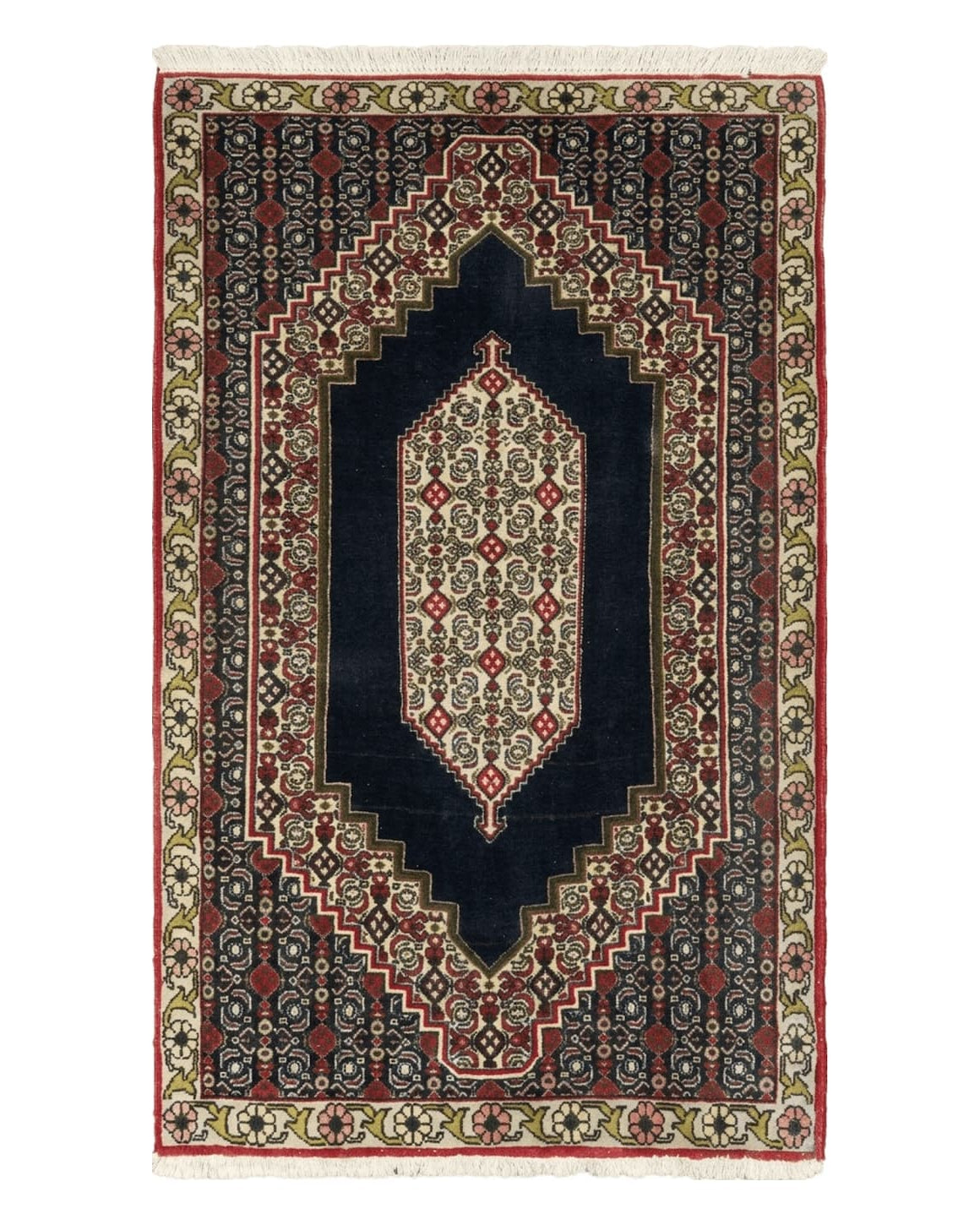
- Senneh: very fine, thin rugs and kilims from the Kurdish capital, Sanandaj.
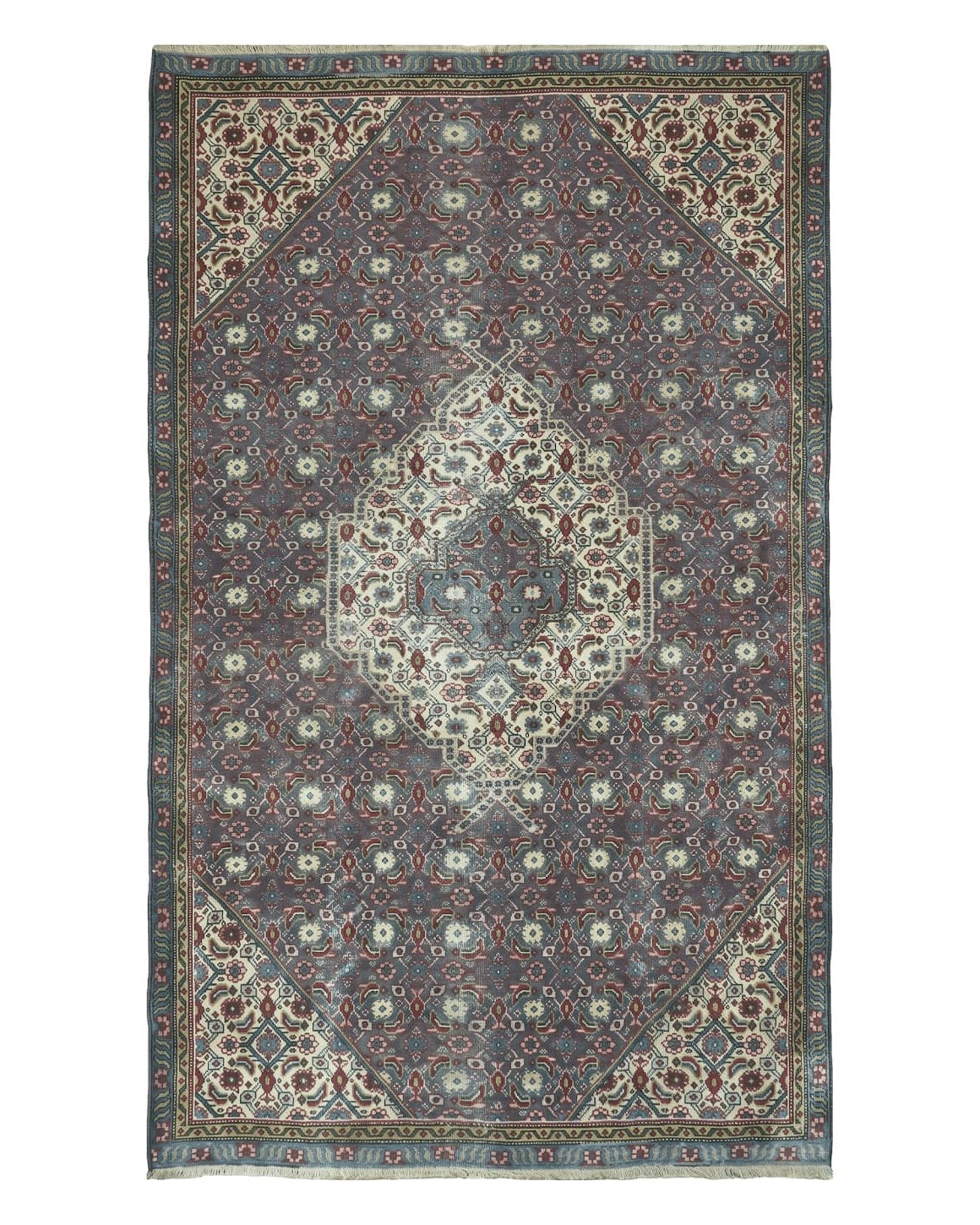
- Koliai: sturdy village rugs from Kermanshah province, often with geometric medallions or Herati patterns.
- Songhor: village rugs with bold medallions and strong colors.
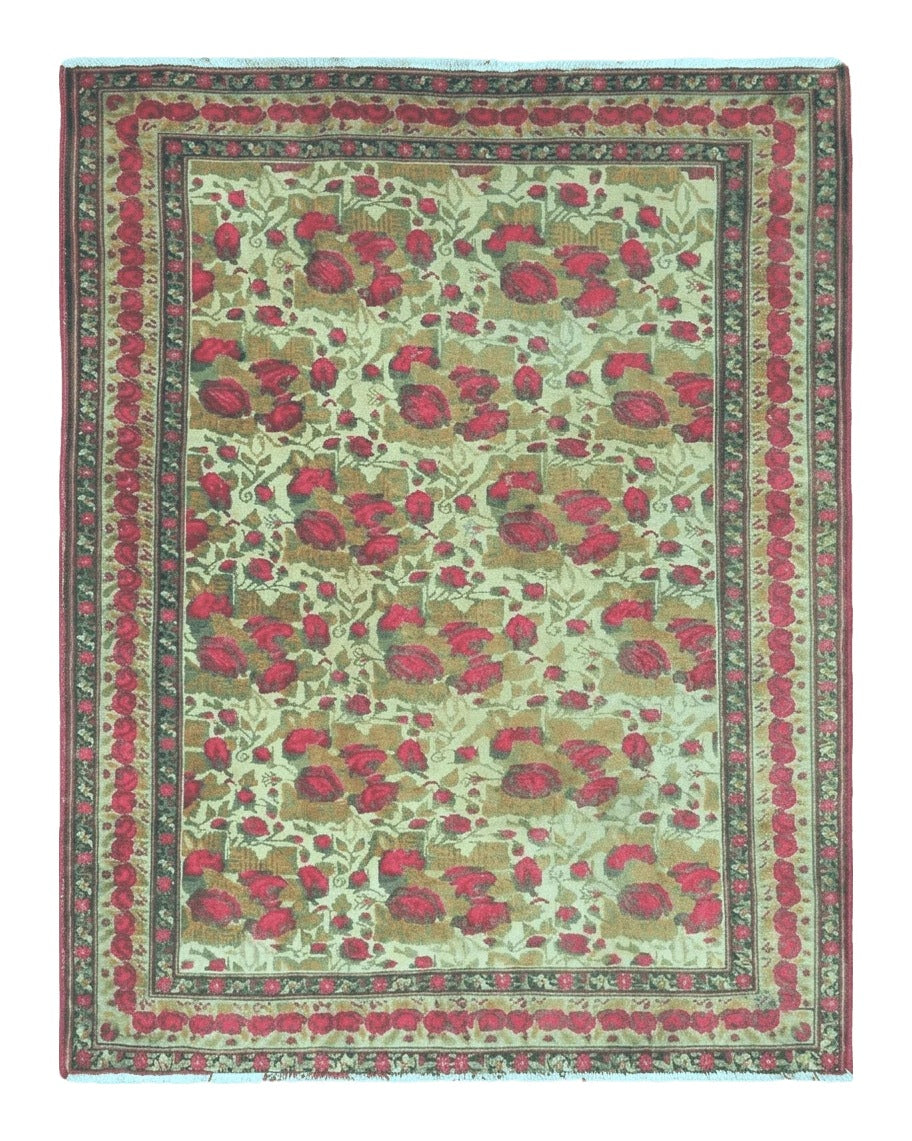
Many other Kurdish village rugs from the region are sold under the broad name "Kurdish" or under the market name of a nearby town.
Khorasan Kurds
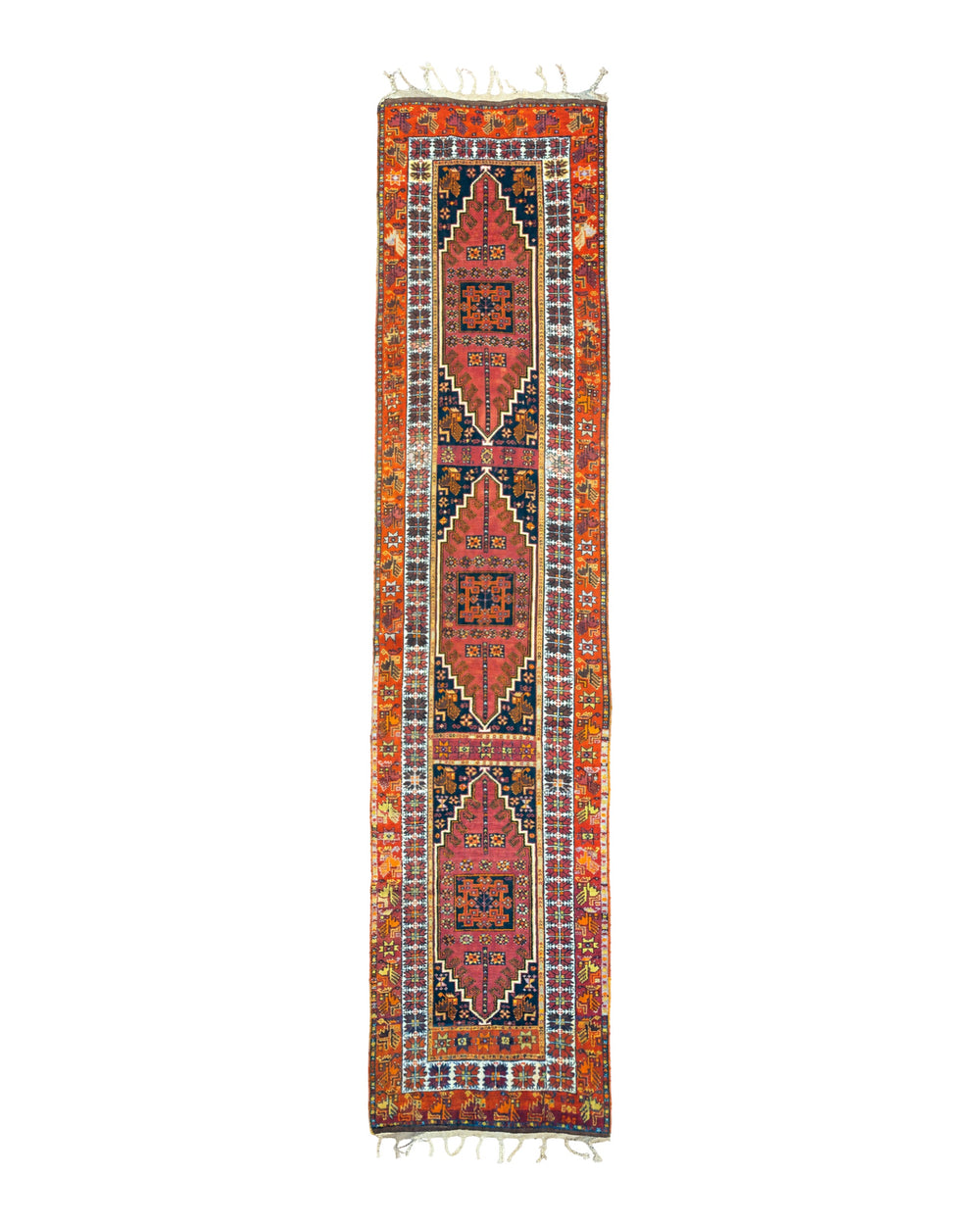
In the 16th and 17th centuries, Kurdish groups were moved to north-east Iran to guard the frontier, and their descendants around Quchan and Bojnurd still weave. Their rugs are tribal in character: wool on wool, with bold geometric medallions, lattices and stylized flowers in strong, often bright colors. Long Quchan runners and colorful small rugs are typical.
Designs and colors
Kurdish designs are usually geometric and bold: hooked and stepped medallions, the Herati and Mina Khani patterns in large scale, boteh, and lattices of flowers. Colors are strong and saturated, with deep reds and blues, golds, greens and ivory, and abrash is common in older pieces. The wool is lustrous and springy, among the best in Iran. See Geometric vs. Curvilinear Designs.
Construction
Kurdish rugs are woven with the symmetric knot. Tribal pieces have wool foundations and are often thick and soft; village rugs usually have cotton foundations. Construction ranges from the extreme density of Bidjar to the thinness of Senneh, but most Kurdish rugs are sturdy, practical and hard-wearing.
See also Persian Tribal Rugs and Hamadan Rugs.