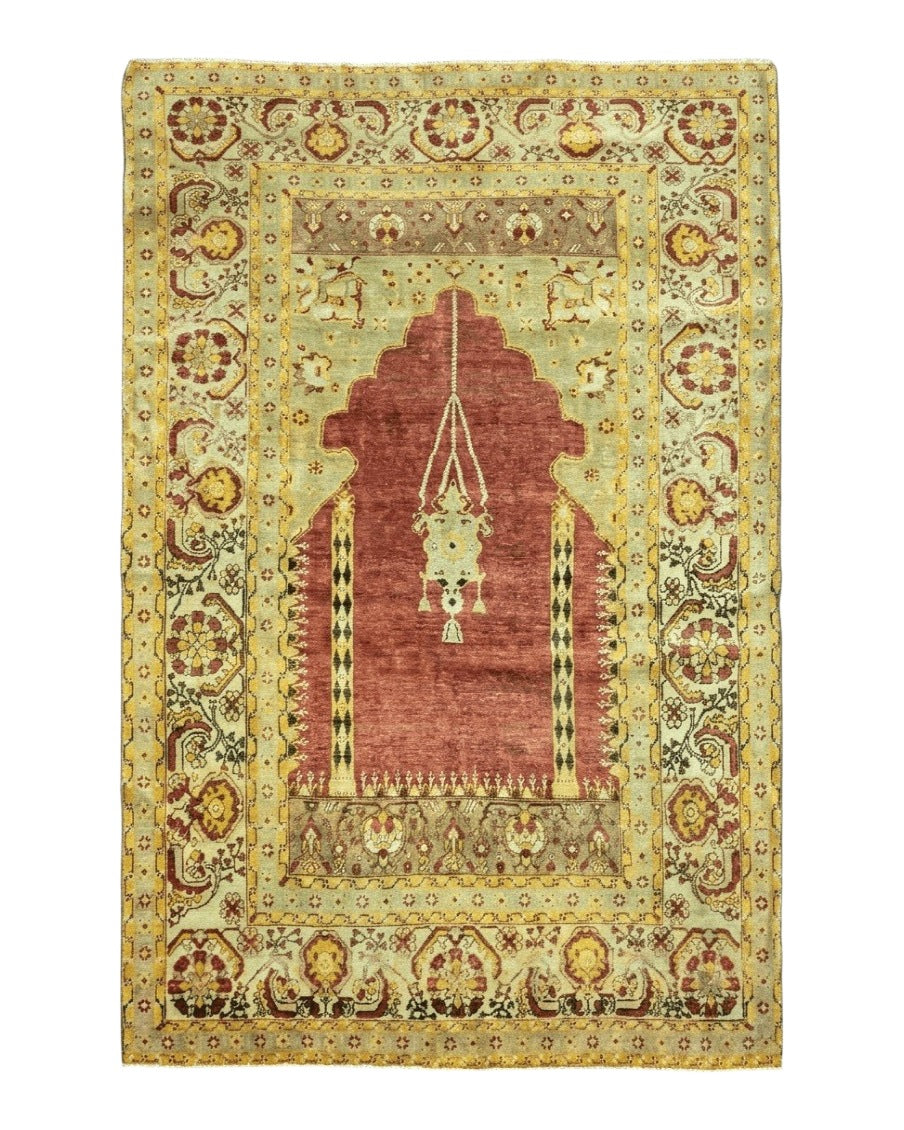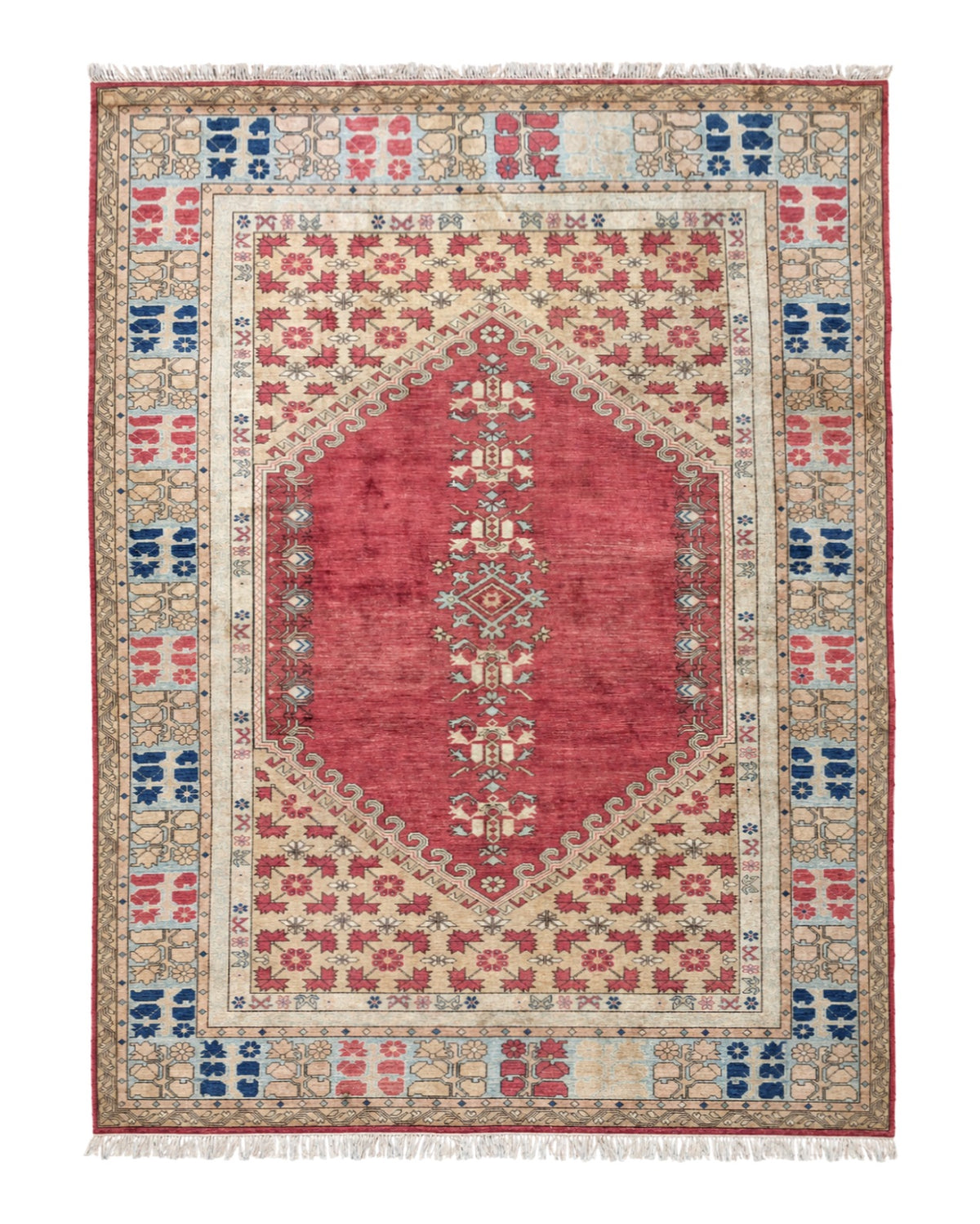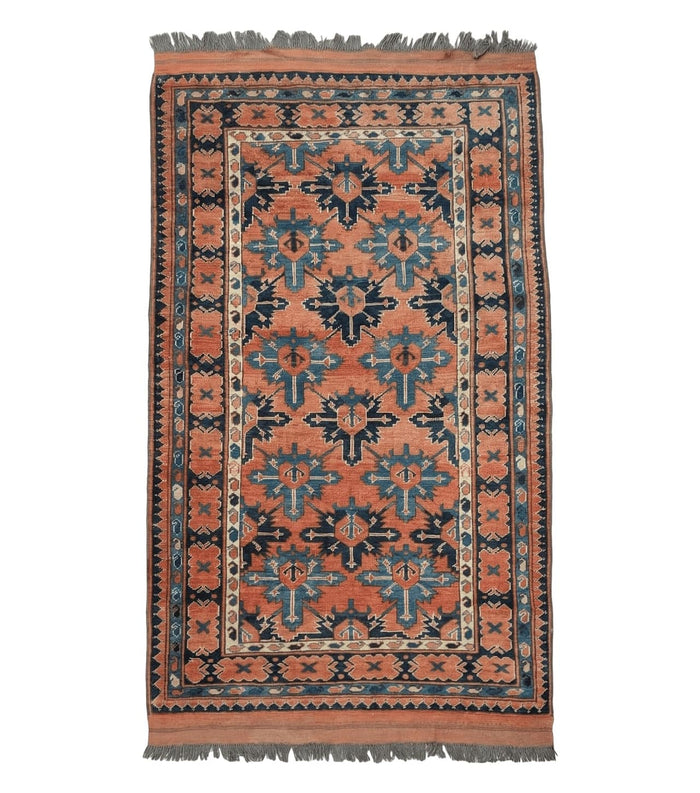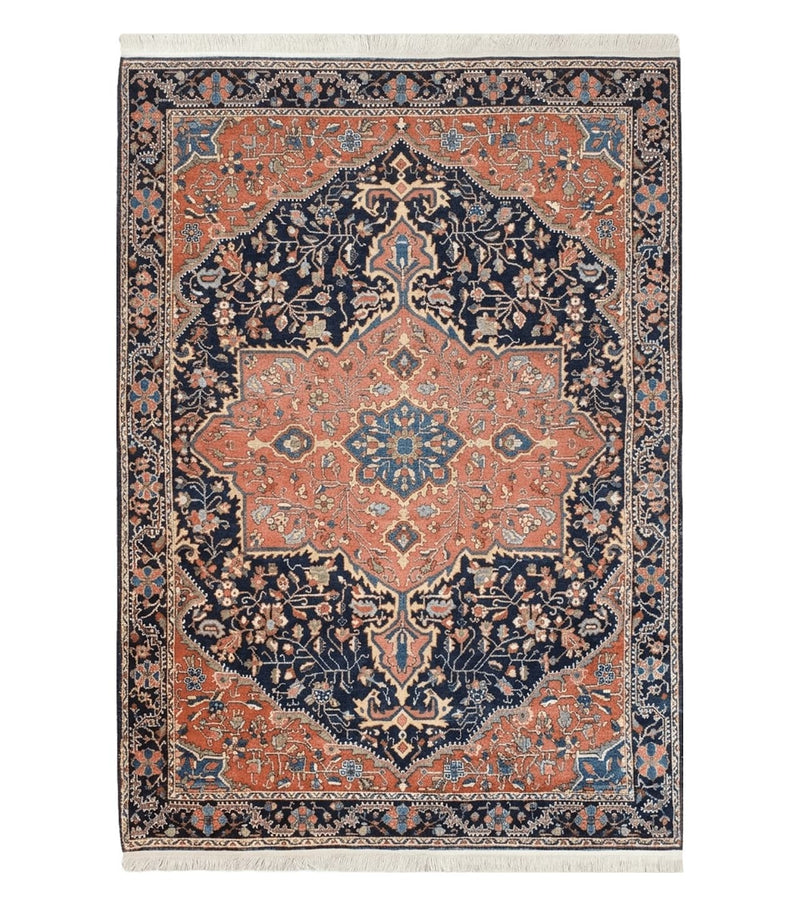


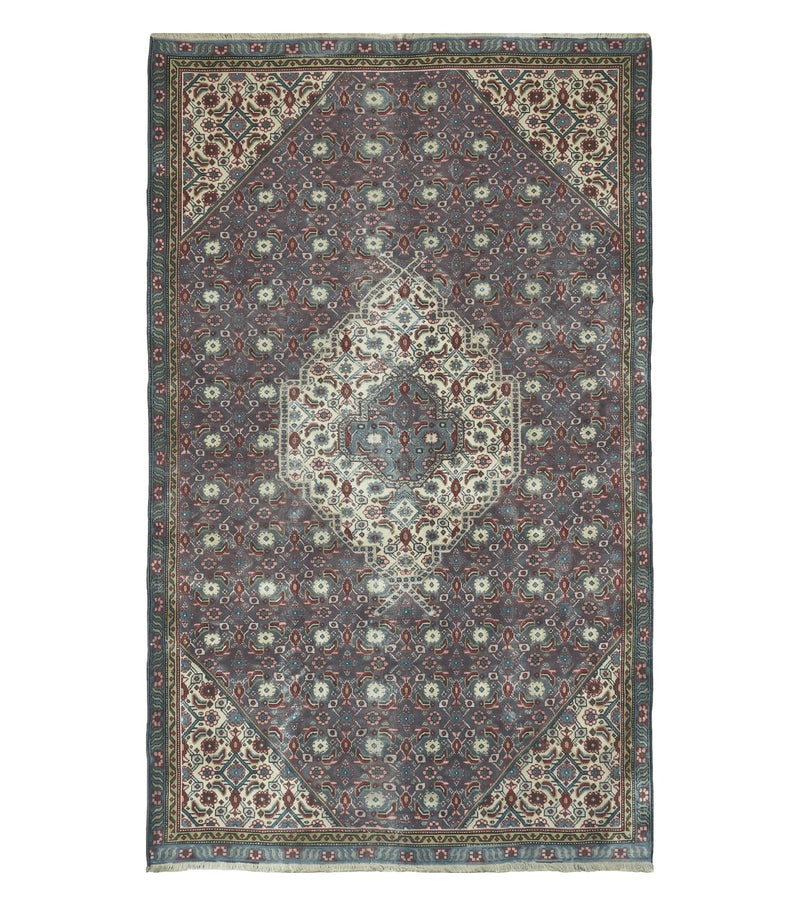


Kazak rugs come from the south-west Caucasus, the area where Azerbaijan, Armenia and Georgia meet, around the town of Gazakh (Kazak). They are the boldest of all Caucasian rugs: thick, with a long, lustrous pile, and decorated with a few huge geometric medallions in a small number of strong colors. Antique Kazaks are among the most admired tribal and village rugs in the world, and the Kazak style is widely woven today.
| Origin | South-west Caucasus, around Gazakh, Armenia and Georgia |
|---|---|
| Knot | Symmetric (Turkish) |
| Materials | Thick, lustrous wool on a wool foundation |
| Pile | Long and heavy |
| Typical designs | One to three large geometric medallions; stars; hooked motifs |
| Common colors | Madder red, indigo, ivory, yellow, green |
| Sizes | Mostly small to medium, often near-square |
The Kazak look
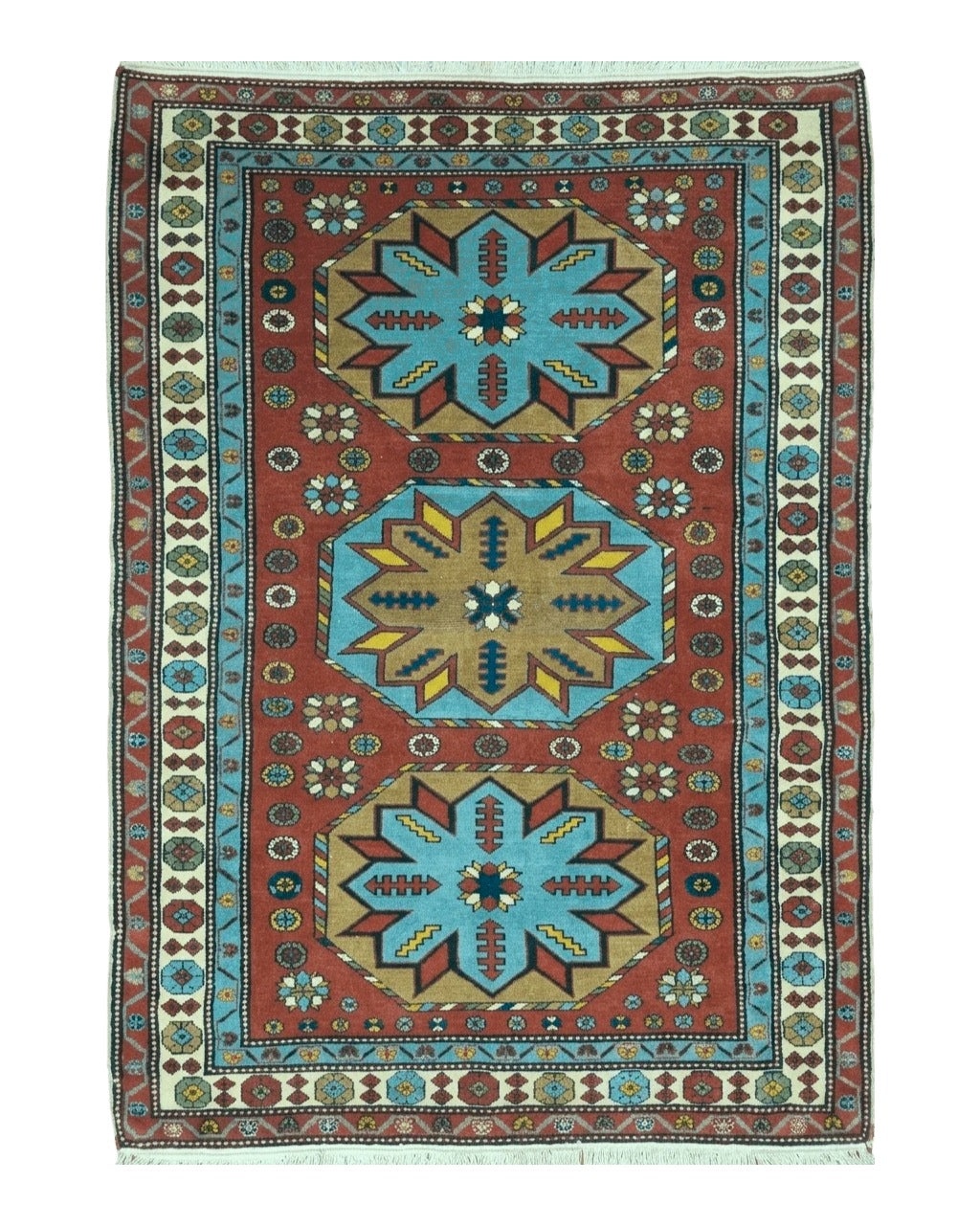
A Kazak rug is designed to be seen from across a room. The field holds one, two or three very large medallions, often square, octagonal or cross-shaped, with heavy hooked outlines, set against a plain or lightly scattered ground. Colors are few and strong, typically a brick or madder red field with indigo, ivory, golden yellow and grass green. The drawing is free and confident, and the long, glossy pile makes the colors glow.
The trade has given names to many Kazak designs, including Lori Pambak (a large central octagon), Fachralo (often prayer rugs with a single medallion), Borchalo, Star Kazak and Shield or Sewan Kazak (with a huge shield-shaped medallion).
Construction
Kazaks are woven with the symmetric knot on a wool foundation, with several wefts, often red, between rows. They are coarsely knotted but thick and heavy, with a deep, springy pile. The sides are often finished with a colored overcasting, and the ends with a band of flatweave.
Kazak-style rugs today
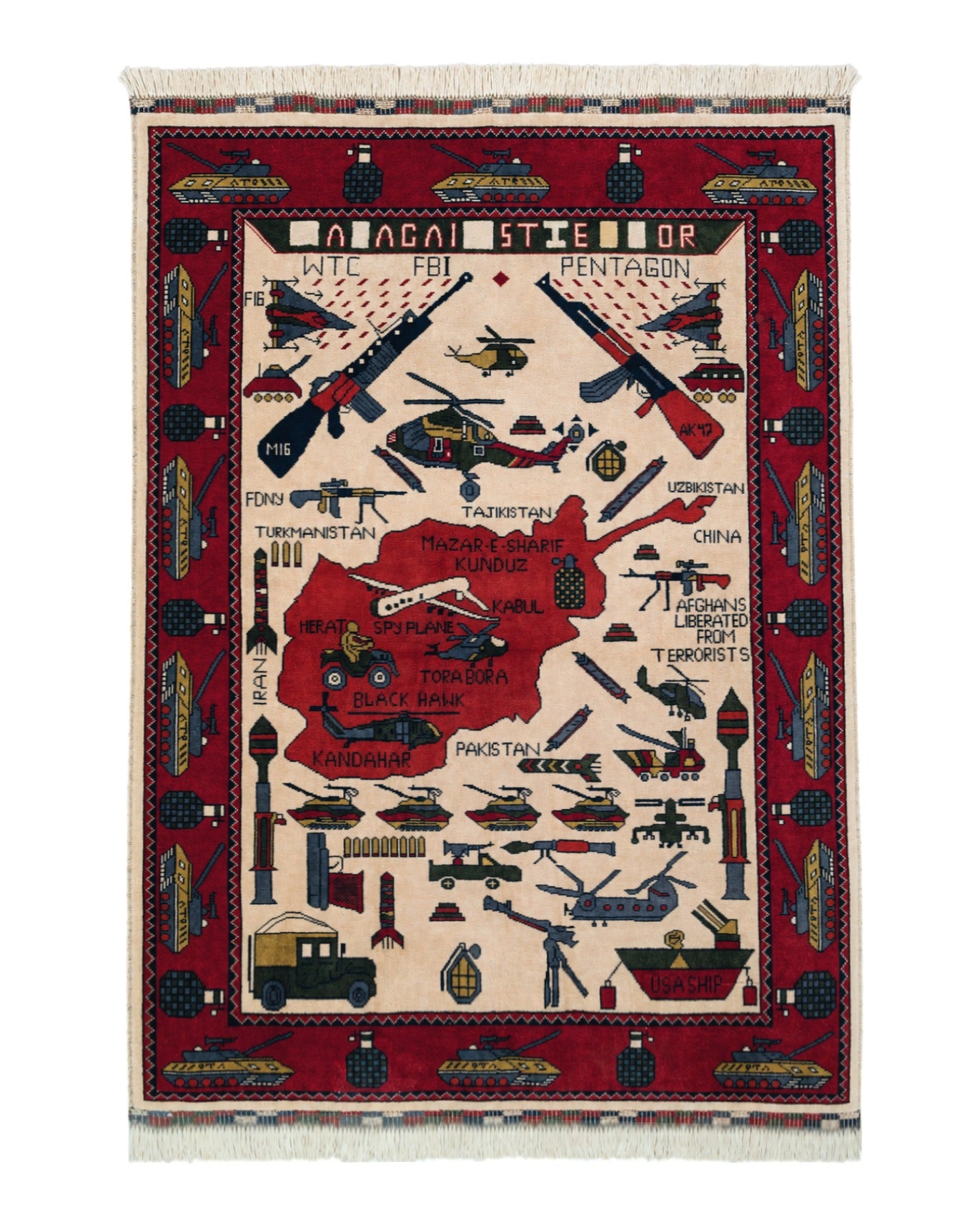
Since the late 20th century, Kazak designs have been widely revived, especially in Afghanistan, Pakistan and Turkey, often with hand-spun wool and natural dyes that give a close look to the old rugs. These "Kazak" rugs are attractive and durable, but they are a different thing from antique Caucasian Kazaks. A listing should make clear whether a rug is a Caucasian original or a Kazak design woven elsewhere. See Afghan Rugs.
How to recognize a Kazak
- Large, bold medallions with hooked outlines.
- A few strong colors and a long, glossy pile.
- Wool foundation and symmetric knots.
- Small or near-square sizes.
See also Caucasian Rugs and Geometric vs. Curvilinear Designs.