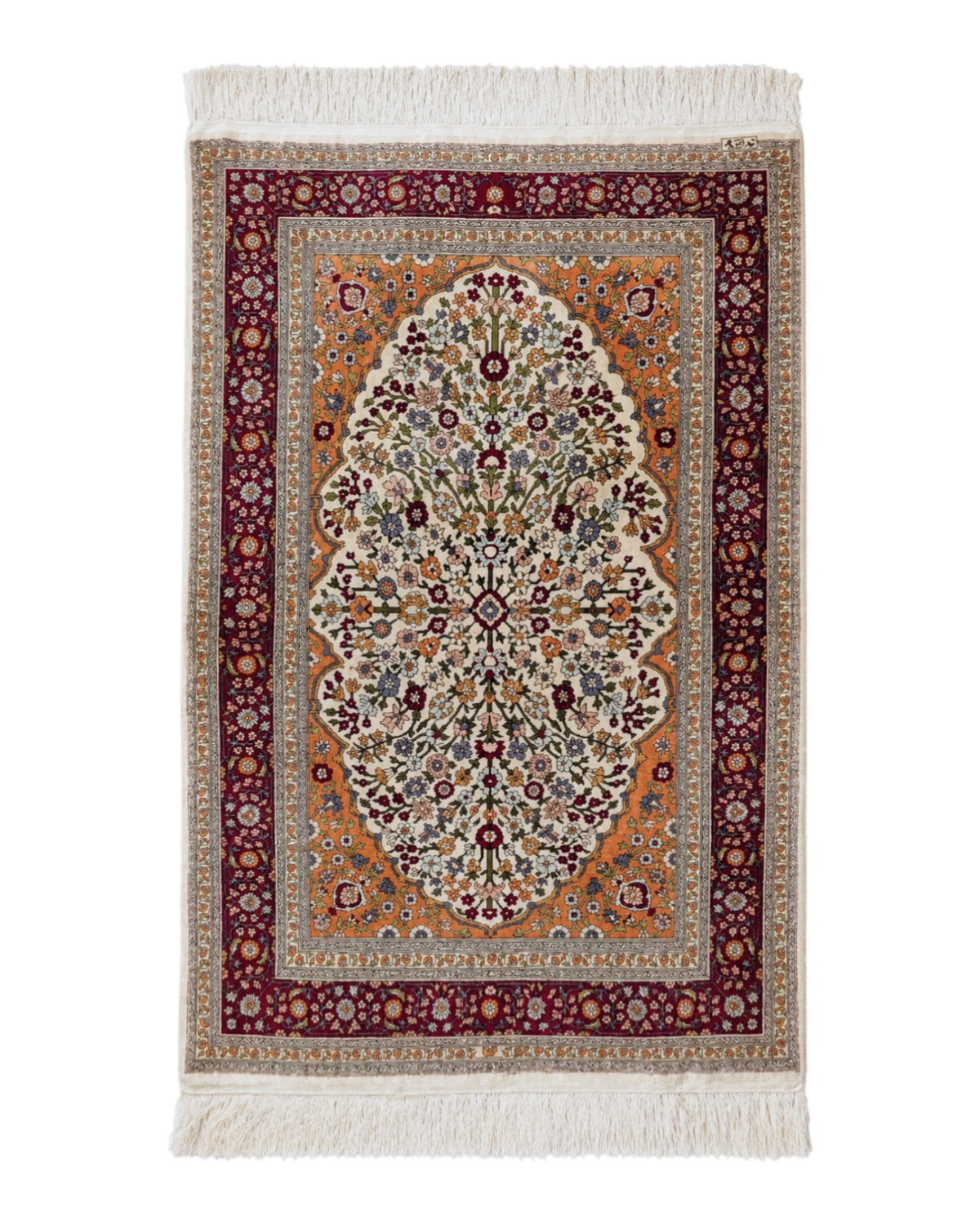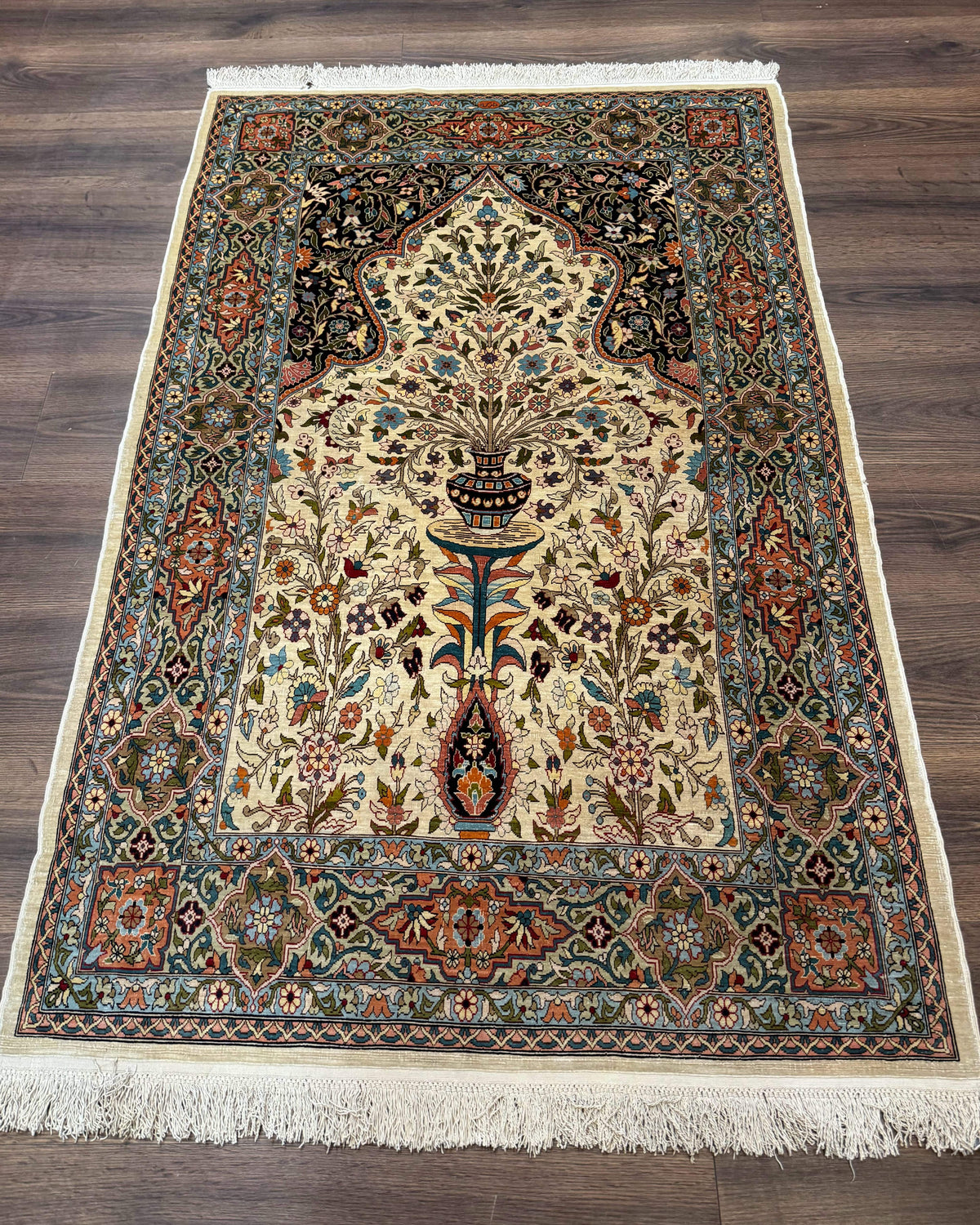




Hereke is a small town on the Gulf of Izmit, east of Istanbul, and the name of some of the finest rugs ever woven in Turkey. In the 19th century the Ottoman sultans established imperial workshops there to make textiles and carpets for their palaces. Hereke rugs, especially those woven in silk, are famous for their extreme fineness, luminous color and elegant designs, and they traditionally carry the name "Hereke" woven into the border.
| Origin | Hereke, on the Gulf of Izmit near Istanbul |
|---|---|
| Founded | Imperial workshops established in the 1840s |
| Knot | Symmetric (Turkish) |
| Materials | Silk on silk; also fine wool on cotton |
| Knotting | Extremely fine in silk, often well over 500 KPSI |
| Typical designs | Prayer designs, floral medallions, Persian and Ottoman court designs |
| Signature | "Hereke," often in a cartouche in the border |
History
The Hereke workshops were founded in the 1840s, during the reign of Sultan Abdulmejid I, at first to produce silk fabrics and upholstery for the new Dolmabahçe Palace in Istanbul. Carpet weaving followed, and the workshops brought in master weavers and designers, drawing on Ottoman court art and the classical Persian tradition. Hereke carpets furnished the imperial palaces and were given as diplomatic gifts. After the end of the empire, the factory continued under the Turkish state, and Hereke-style weaving spread to private workshops in the town and beyond.
Silk Herekes
Hereke is best known for rugs woven entirely in silk, with very small knots that allow remarkable detail, crisp curves and fine shading. Prayer designs with arches, columns and hanging lamps, floral medallions, and adaptations of famous classical Persian carpets are all common. Many are small and are often hung as works of art. See Rug Materials.
Wool Herekes
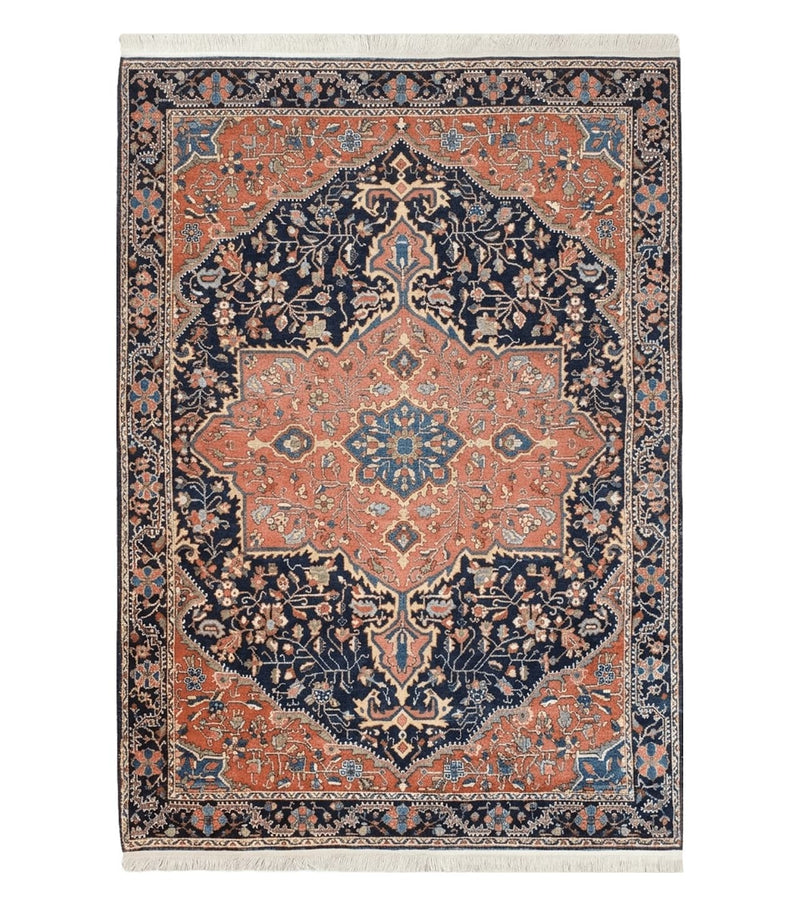
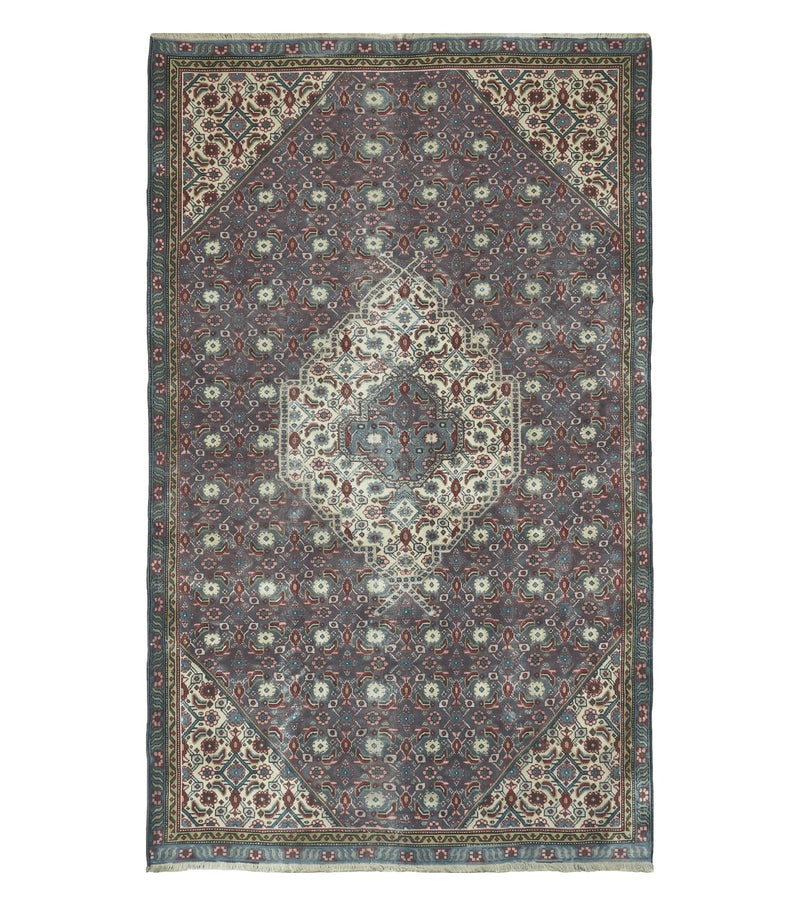
Hereke workshops also weave fine wool rugs on cotton foundations, in larger sizes, with similar designs. These are more practical for floors and still very finely made.
The signature
Hereke rugs traditionally carry the word "Hereke," often in a small panel in the border at one end. Because the name is so valuable, it has been widely copied, and rugs woven in Kayseri, elsewhere in Turkey, and in China have been given a "Hereke" signature. A genuine Hereke should match its reputation in fineness, materials and finish. See Signed Rugs.
How to recognize a Hereke
- Extremely fine, even knotting with crisp detail.
- Silk pile with a strong luster, or very fine wool.
- Symmetric knots, visible on the back as paired bumps.
- A "Hereke" signature in the border.
See also Turkish Rugs. For the Persian city most famous for silk rugs, see Qum Rugs.