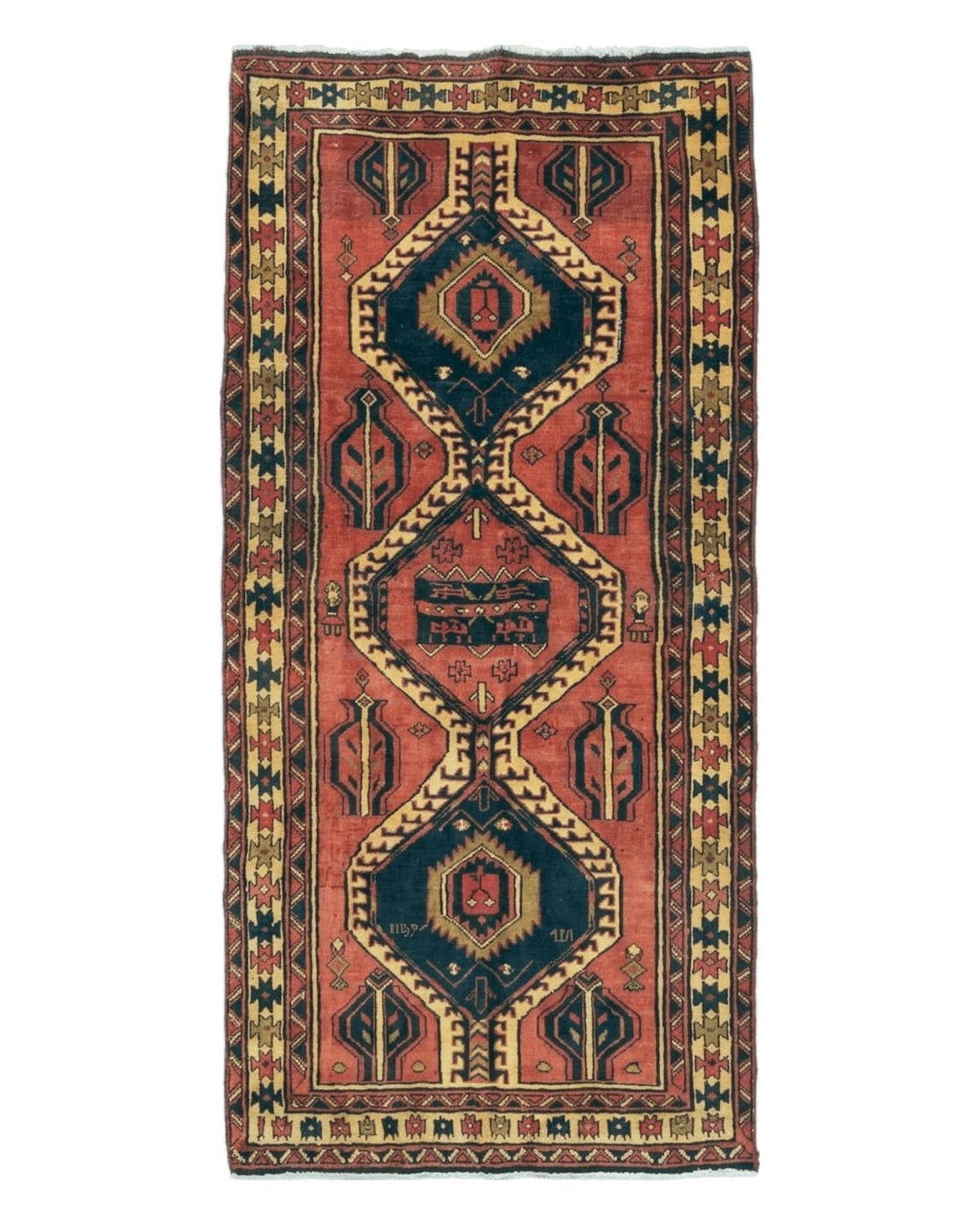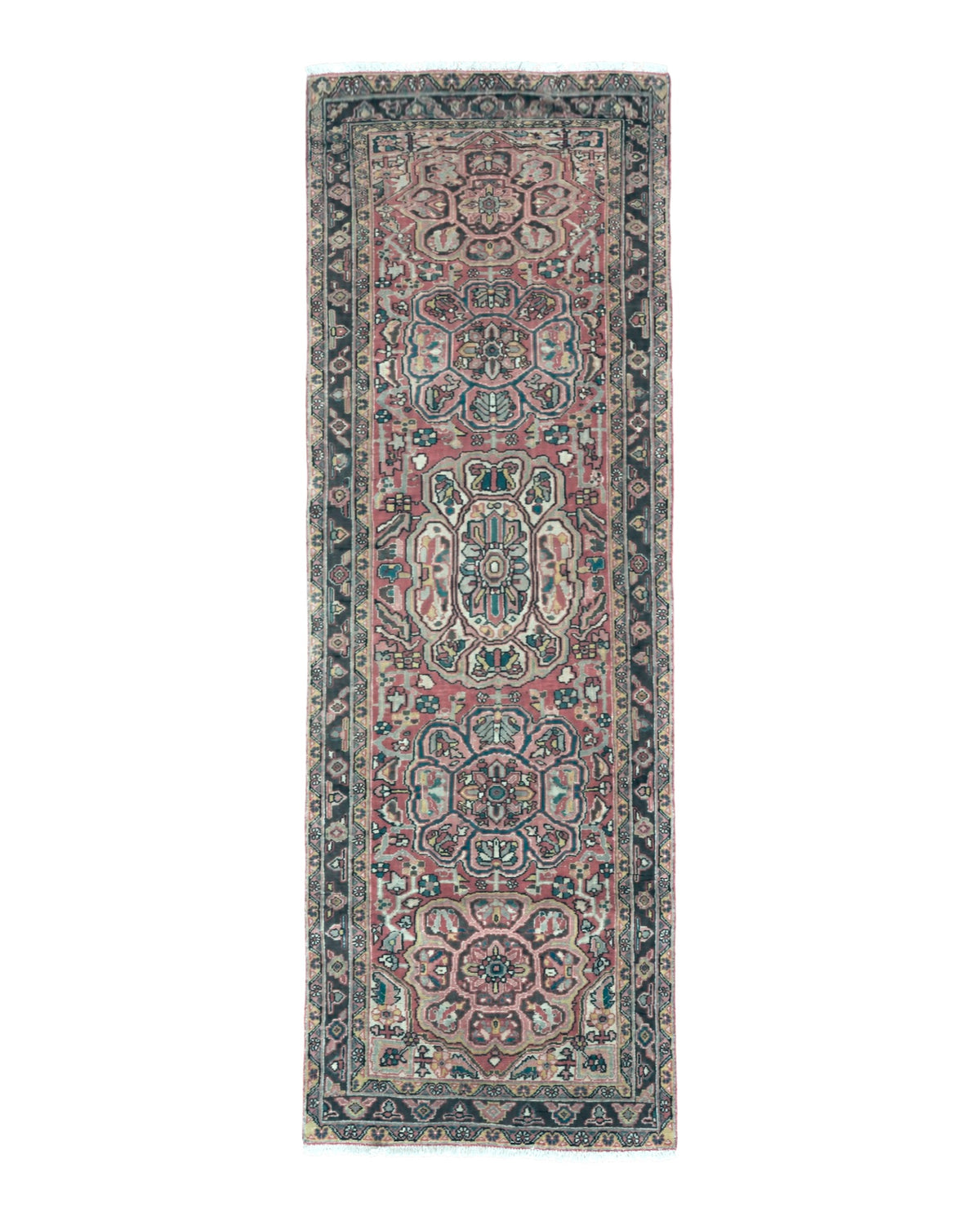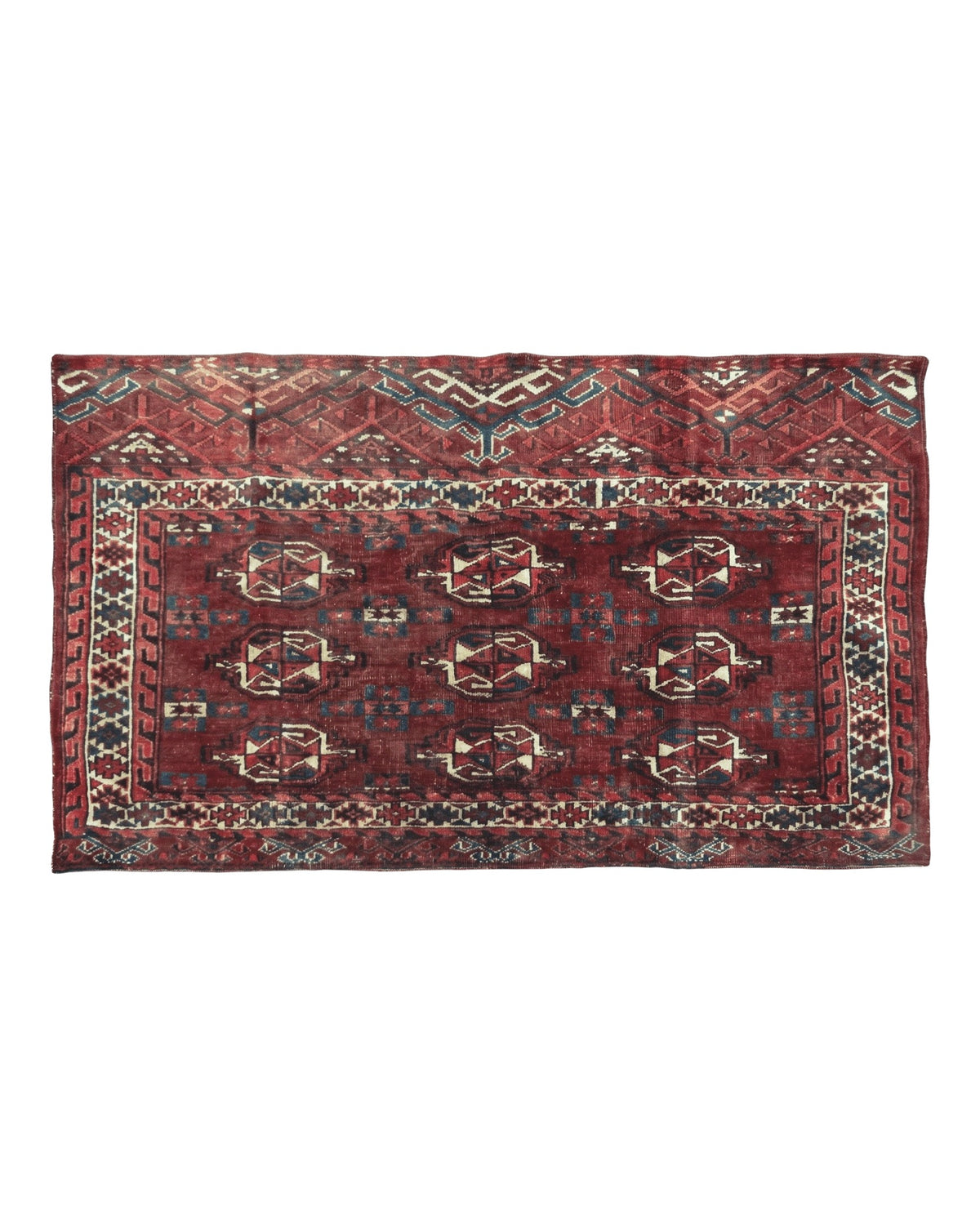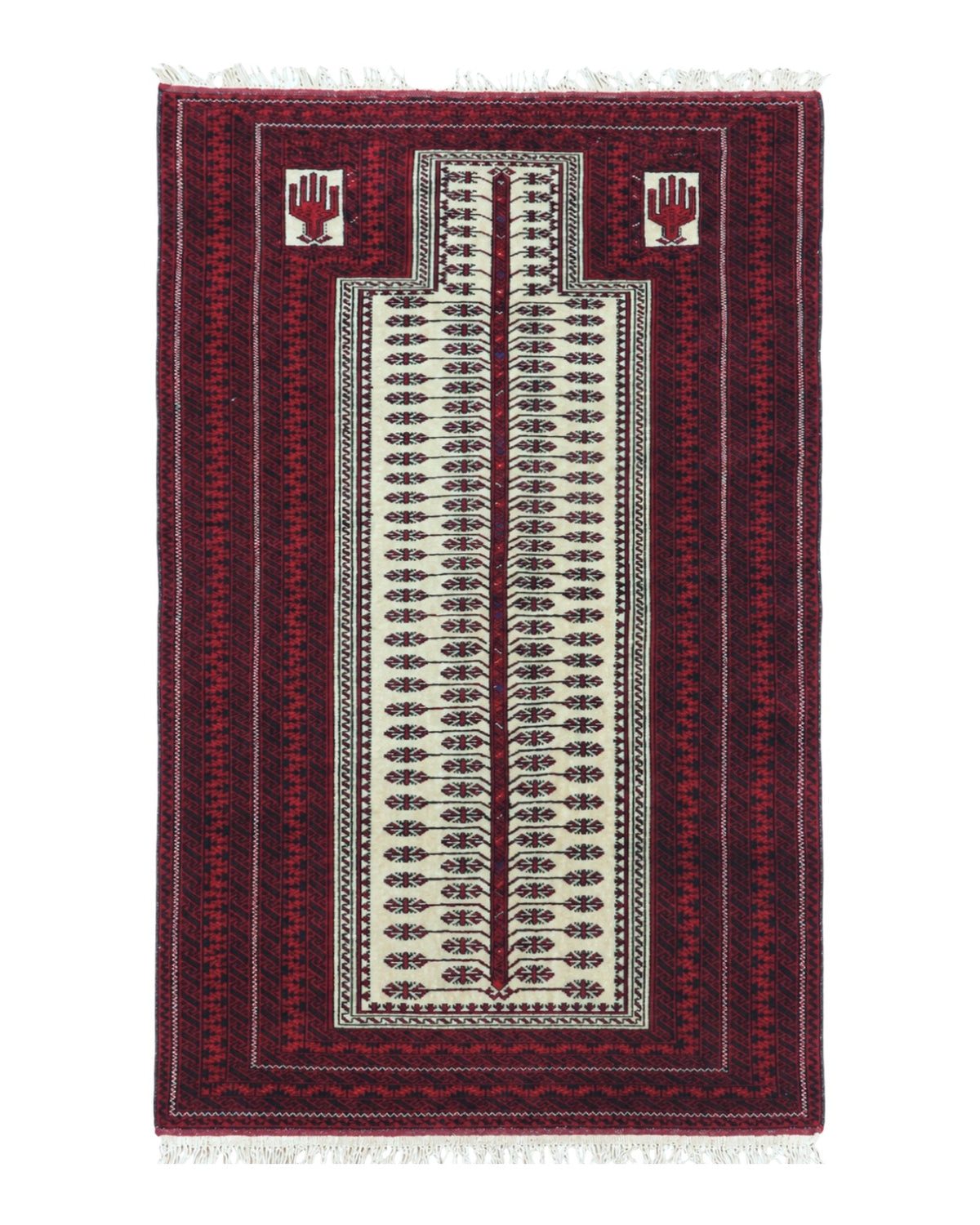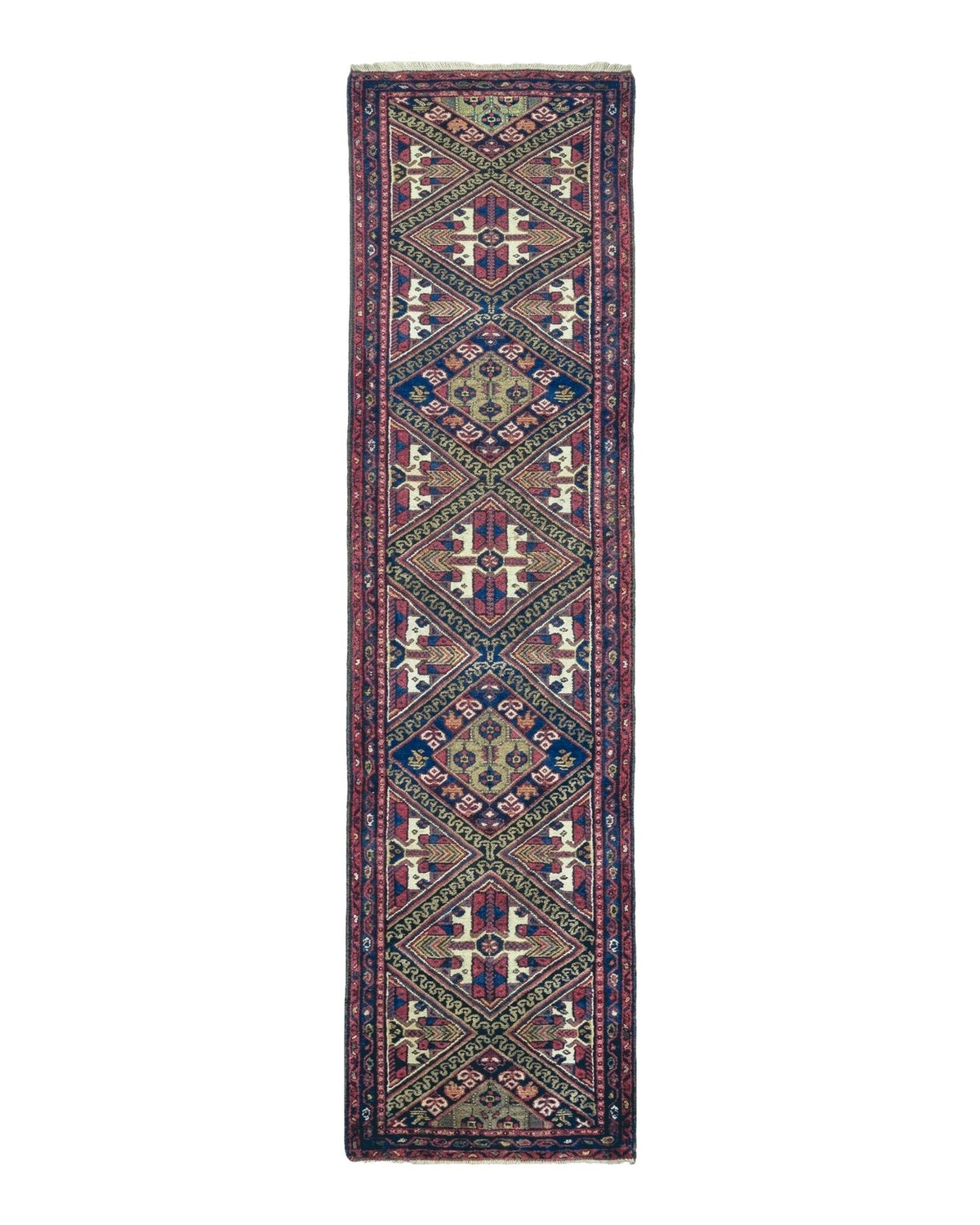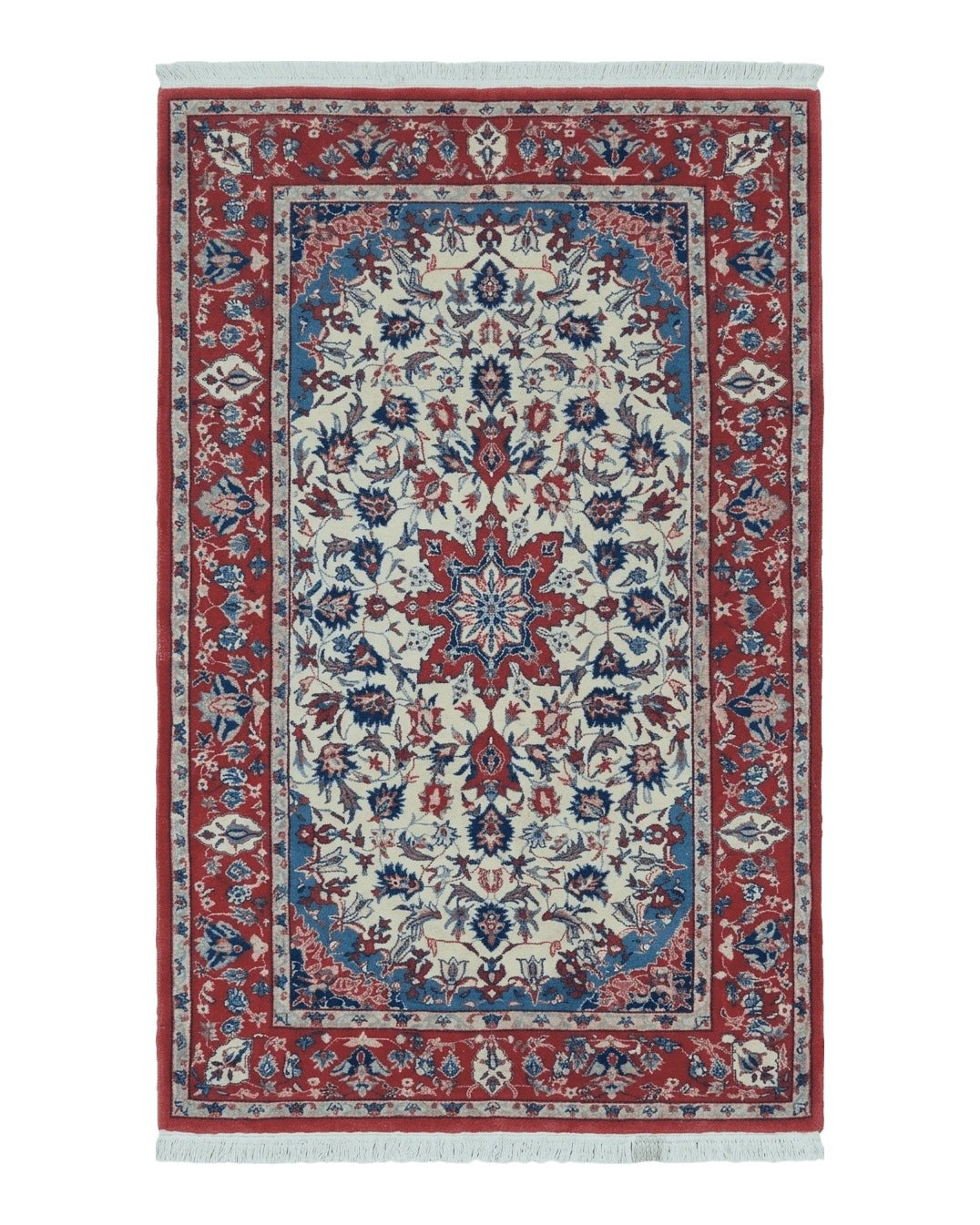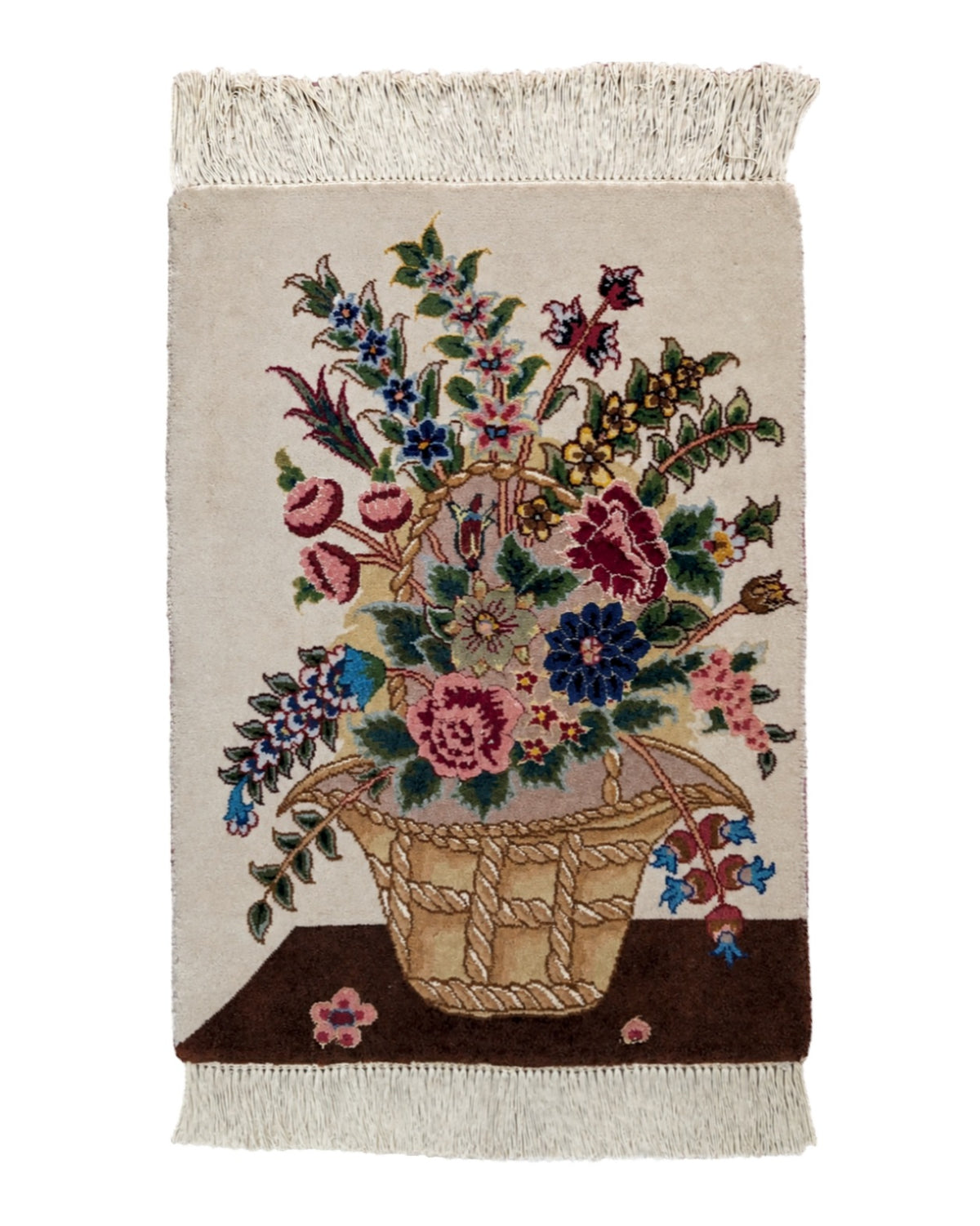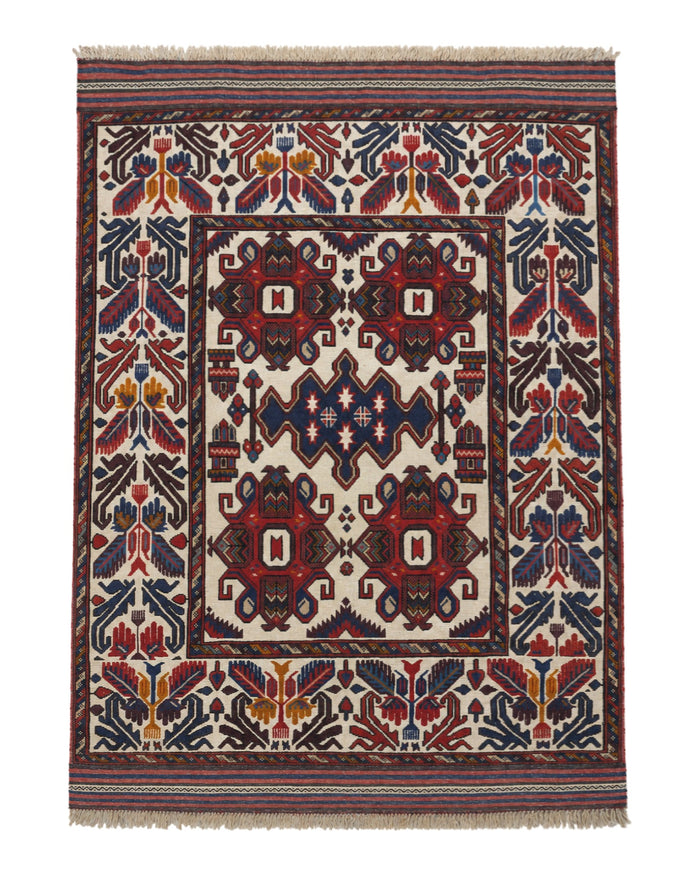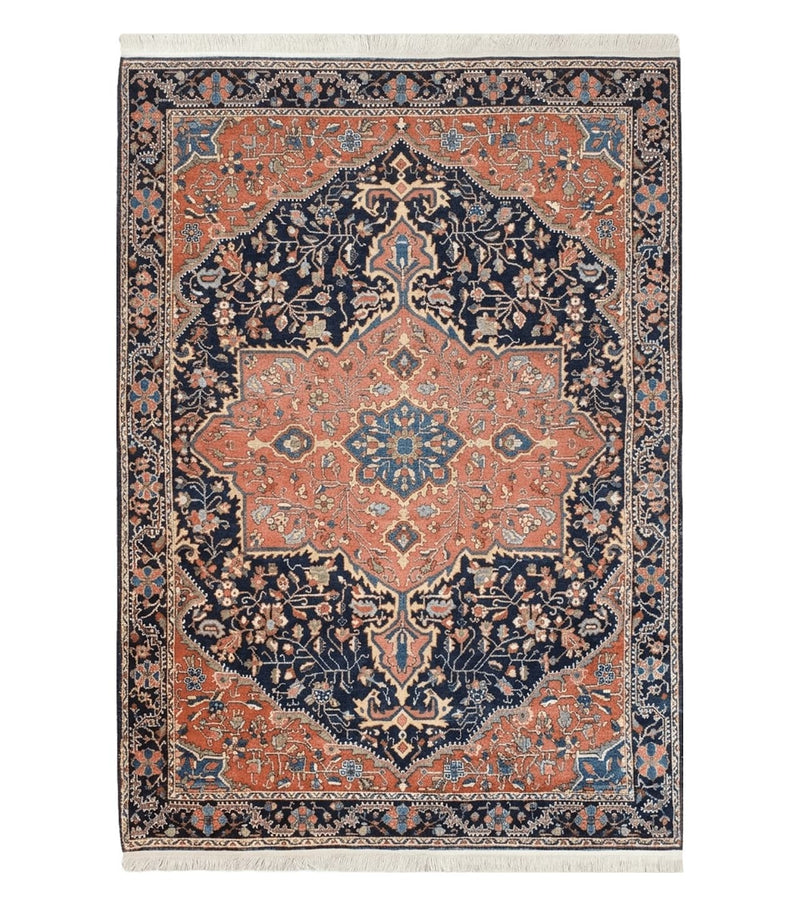


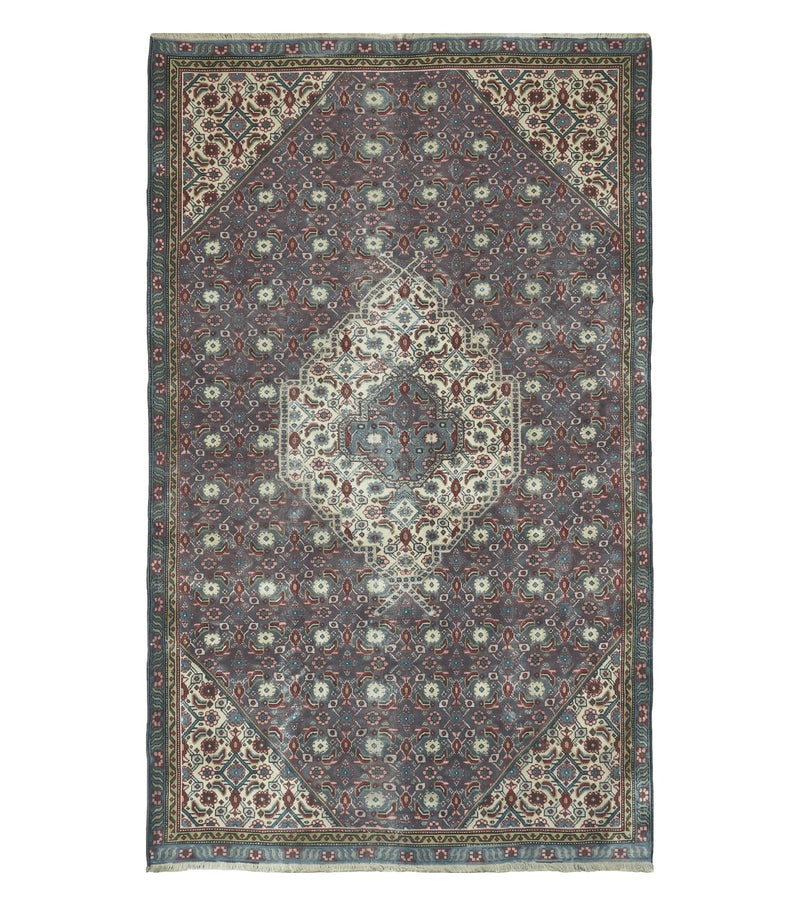


Oriental rugs are full of motifs: flowers, trees, animals, stars and abstract shapes, repeated and combined in endless ways. Many are said to carry meanings, and some certainly did. But motifs have traveled between regions and been copied for centuries, and a weaver today may use a shape simply because it is part of her tradition and looks right. The meanings below are the traditional interpretations most often given; they are part of the richness of rugs rather than a fixed code.
| Plants | Boteh, Herati, palmettes, rosettes, trees, cypress, willow |
|---|---|
| Animals | Lions, birds, peacocks, dogs, camels, goats, deer |
| Geometric | Guls, stars, diamonds, hooks, crosses, running dog |
| Objects | Combs, ewers, lamps, hands, amulets, vases |
| A caution | Meanings are traditional and vary; many motifs are used purely as decoration |
Plant motifs
- Boteh: the teardrop or paisley shape, variously read as a flame, a bent cypress, a bud or a cluster of leaves; a symbol of life and growth. See The Boteh (Paisley) Motif.
- Herati: a rosette in a diamond flanked by curling leaves, often called "fish" in its small form. Sometimes linked to water and abundance. See All-Over Designs.
- Palmette and rosette: stylized flowers seen from the side or from above; the building blocks of Persian floral design.
- Tree of life: growth, continuity and the link between earth and heaven.
- Cypress: evergreen, a traditional symbol of eternity and life after death.
- Weeping willow: often associated with mourning and remembrance.
- Pomegranate: fertility and abundance, because of its many seeds.
See Garden, Panel and Tree of Life Designs.
Animal motifs
- Lion: power, courage and protection; an ancient Persian royal symbol, often shown with the sun. Lion rugs are a tribal tradition of southern Iran.
- Birds: widely associated with good fortune and the soul; peacocks with paradise and immortality; roosters and hens are common in Khamseh weaving.
- Dog: protection; the "running dog" is also the name of a common border of hooked waves.
- Camel: wealth and endurance, especially in nomadic weaving.
- Deer and gazelle: grace, and the hunt, in pictorial and hunting rugs.
See Pictorial and Hunting Rugs.
Geometric motifs
- Gul: the polygonal emblem of Turkmen tribes, each tribe traditionally having its own. See Persian Turkoman Rugs.
- Star: often read as divine guidance or good fortune; the eight-pointed star is especially common.
- Diamond (lozenge): sometimes linked to fertility; common in tribal medallions.
- Hooks and ram's horns: protection and strength, common in Caucasian and Anatolian rugs.
- Crosses and whirling sun motifs: ancient symbols of the sun and the turning of the seasons, found in many cultures.
Objects and protective symbols
- Comb and ewer: cleanliness, especially before prayer; common in prayer rugs.
- Lamp: divine light, hung in the arch of a prayer rug. See Prayer Rugs.
- Hand: often called the hand of Fatima; protection, and in prayer rugs the place for the hands.
- Amulet: a triangle with hanging tassels, representing the protective charms worn against the evil eye.
- Eye: small eye-like shapes, also against the evil eye.
- Vase: abundance and the garden; see the Zil-i-Sultan design.
Colors carry their own traditional meanings. See Rug Colors and Their Meanings and the Rug Glossary.