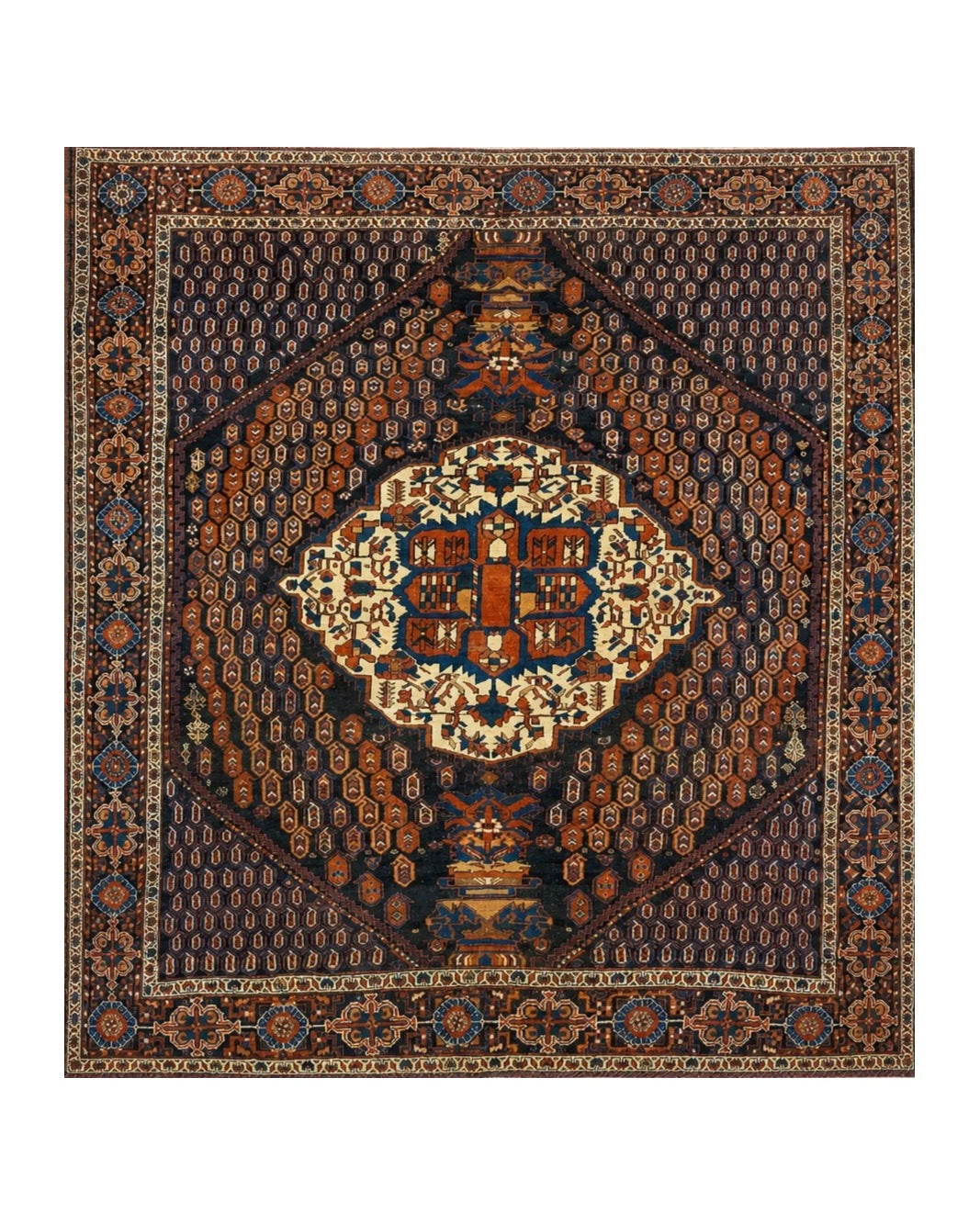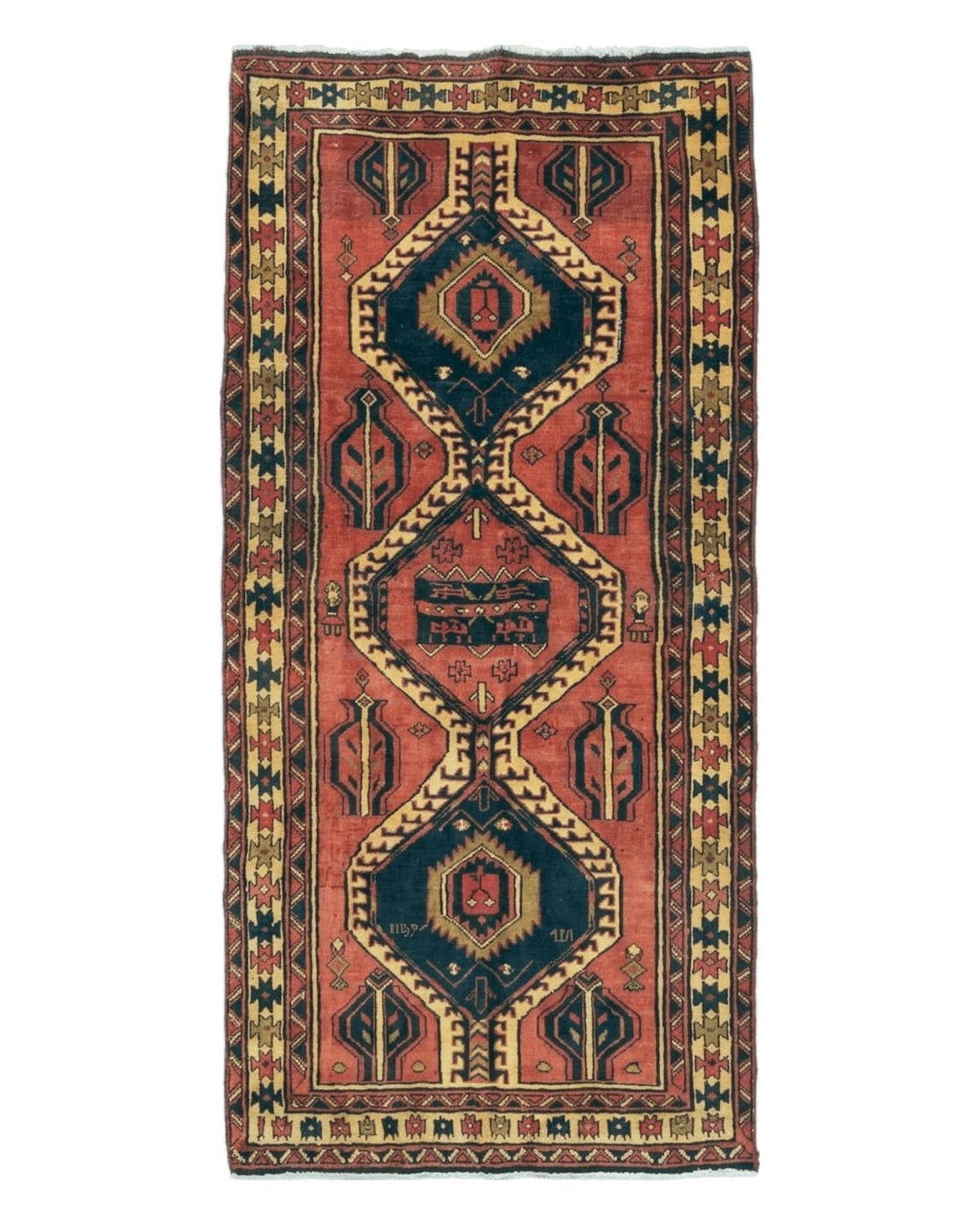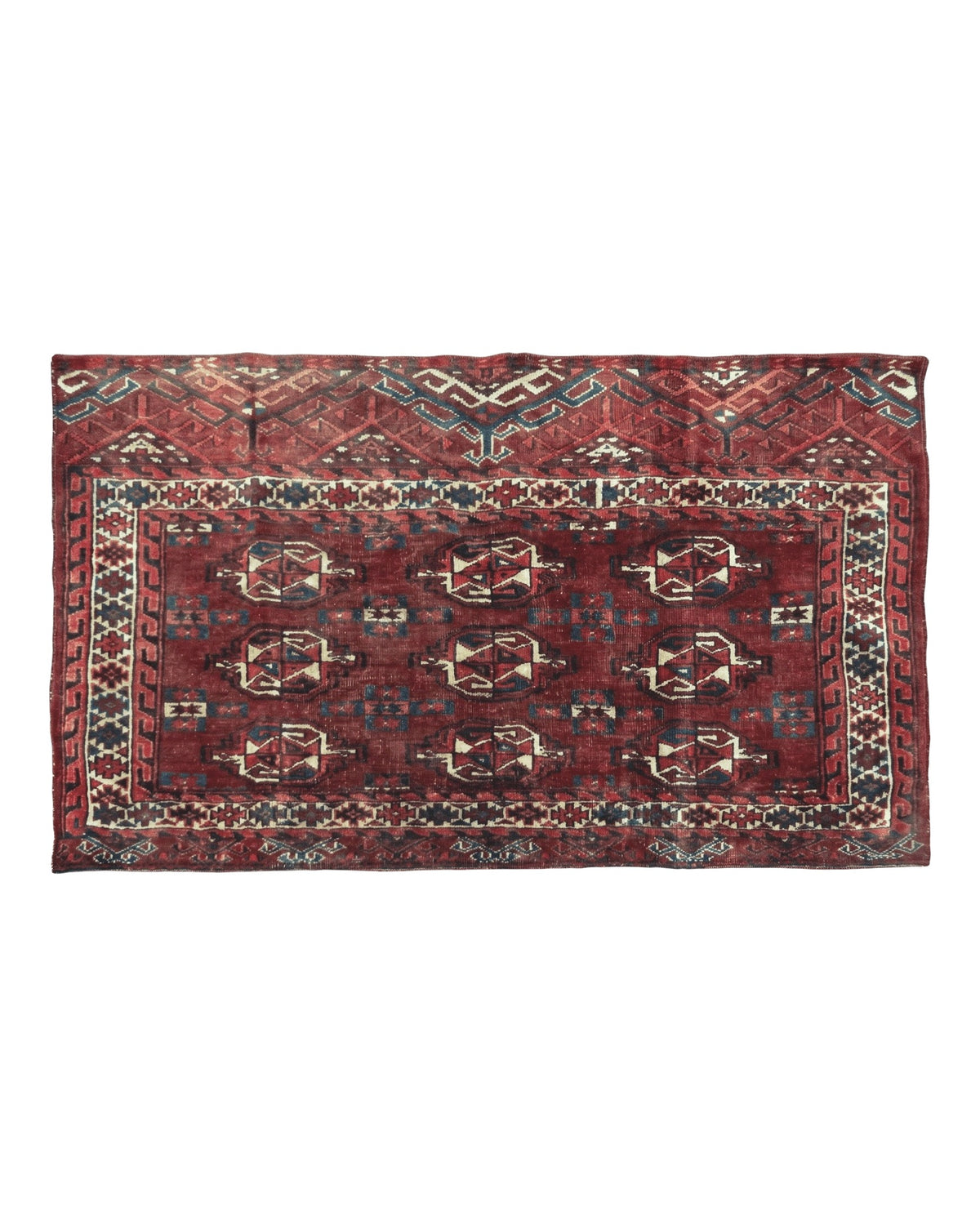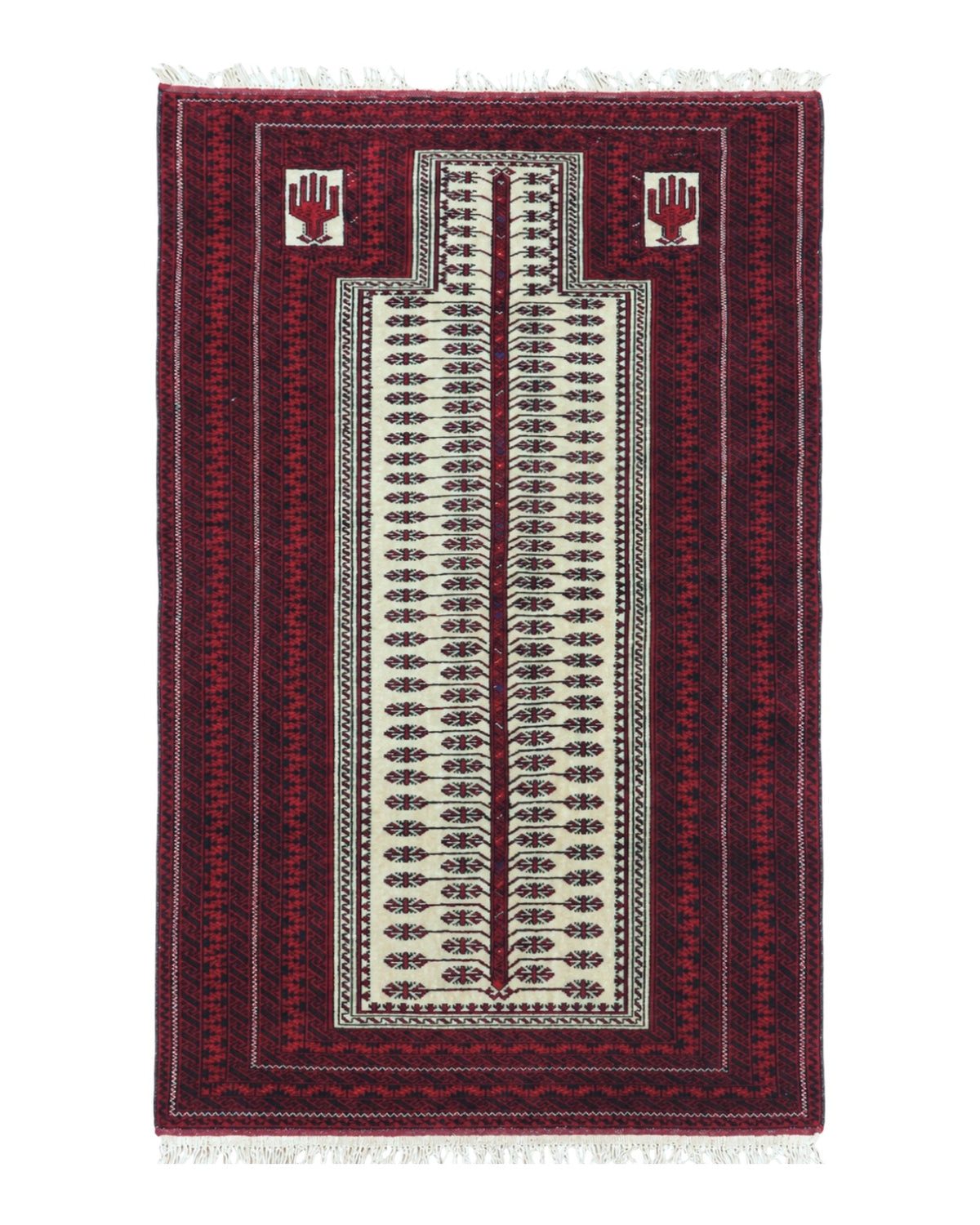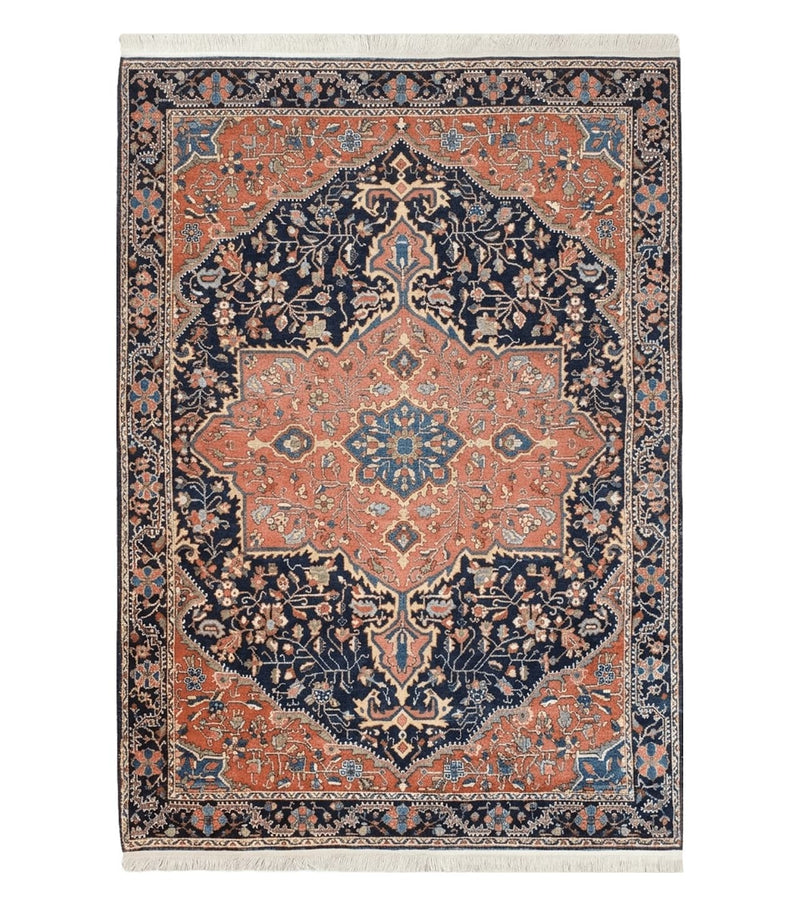


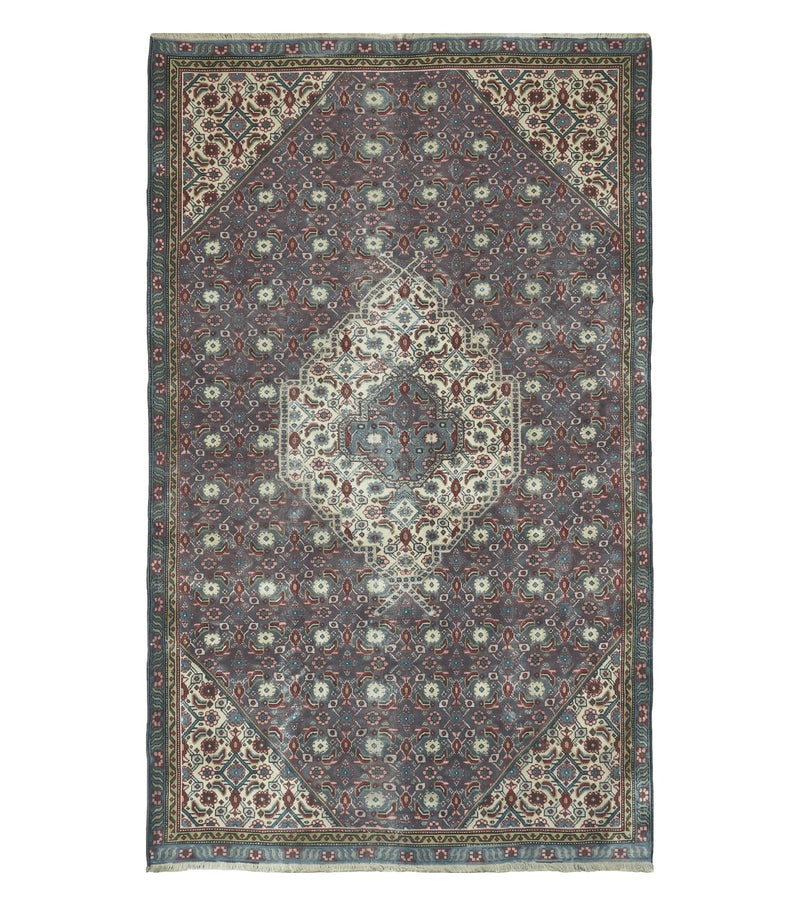


The Afshar are a Turkic tribe whose members live in many parts of Iran, but the Afshar best known for weaving live in Kerman province in the south-east, around Sirjan and Baft. Their rugs, woven by both nomadic and village families, are bold, colorful and full of life. Afshar rugs are recognized by their distinctive designs, especially the boteh and the "chicken" pattern, and by their nearly square shape.
| Origin | Afshar tribes and villages of Kerman province, south-east Iran |
|---|---|
| Tradition | Tribal and village rugs |
| Knot | Symmetric or asymmetric |
| Materials | Lustrous wool pile on a wool or cotton foundation |
| Typical designs | Boteh, "chicken" (morghi), stacked diamond medallions, vase designs |
| Typical size | Near-square, about 4 × 5 to 5 × 6 feet |
| Common colors | Madder red, navy, ivory, orange, with green and gold |
Designs
- Boteh: rows of large or small boteh (paisley) across the field, sometimes in alternating colors. See The Boteh (Paisley) Motif.
- The "chicken" design (morghi): an all-over pattern of small stylized birds, or of flowers whose shape suggests birds.
- Stacked medallions: two or three linked diamond medallions, sometimes with a dark central diamond and large corner spandrels.
- Vase and floral designs, influenced by the city rugs of nearby Kerman.
Afshar weavers often combine tribal motifs with designs borrowed from Kerman, so their rugs can be surprisingly varied. Colors are rich and warm, with plenty of orange, gold and green alongside red and navy.
Shape and size
A typical Afshar rug is almost square, often around 4 × 5 or 5 × 6 feet. This shape, unusual in Persian rugs, makes Afshars easy to recognize and practical for smaller rooms, entries and seating areas.
Construction
Afshar rugs are woven with lustrous, often soft wool. Nomadic pieces have wool foundations; village pieces usually have cotton. Many Afshars have a red weft, which shows on the back as a reddish tint, and a distinctive finish to the ends, sometimes with a band of flatweave.
How to recognize an Afshar
- A near-square shape.
- Boteh, chicken or stacked medallion designs.
- Warm colors with orange, gold and green.
- Lustrous wool and often a reddish tint on the back from red wefts.
See also Persian Tribal Rugs and Kerman Rugs.