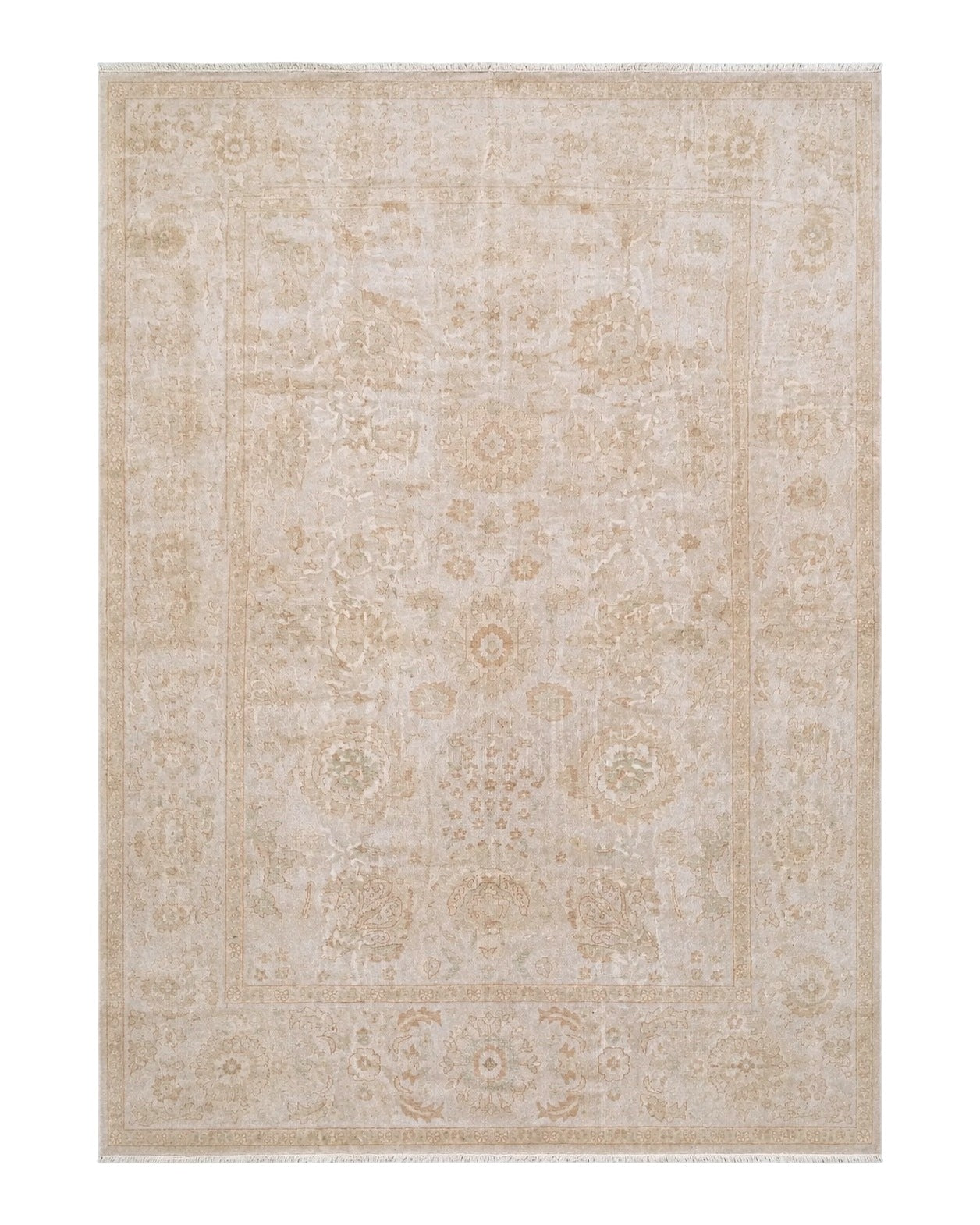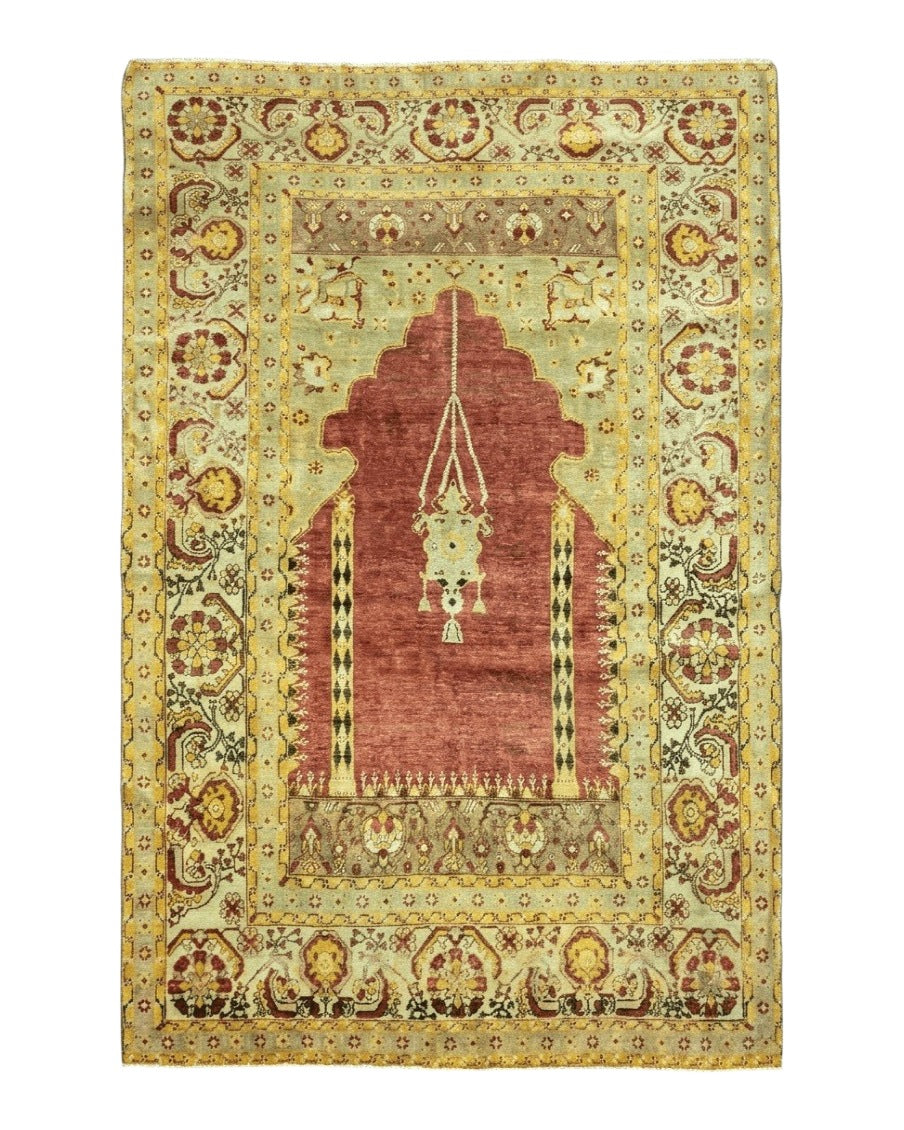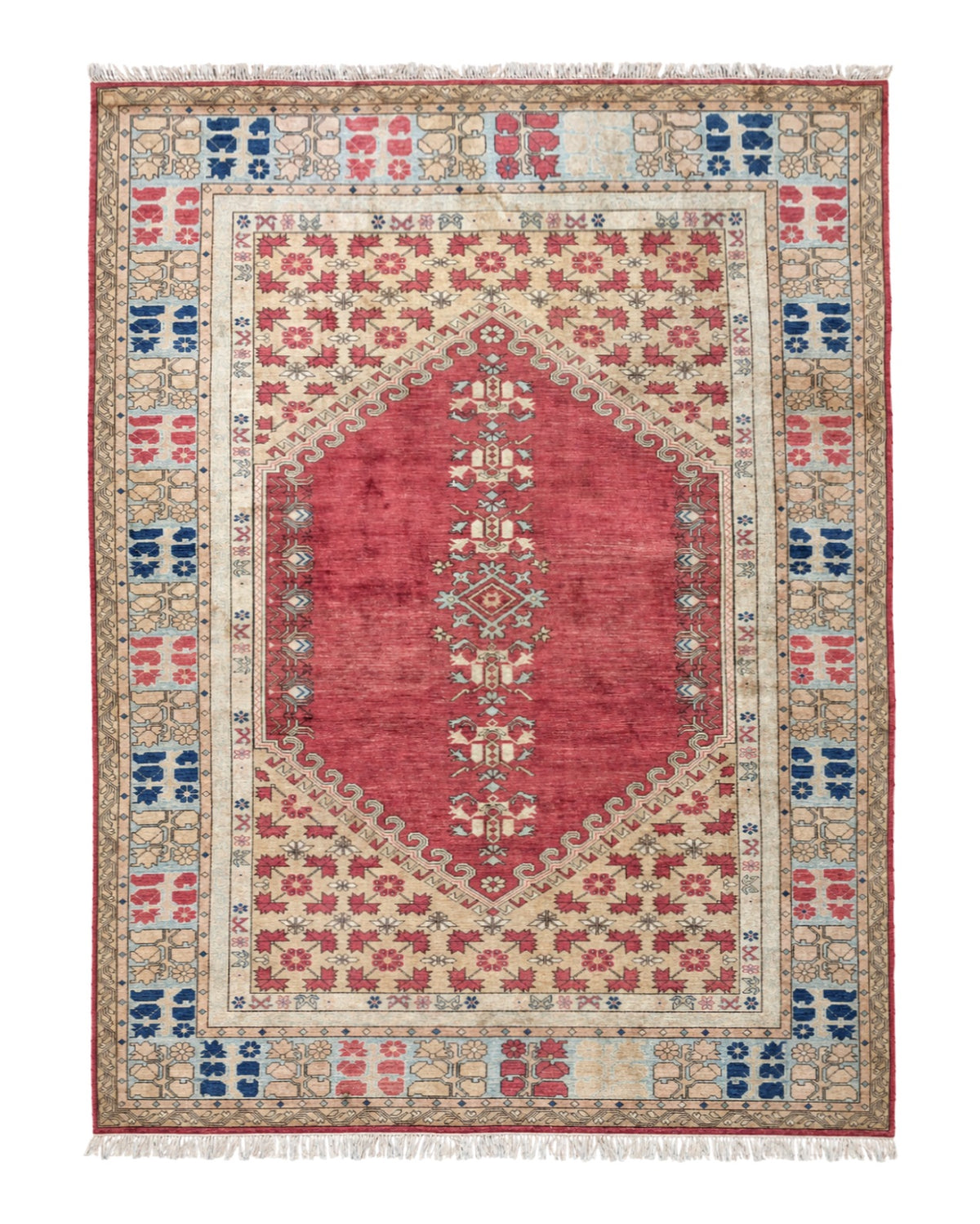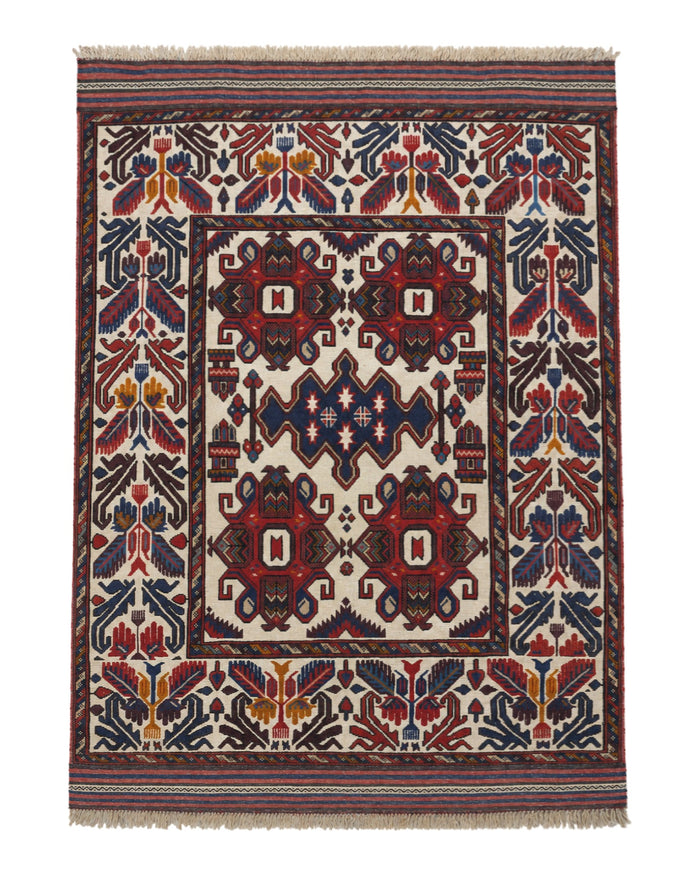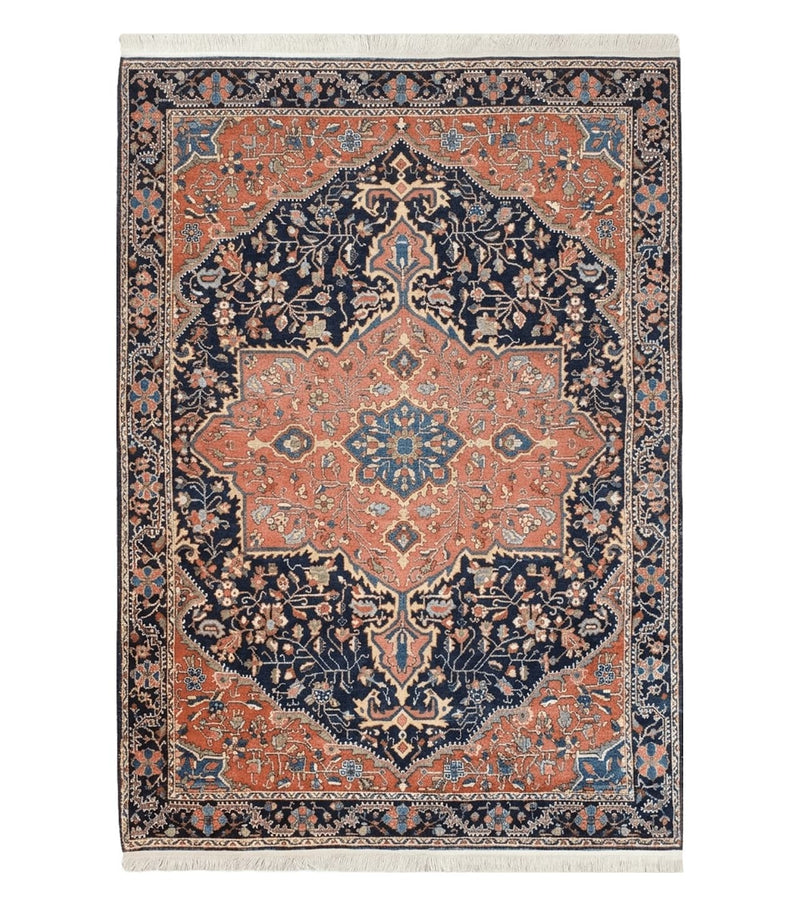


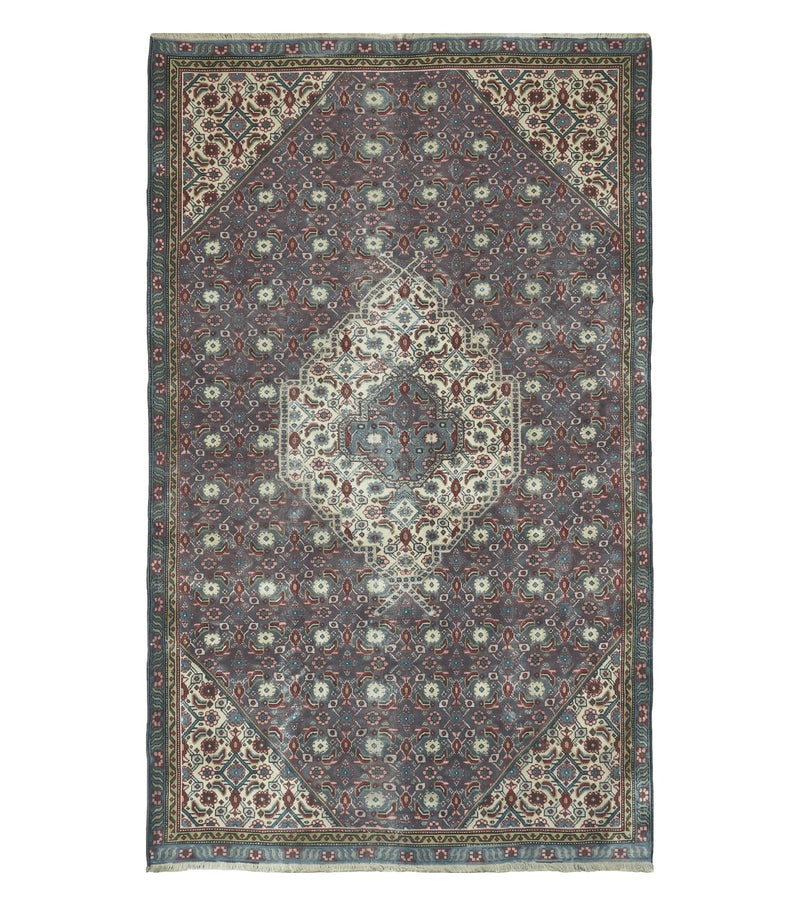


Oushak (also Ushak or Usak) is a town in western Turkey with a weaving history going back more than five centuries. Its name is attached to two quite different groups of rugs: the grand classical carpets woven for the Ottoman court and European buyers in the 15th to 17th centuries, and the decorative rugs of the late 19th and early 20th centuries that are so popular with interior designers today. Oushaks are known for large, open designs and soft, warm colors.
| Origin | Ushak (Usak) and surrounding area, western Anatolia |
|---|---|
| Knot | Symmetric (Turkish) |
| Materials | Soft, lustrous wool on a wool or cotton foundation |
| Knotting | Coarse to medium; loose and supple |
| Typical designs | Large-scale medallions and palmettes; all-over lattices |
| Classic colors | Apricot, saffron, terracotta, celadon, ivory, soft blue |
| Sizes | Often large room sizes and oversized |
Classical Ushak carpets
From the 15th to 17th centuries, Ushak workshops wove large carpets in two famous designs: Star Ushaks, with eight-pointed star medallions in a repeating pattern, and Medallion Ushaks, with large pointed oval medallions. These carpets were exported to Europe, appear in many paintings of the time, and are now treasured museum pieces.
Decorative Oushaks
From the later 19th century, Oushak weavers made large rugs for European and American homes. These "decorative Oushaks" have big, open, often loosely drawn designs, large medallions, oversized palmettes, or simple lattices, in a soft, sun-washed palette of apricot, saffron yellow, terracotta, celadon green, ivory and light blue. The wool is soft and lustrous and the weave fairly loose, so the rugs are supple and lie beautifully. Their gentle colors work in both traditional and contemporary rooms, which is why antique Oushaks are so prized by designers.
Oushak-style rugs today
The Oushak look is now woven in many places. Turkish workshops still make Oushaks, and rugs in Oushak designs and colors are widely produced in India, Pakistan, Afghanistan and Nepal, often with hand-spun wool and vegetable dyes. Many are excellent decorative rugs. Like Ziegler-style rugs, they are part of a broader taste for softly colored, large-scale designs. See Chobi and Ziegler-Style Rugs.
How to recognize an Oushak
- Large-scale, open designs rather than fine detail.
- A soft, warm palette of apricot, saffron, terracotta and celadon.
- Supple, lustrous wool and a loose, flexible weave.
- Symmetric knots and often large sizes.
See also Turkish Rugs and Mahal and Sultanabad Rugs, the Persian rugs closest to Oushaks in spirit.