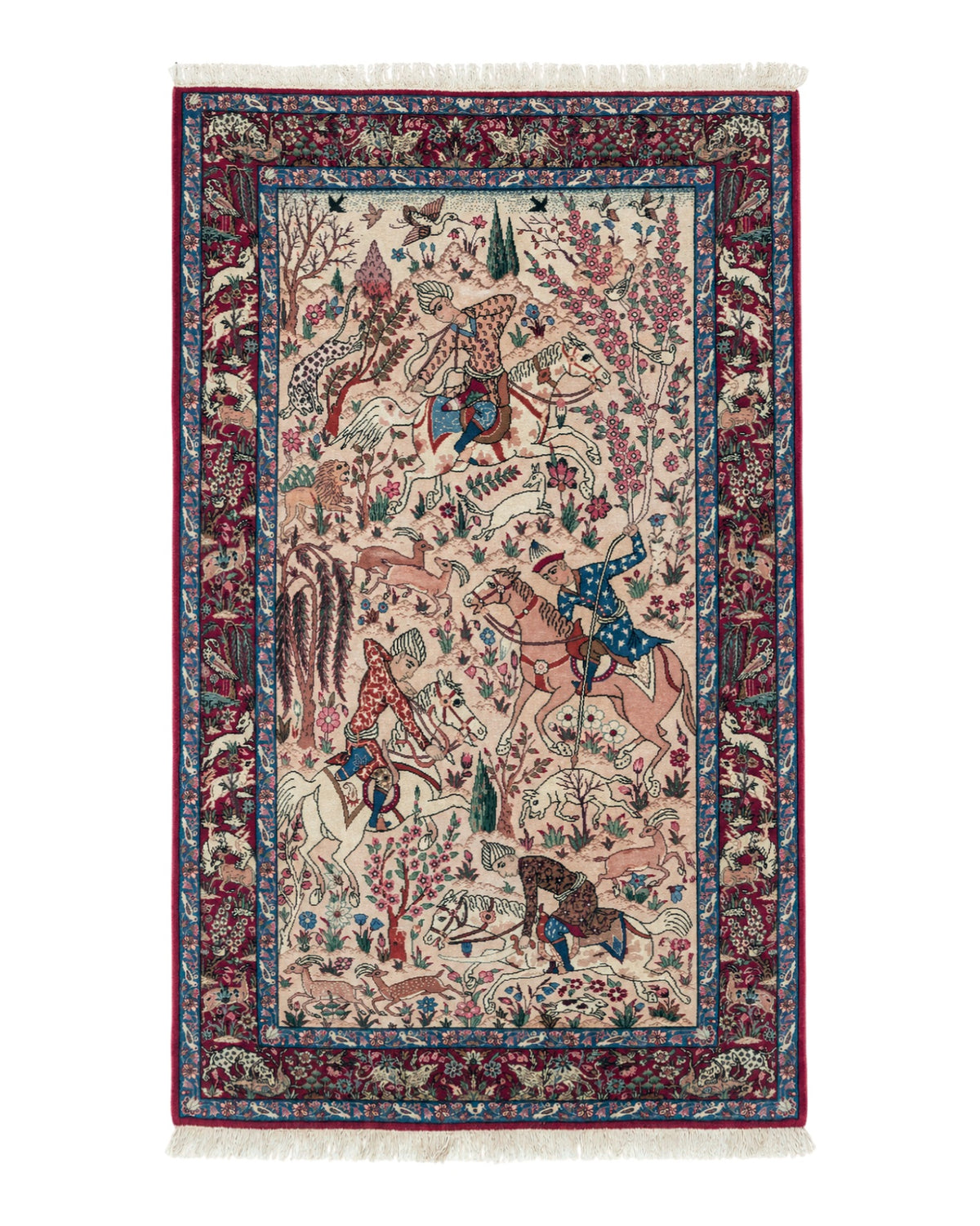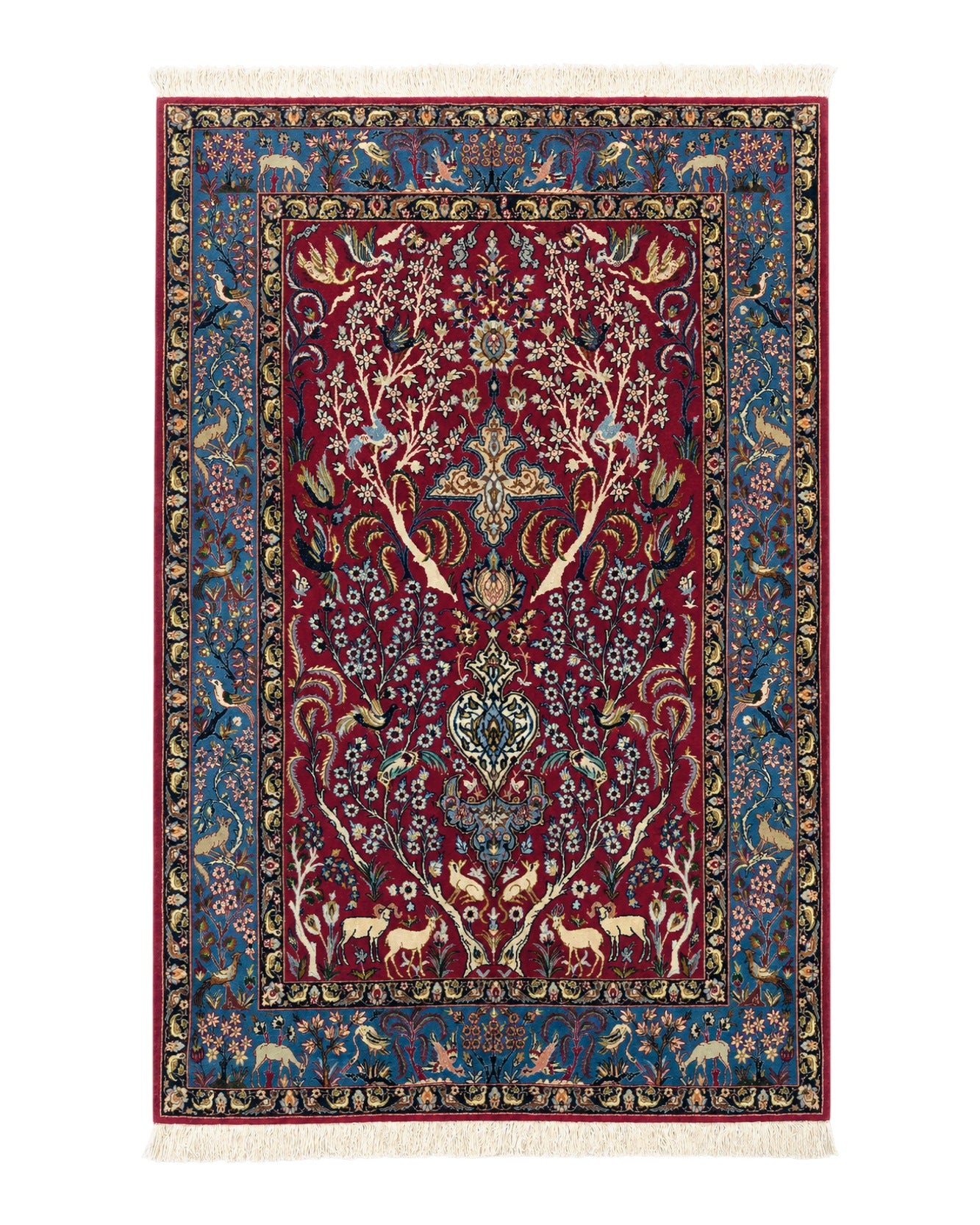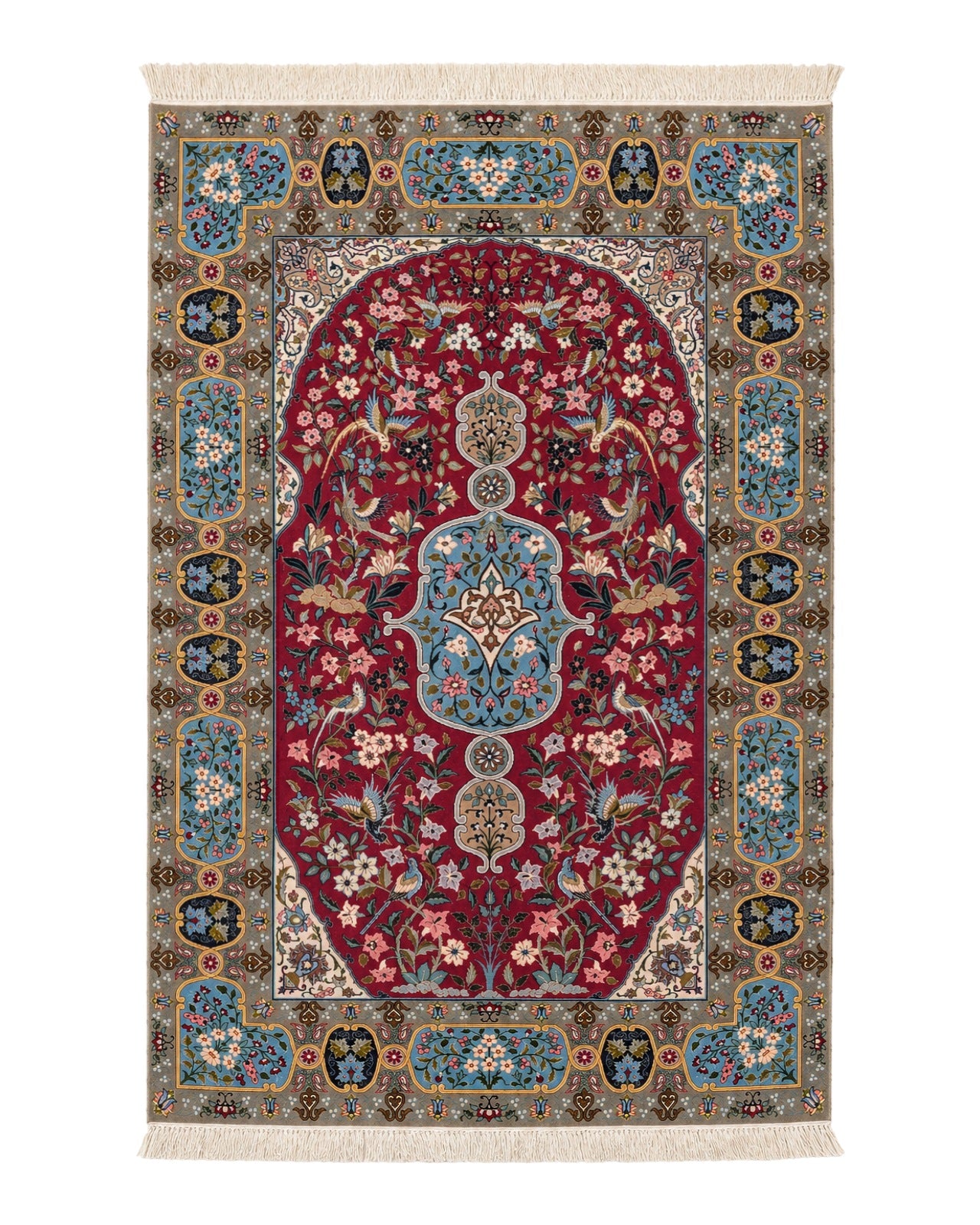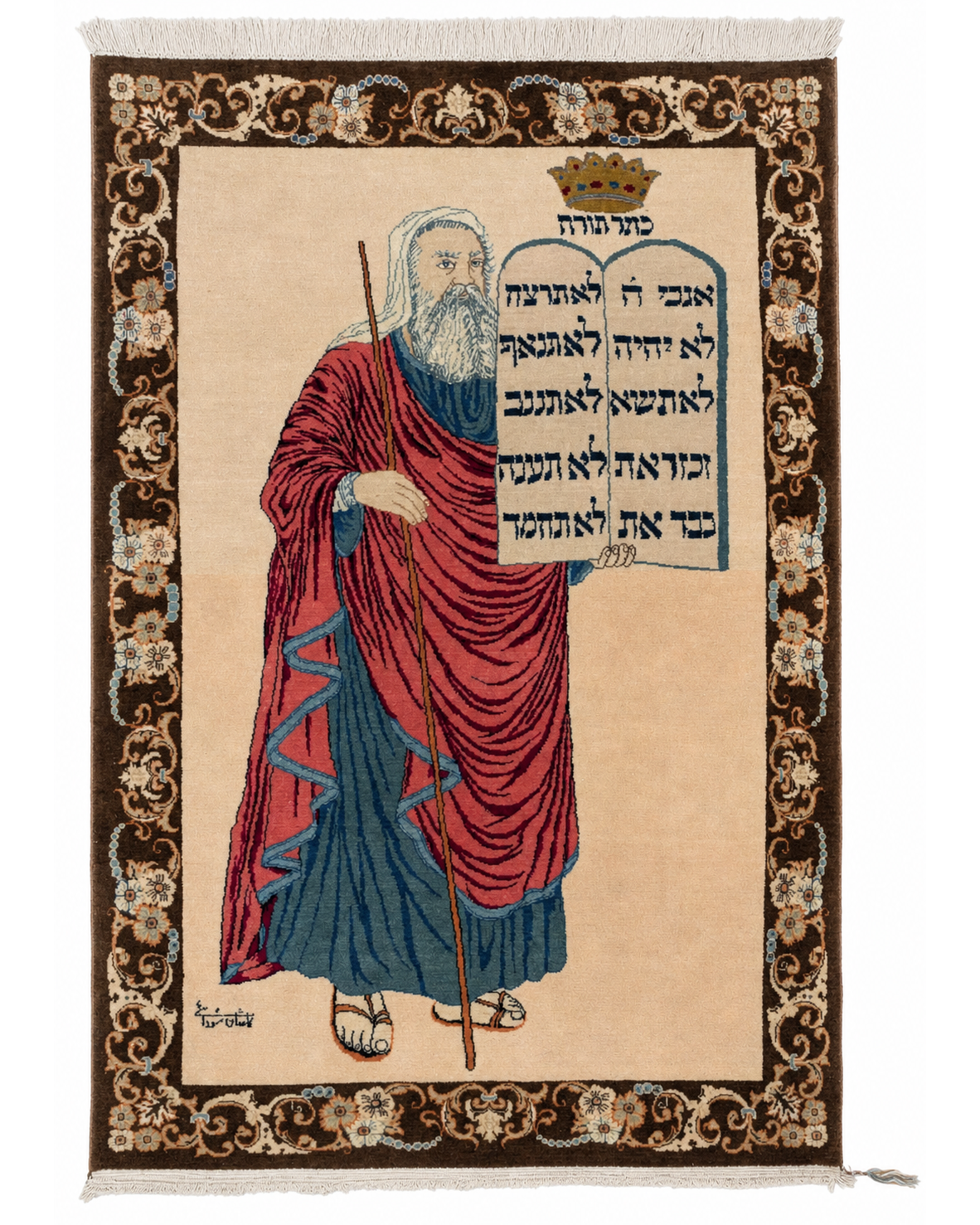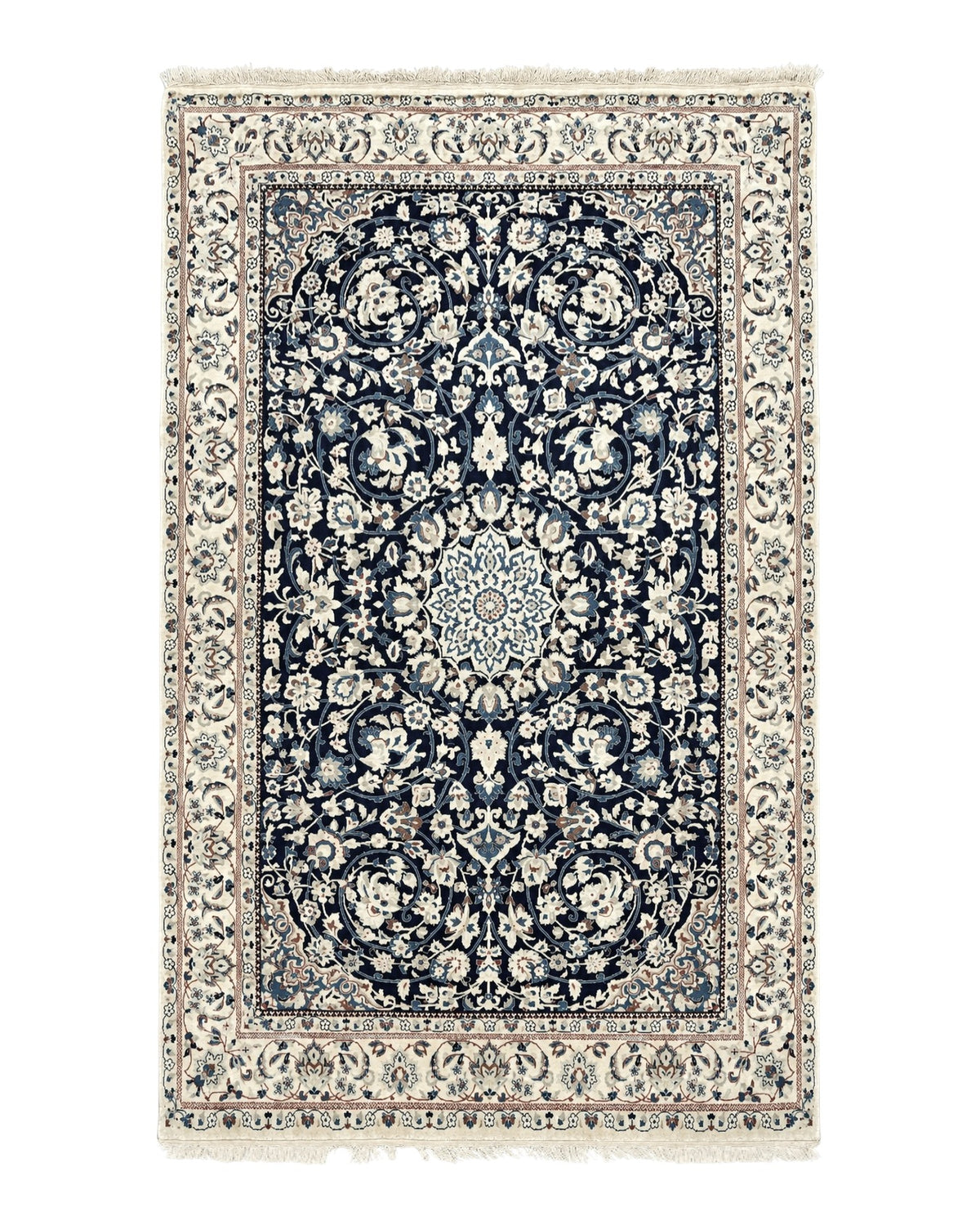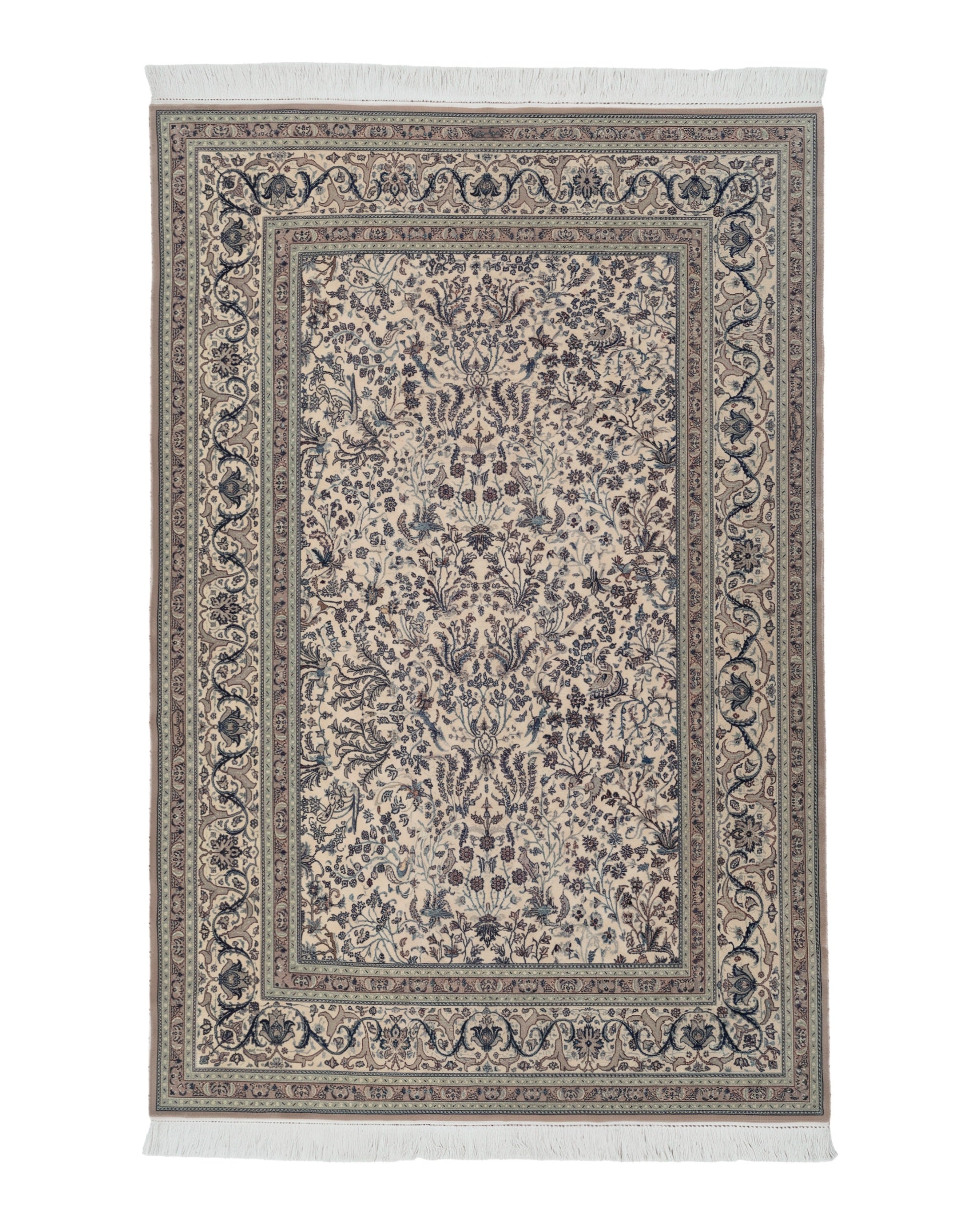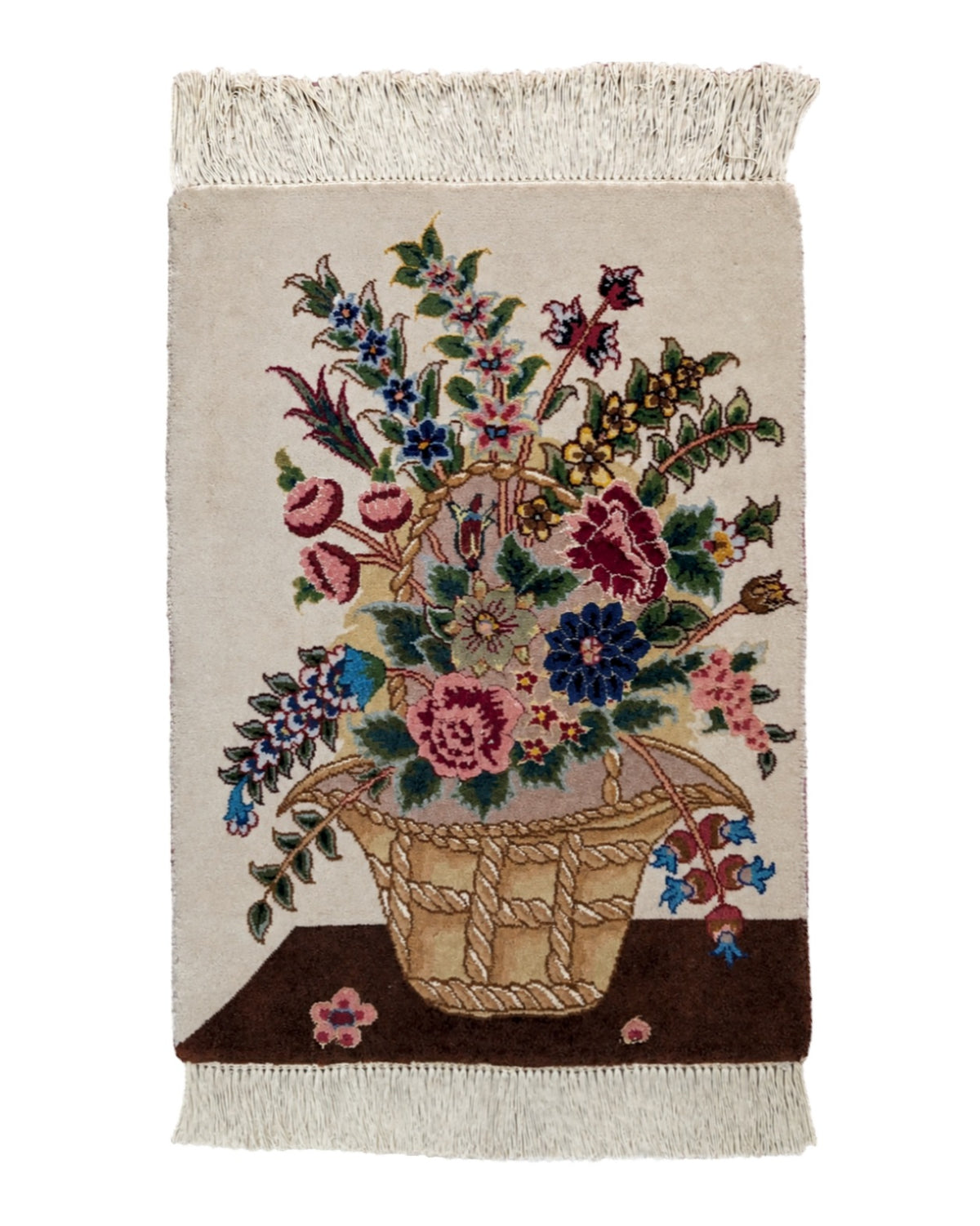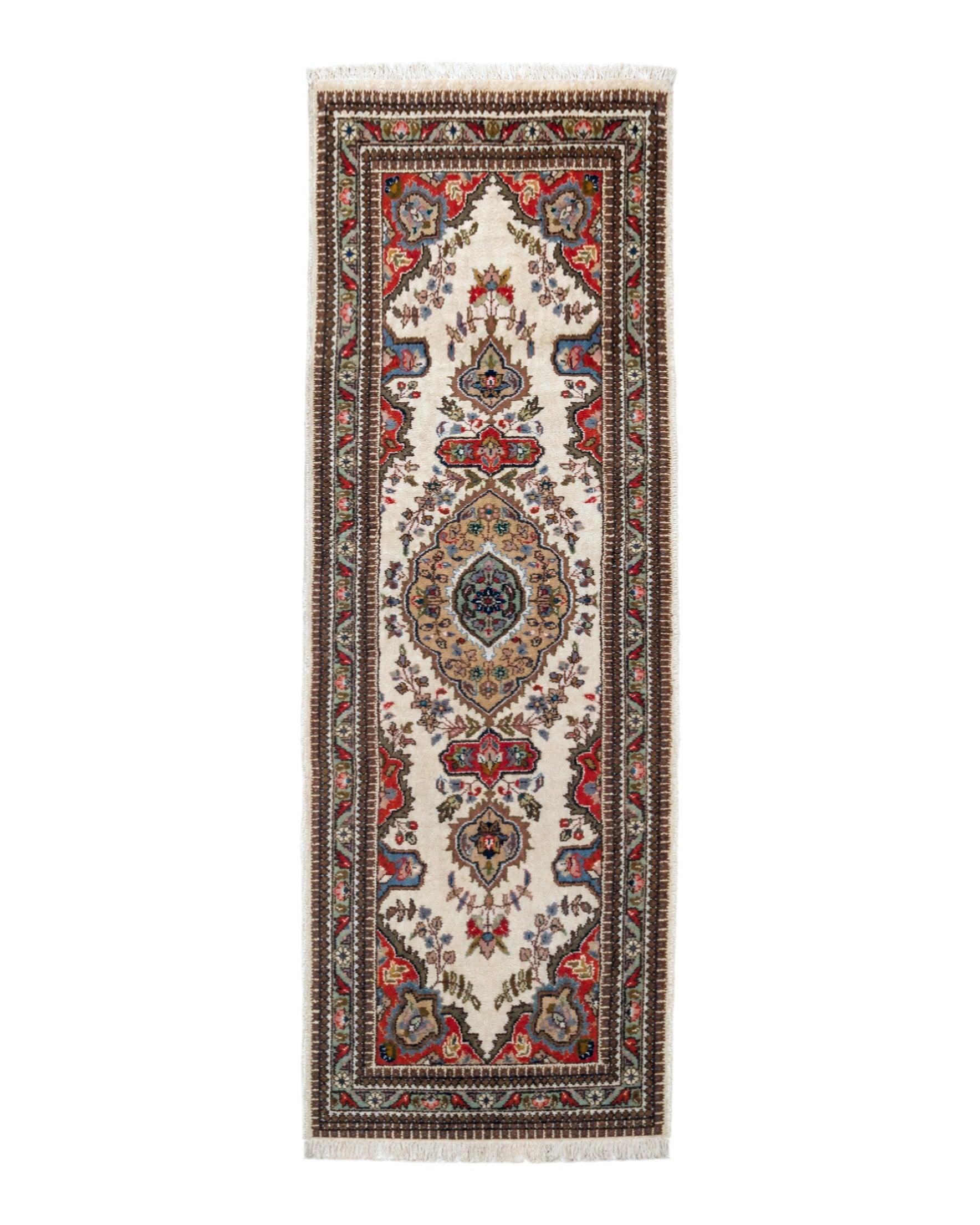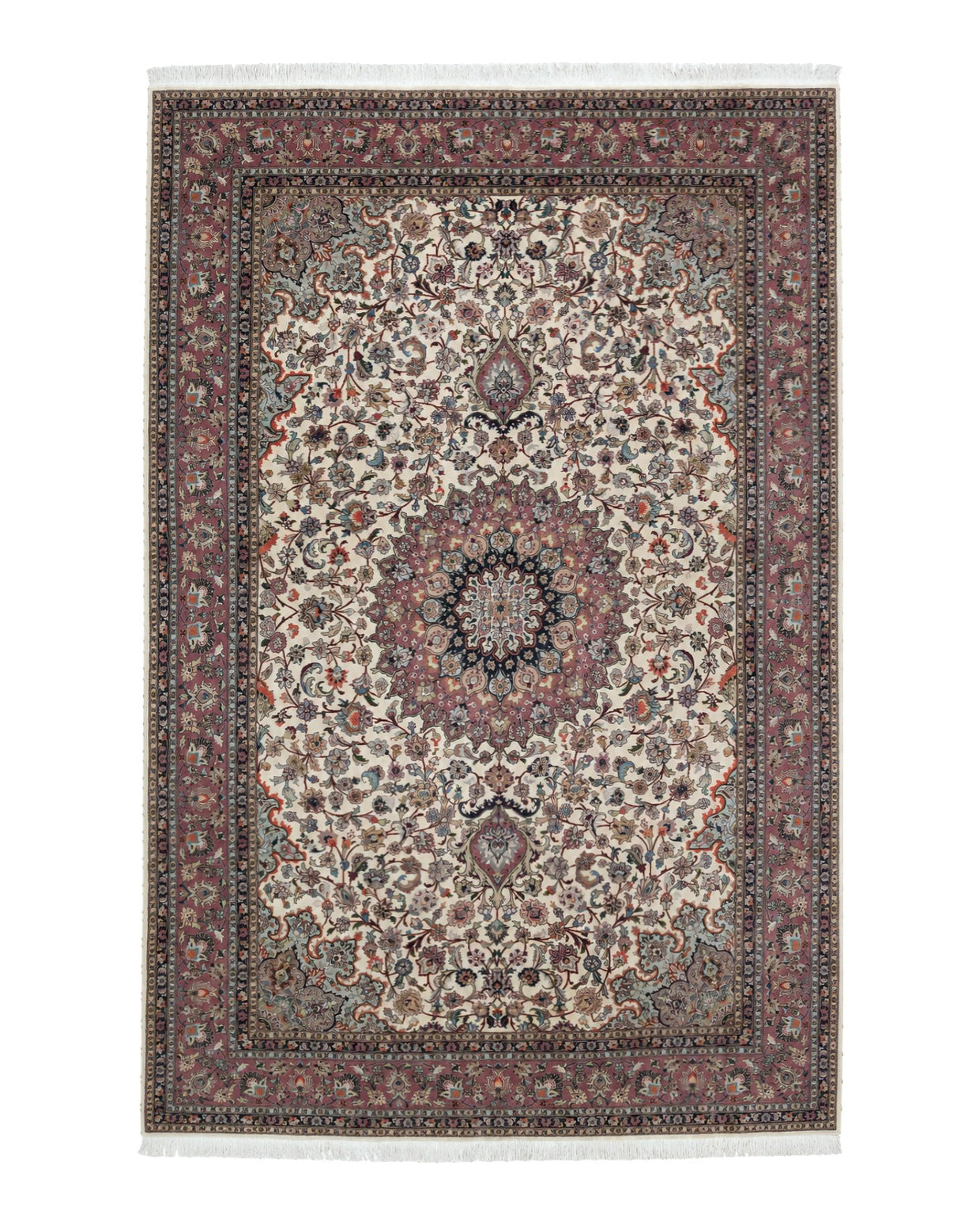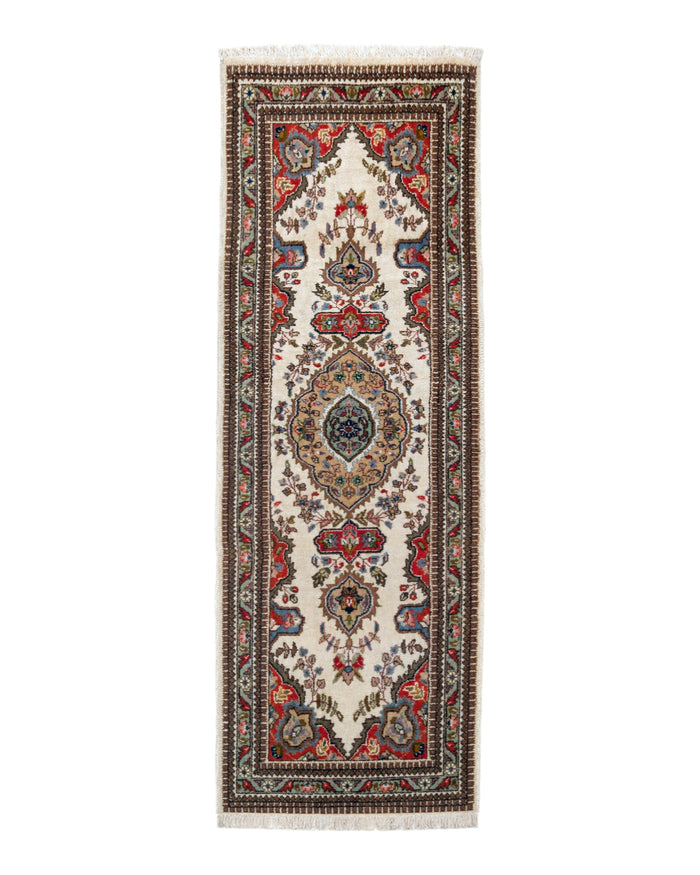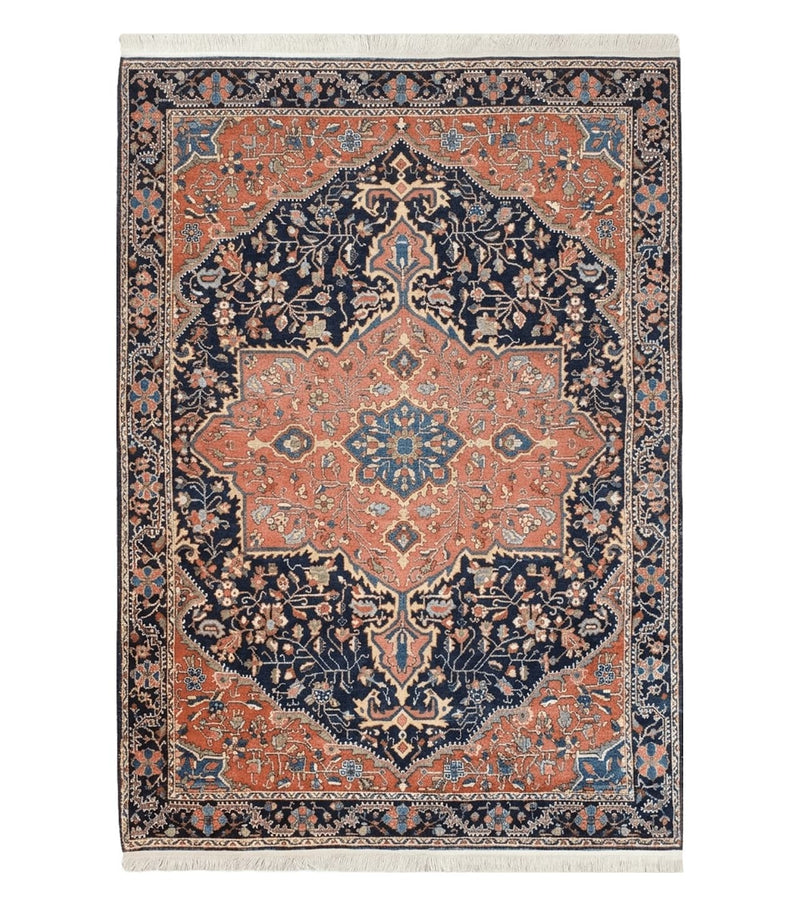


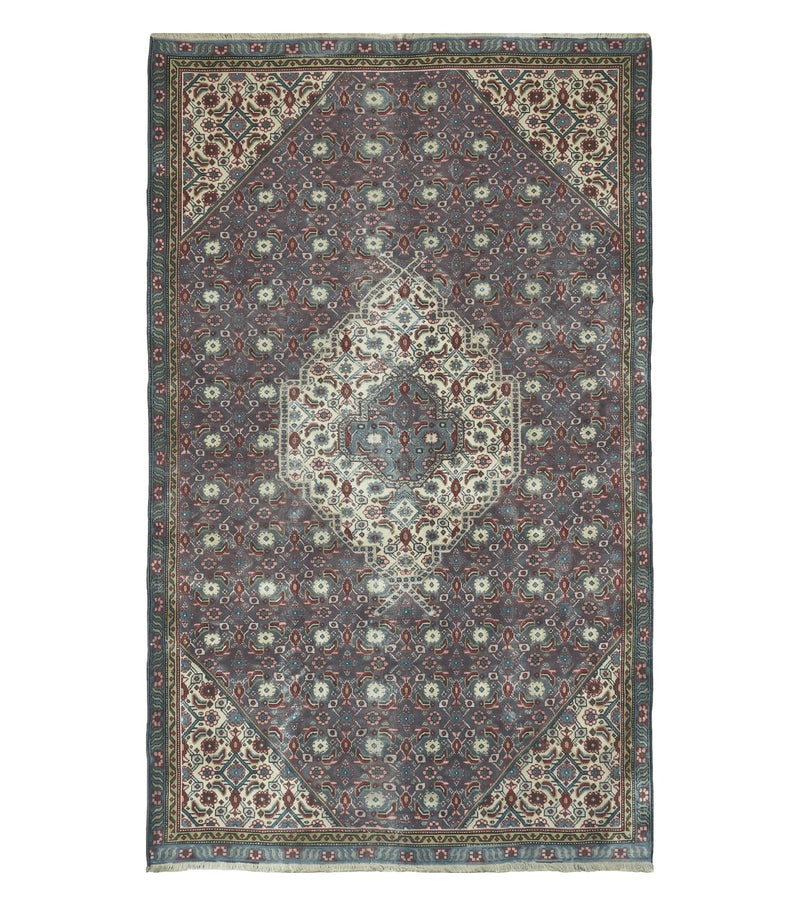


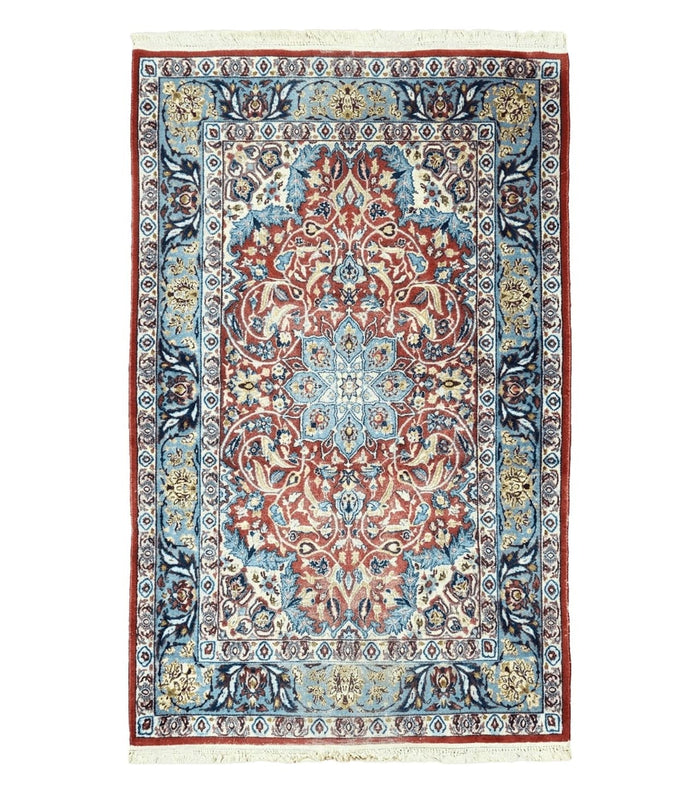

Persian city rugs are the workshop rugs of Iran's great weaving cities: Tabriz, Kashan, Isfahan, Nain, Qum, Kerman, Mashad and others. They are woven by professional weavers from a full-size drawn design, which is what gives them their flowing curves, fine detail and near-perfect symmetry. For many people, a city rug is the picture that comes to mind when they hear the words "Persian rug".
| Woven by | Professional weavers in urban workshops |
|---|---|
| Design | Drawn in advance on a cartoon and followed knot by knot |
| Style | Curvilinear: flowing vines, palmettes, detailed medallions |
| Knotting | Fine to very fine |
| Materials | Wool pile on cotton; silk highlights; some all-silk |
| Main centers | Tabriz, Kashan, Isfahan, Nain, Qum, Kerman, Mashad, Tehran, Kashmar |
What makes a rug a "city" rug
The defining feature is the design process. In a city workshop, a designer draws the whole rug, or one quarter of it, on squared paper called a cartoon (in Persian, naqsheh). Each square stands for a single knot and is colored to show which yarn goes there. The weavers follow the cartoon exactly, row by row, so the finished rug matches the drawing.
Working from a drawing allows things that are difficult to weave from memory: smooth curves, tiny floral details, corners that mirror each other perfectly, and borders that turn the corner cleanly. It is the reason city rugs look so refined, and the main difference from village and tribal rugs, which are usually woven from memory.
How city rugs are made
City rugs are woven on large fixed vertical looms, often by several weavers sitting side by side. A workshop is usually run by a master (ostad) who chooses the design, the colors and the quality. Wool is spun and dyed to order, and the foundation is normally cotton, which is strong and keeps the rug straight and flat. Many workshops add silk to outline motifs or highlight details, and some rugs, especially from Qum, Isfahan and Kashan, are woven entirely in silk.
Because the knots are small and the designs detailed, a large city rug can take a team of weavers a year or more. When it comes off the loom, it is washed and the pile is sheared low, which keeps the fine detail crisp.
The great weaving cities
| City | Region | Known for |
|---|---|---|
| Tabriz | North-west | The widest range of designs of any city, from medallions to pictorial and hunting scenes; quality graded in raj |
| Kashan | Central | Classic medallion designs in deep red and navy; one of the oldest weaving centers |
| Isfahan | Central | Very fine, crisp floral rugs, often on a silk foundation; the Safavid capital |
| Nain | Central | Ivory and blue palettes with silk outlining; graded by la |
| Qum (Qom) | Central | Fine silk rugs; a 20th-century weaving center |
| Kerman | South-east | Soft, graceful florals and a wide color palette |
| Mashad | North-east | Large floral medallions on rich red grounds |
| Tehran | North | Fine floral rugs woven in the capital, mostly older pieces |
| Kashmar | North-east | Dense, busy floral and pictorial designs |
Common designs
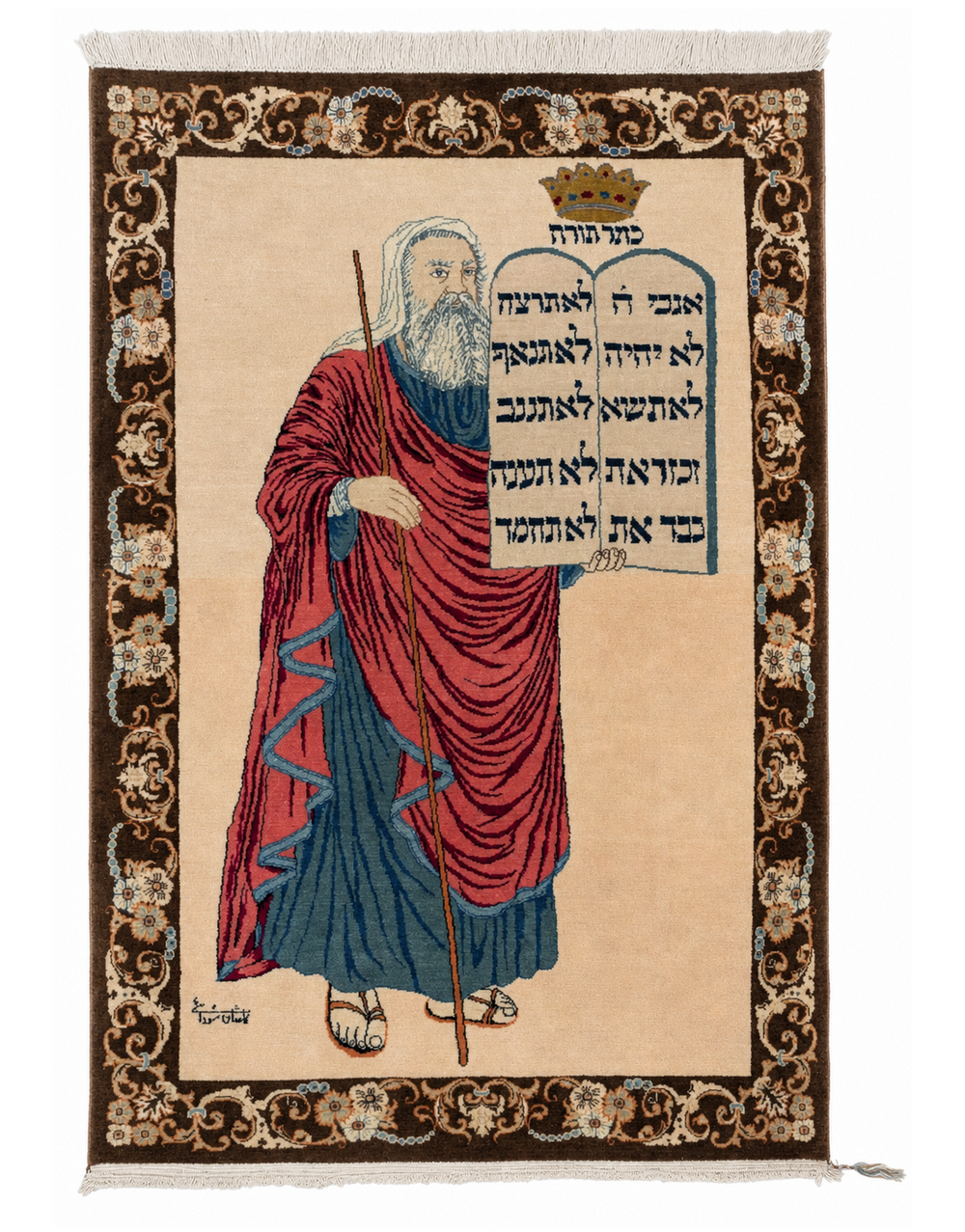
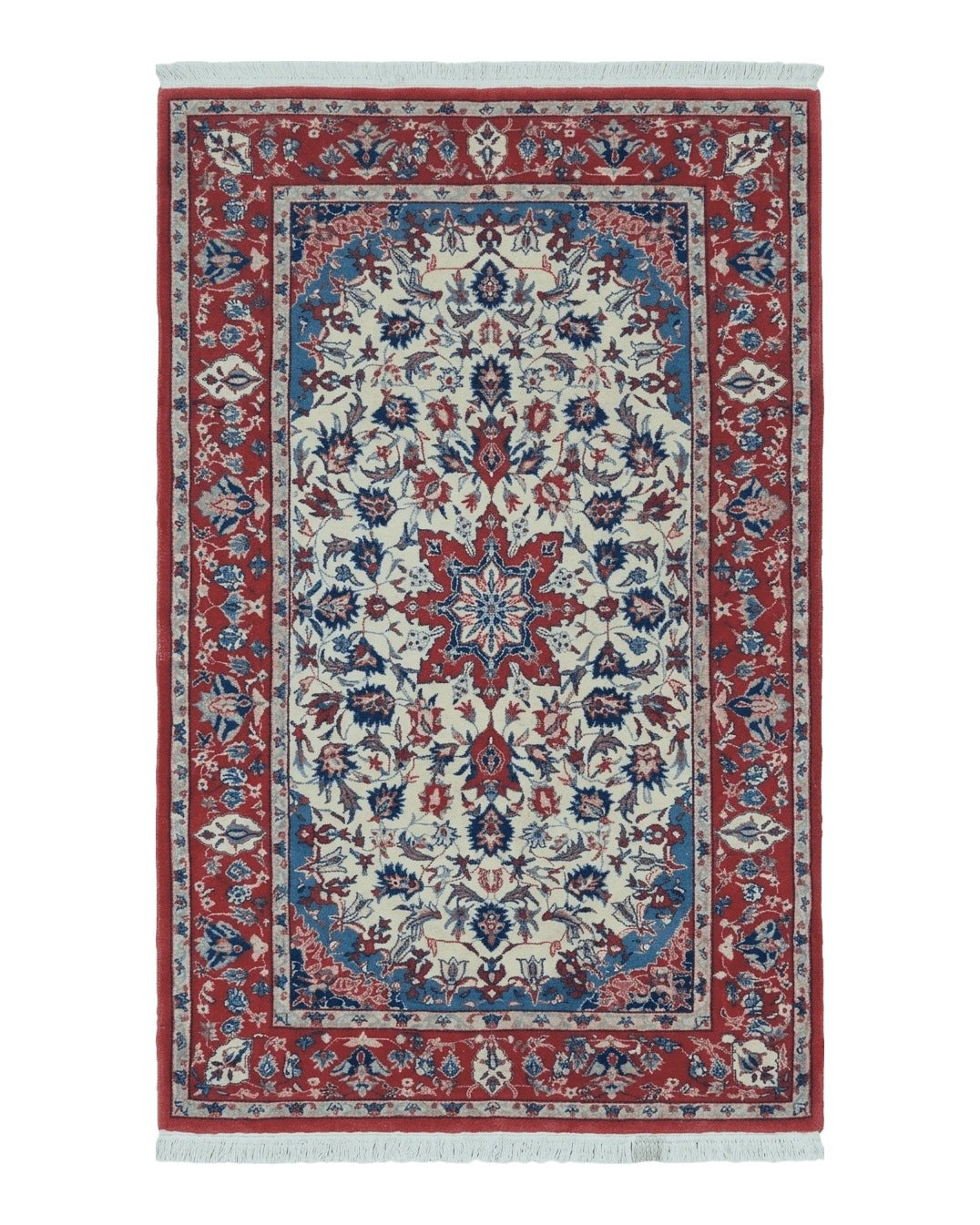
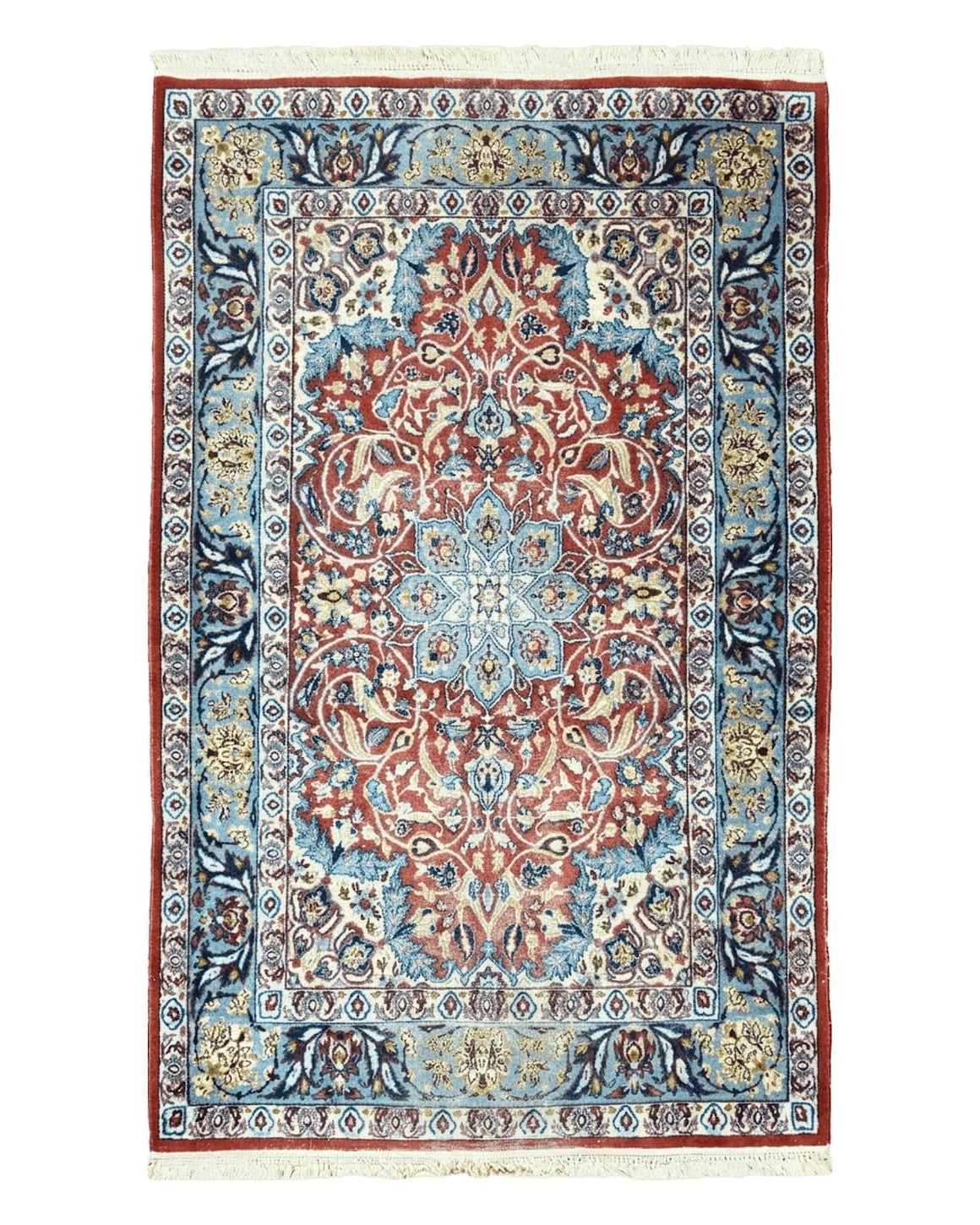
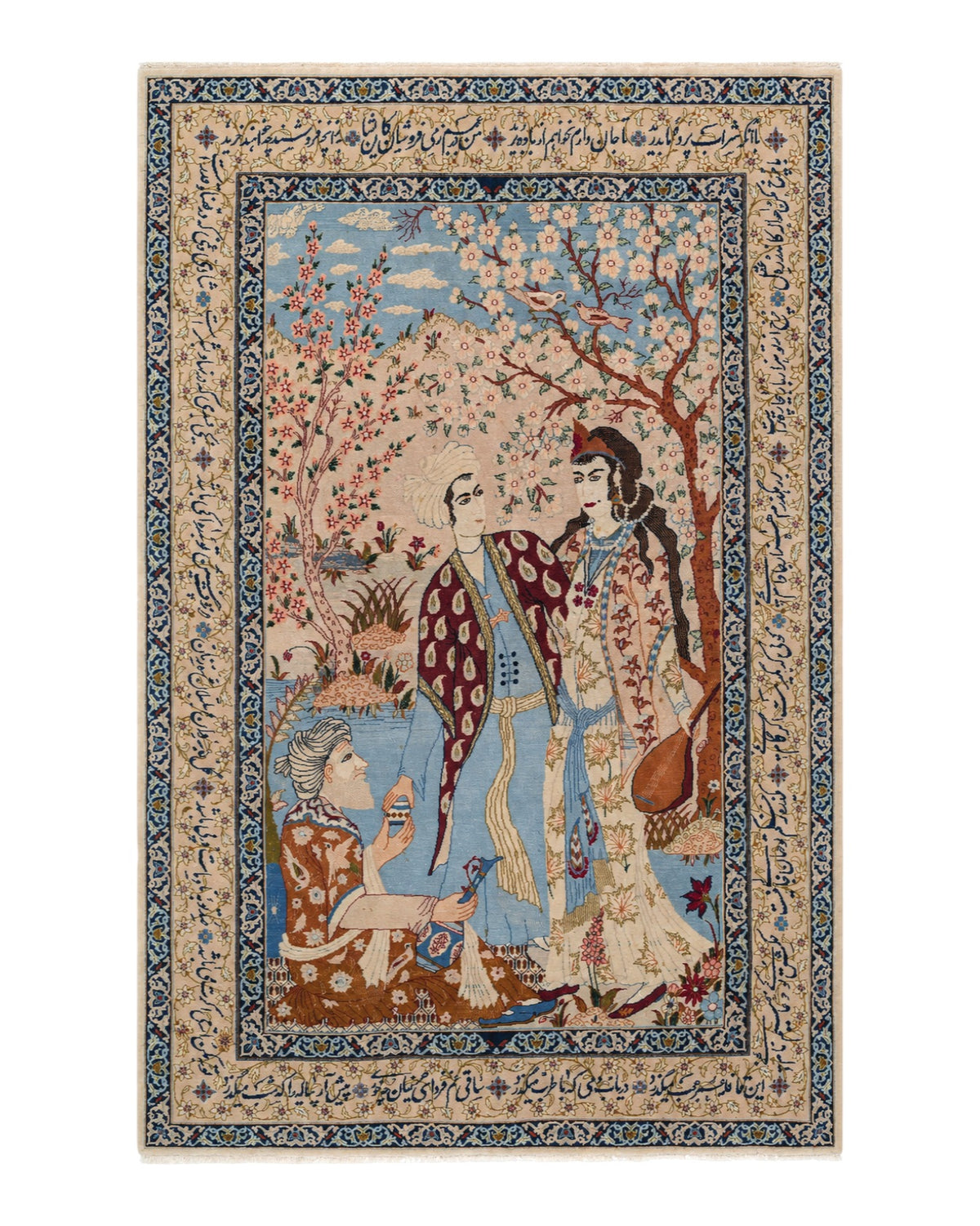
City rugs use the full classical vocabulary of Persian design. The most familiar is the central medallion with matching corner pieces, set in a field of vines and blossoms. Others repeat a single motif across the whole field, such as the Herati or Shah Abbasi palmette. Tabriz, Kashan and Isfahan are also known for pictorial rugs showing hunting scenes, gardens, poets and kings. See Medallion Designs and All-Over Designs.
How quality is described
City rugs are usually described by how finely they are knotted. Most of the world uses knots per square inch (KPSI), explained in Knots and Knot Density. Some cities have their own systems: Tabriz rugs are graded in raj, the number of knots across 7 centimeters, and Nain rugs in la, the number of strands in the warp thread, where fewer strands mean a finer rug.
Living with a city rug
City rugs suit formal living rooms, dining rooms and bedrooms, and anywhere you want a rug that brings detail and balance to a room. Their low, dense pile lies flat under furniture and is easy to keep clean. Wool city rugs are hard-wearing; silk rugs are softer and best kept for lighter-traffic rooms or hung on a wall.