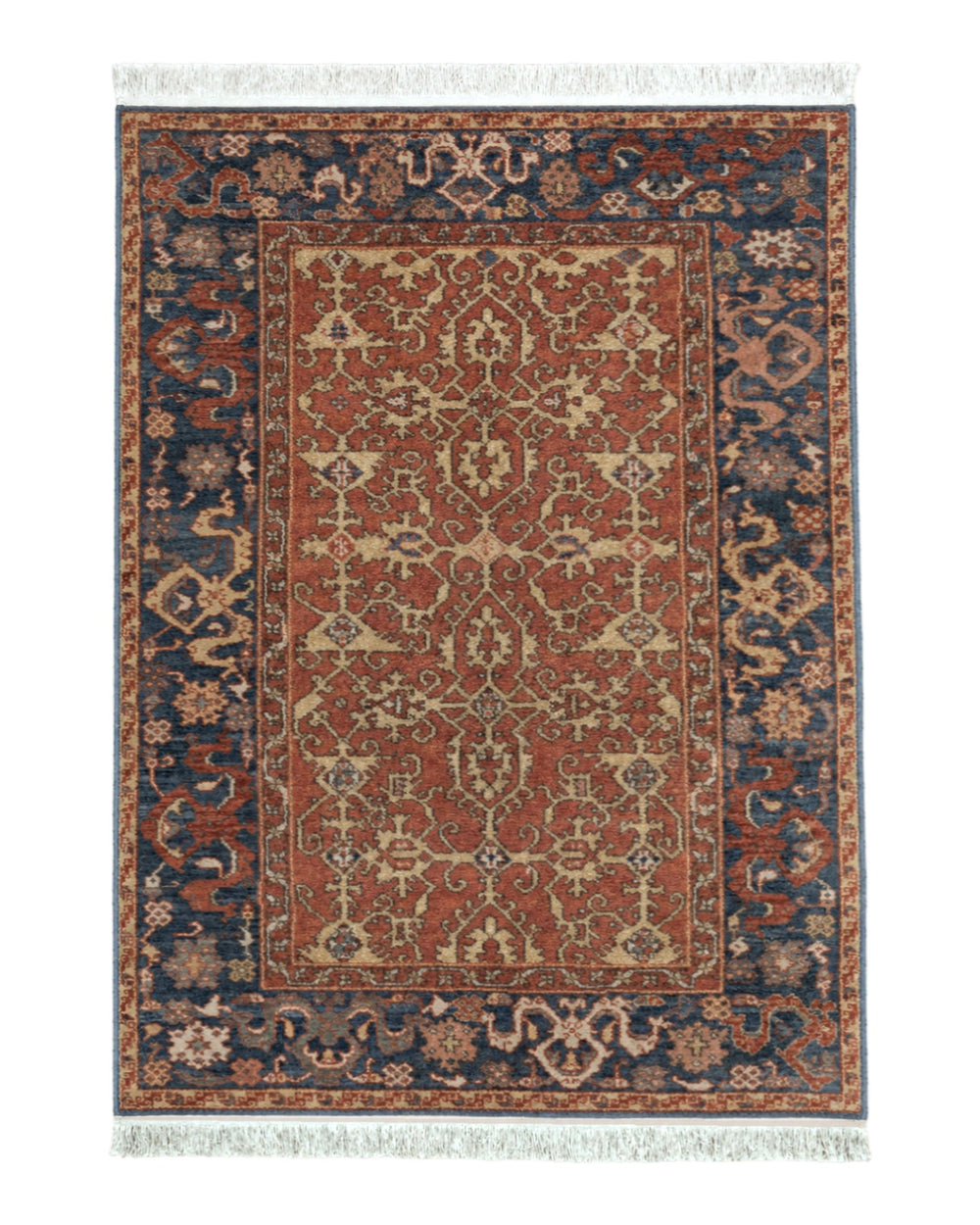
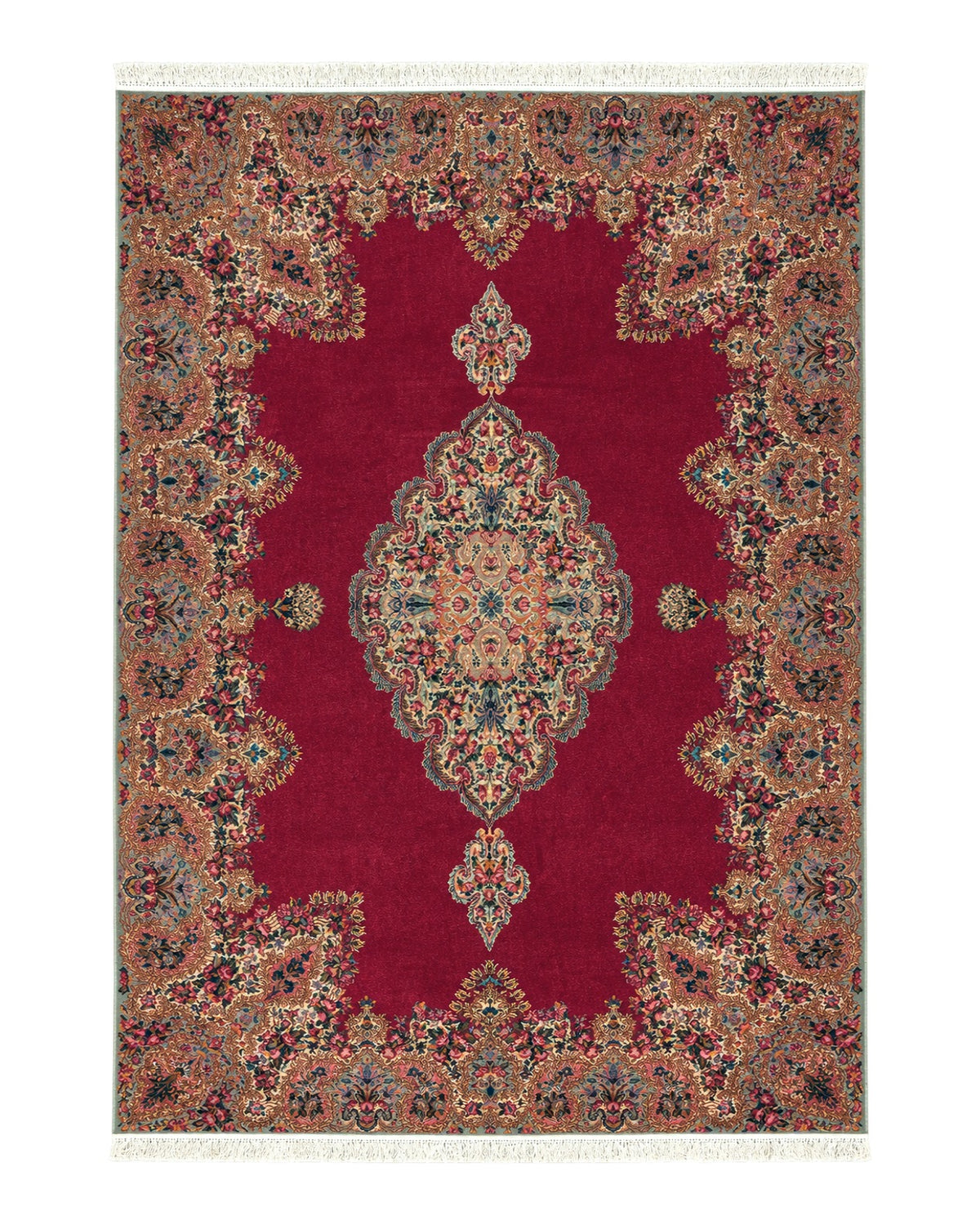
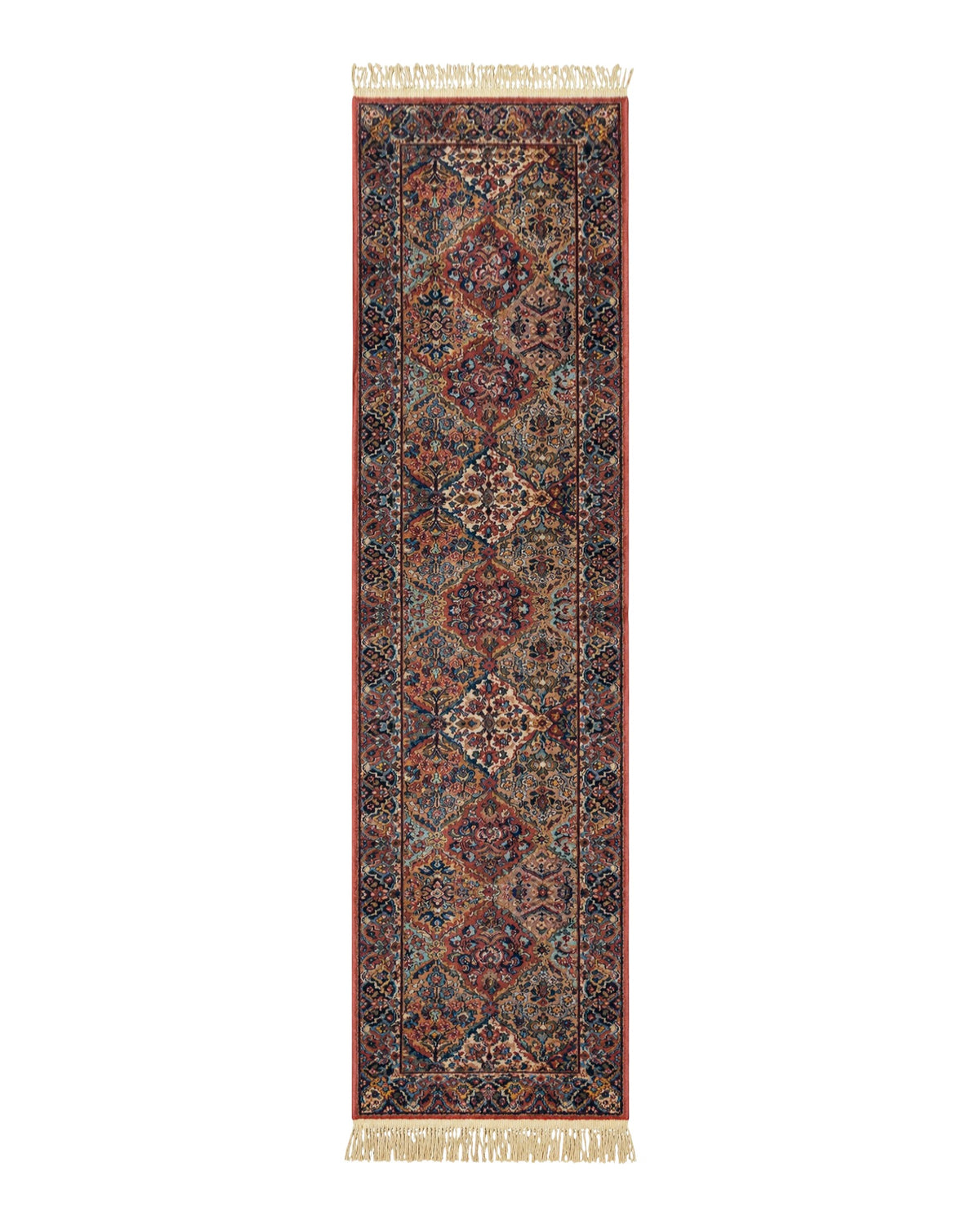
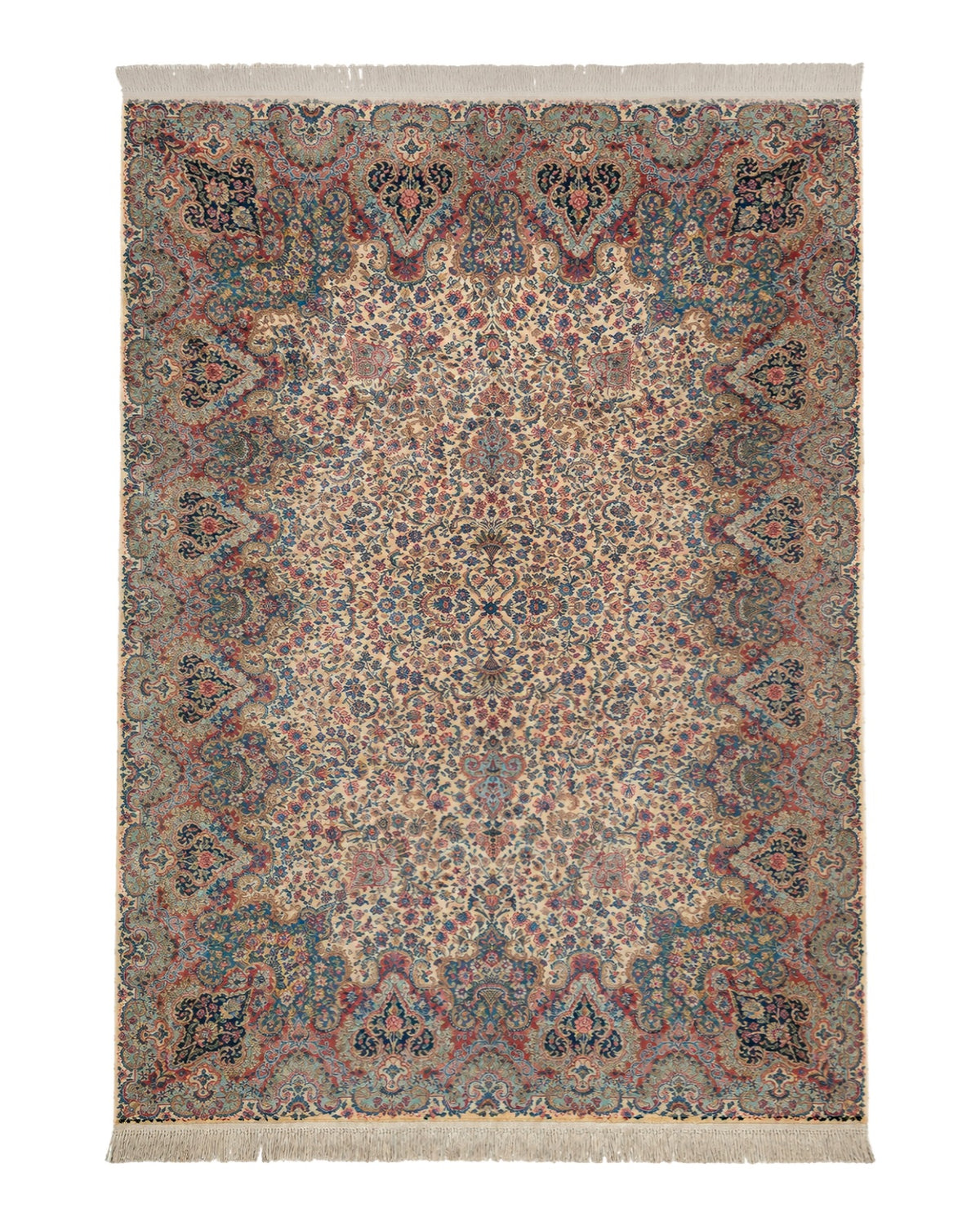
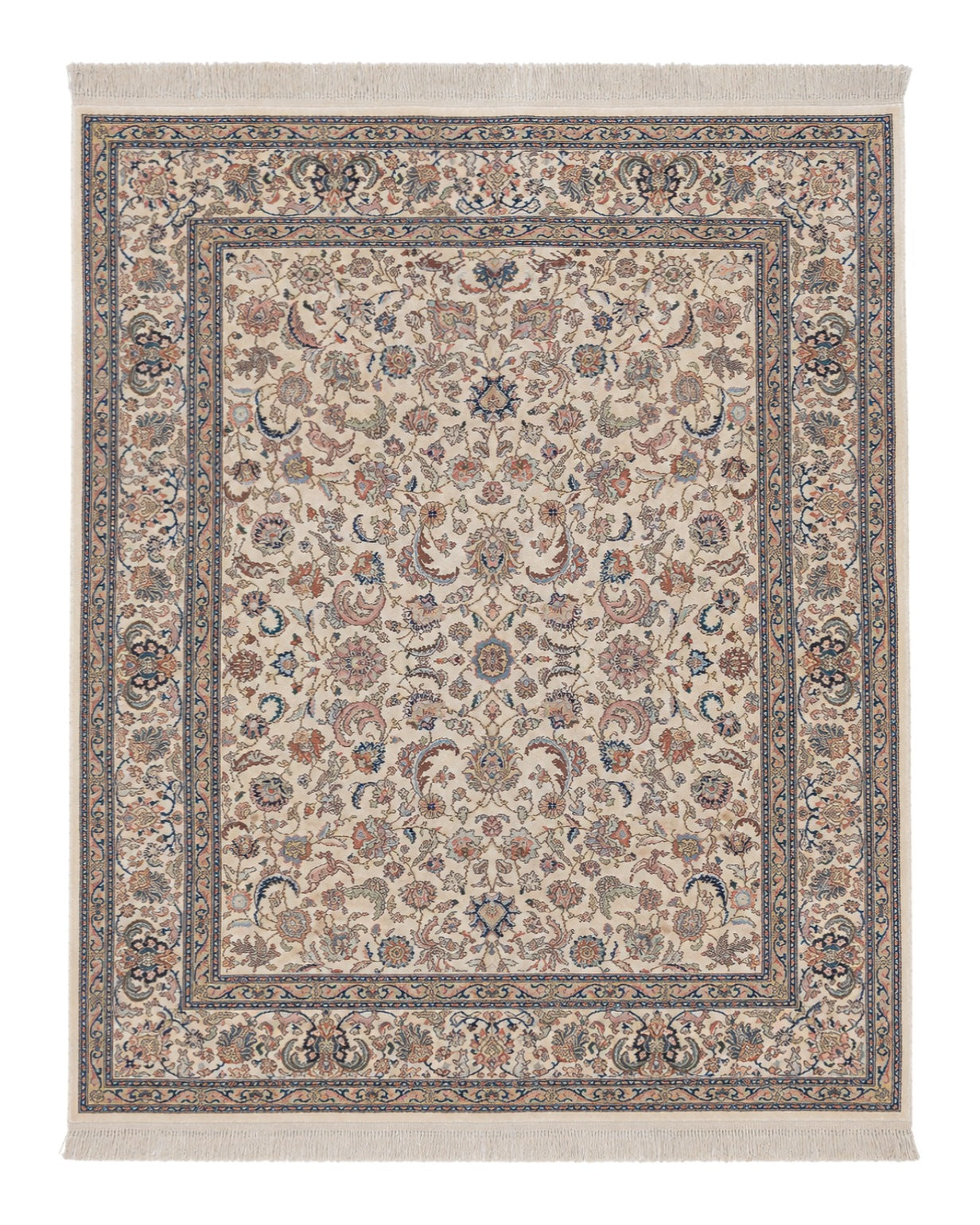
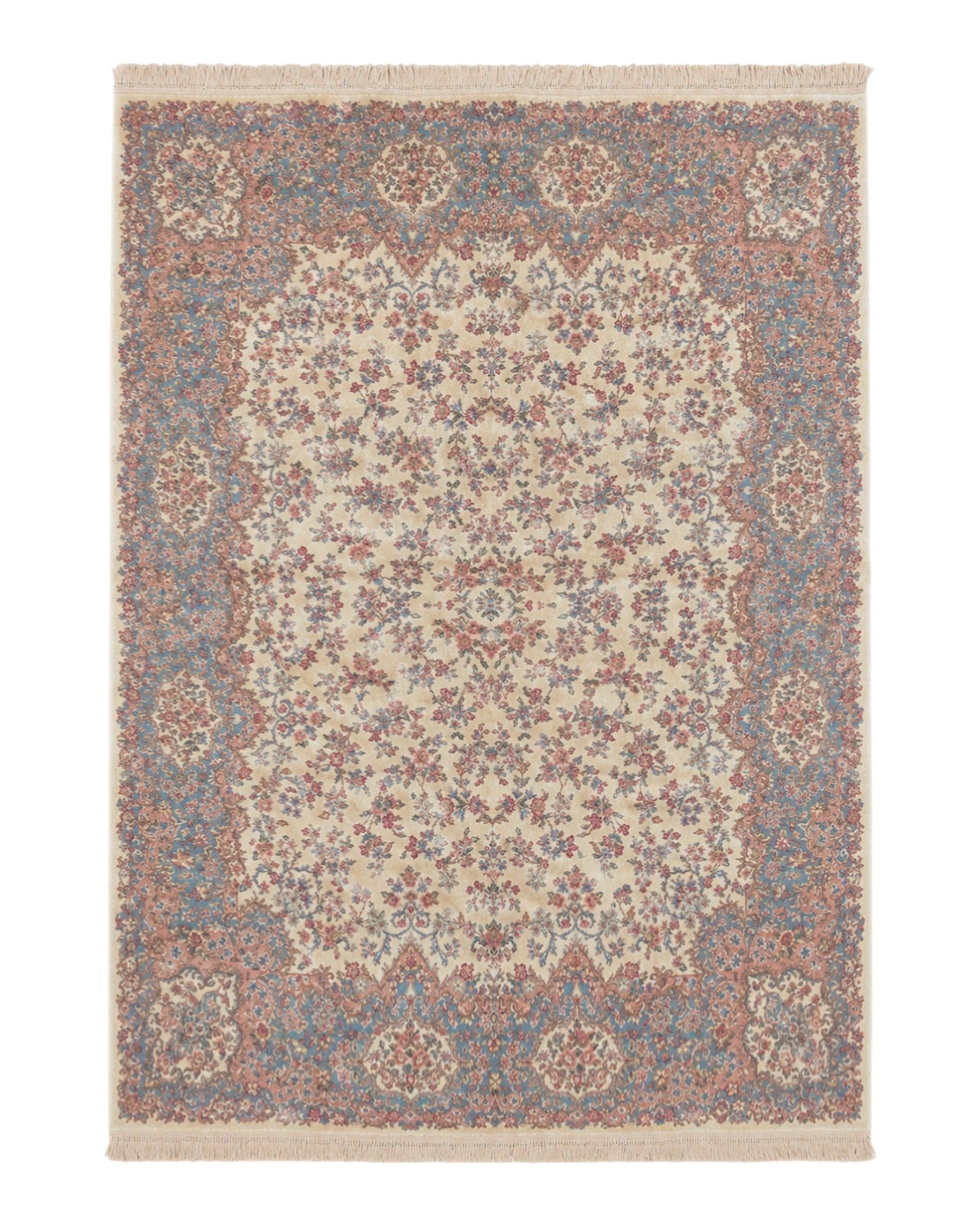
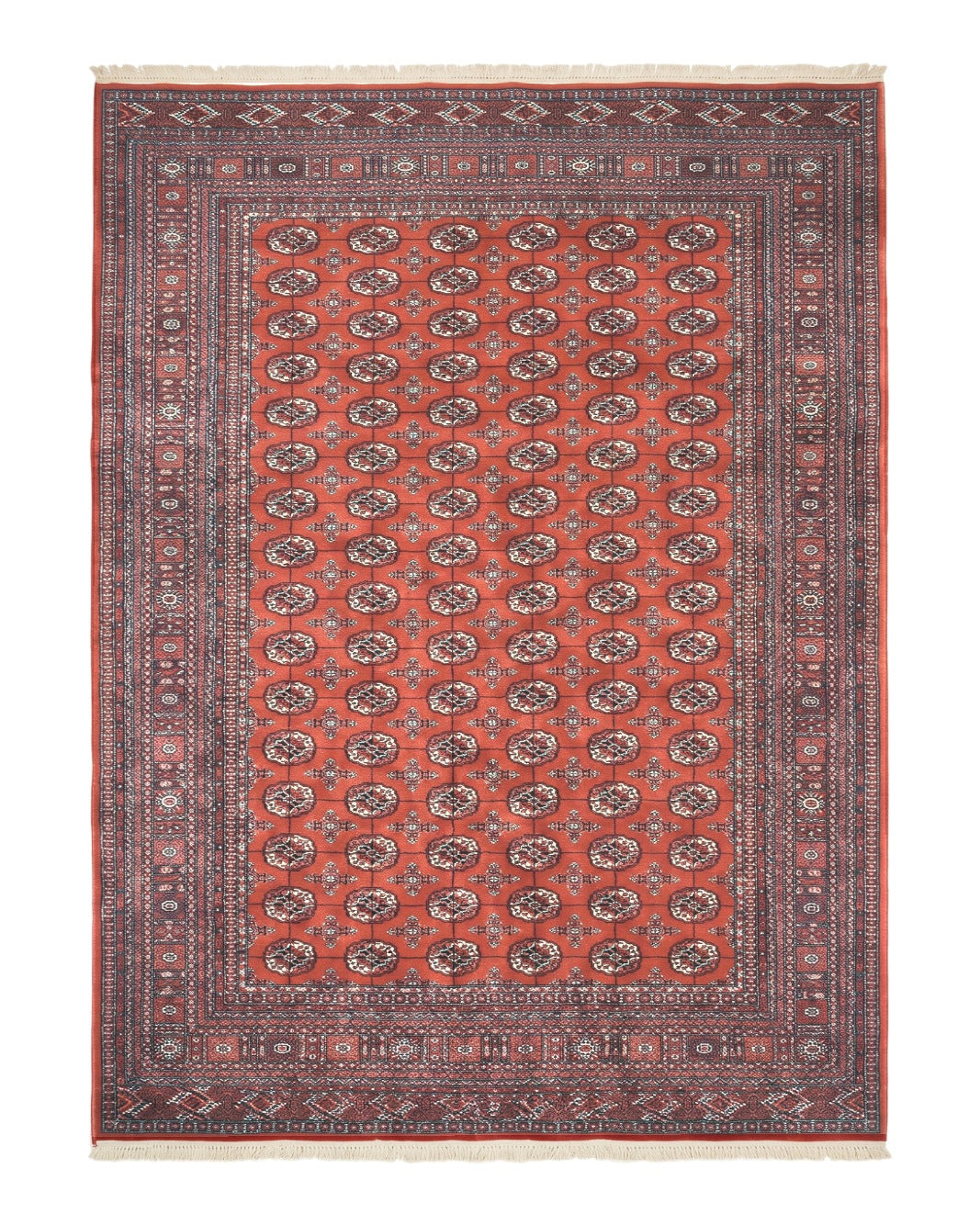
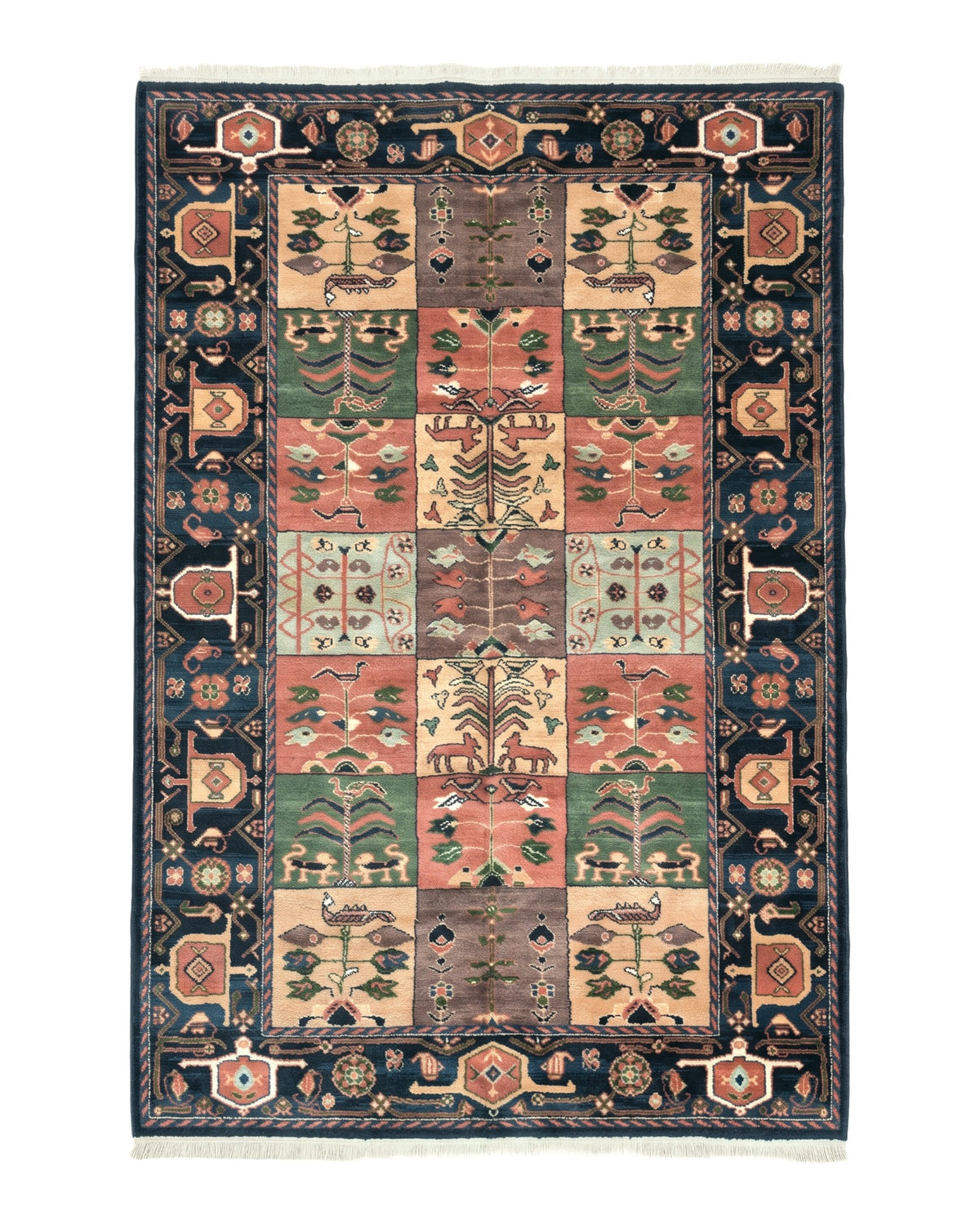
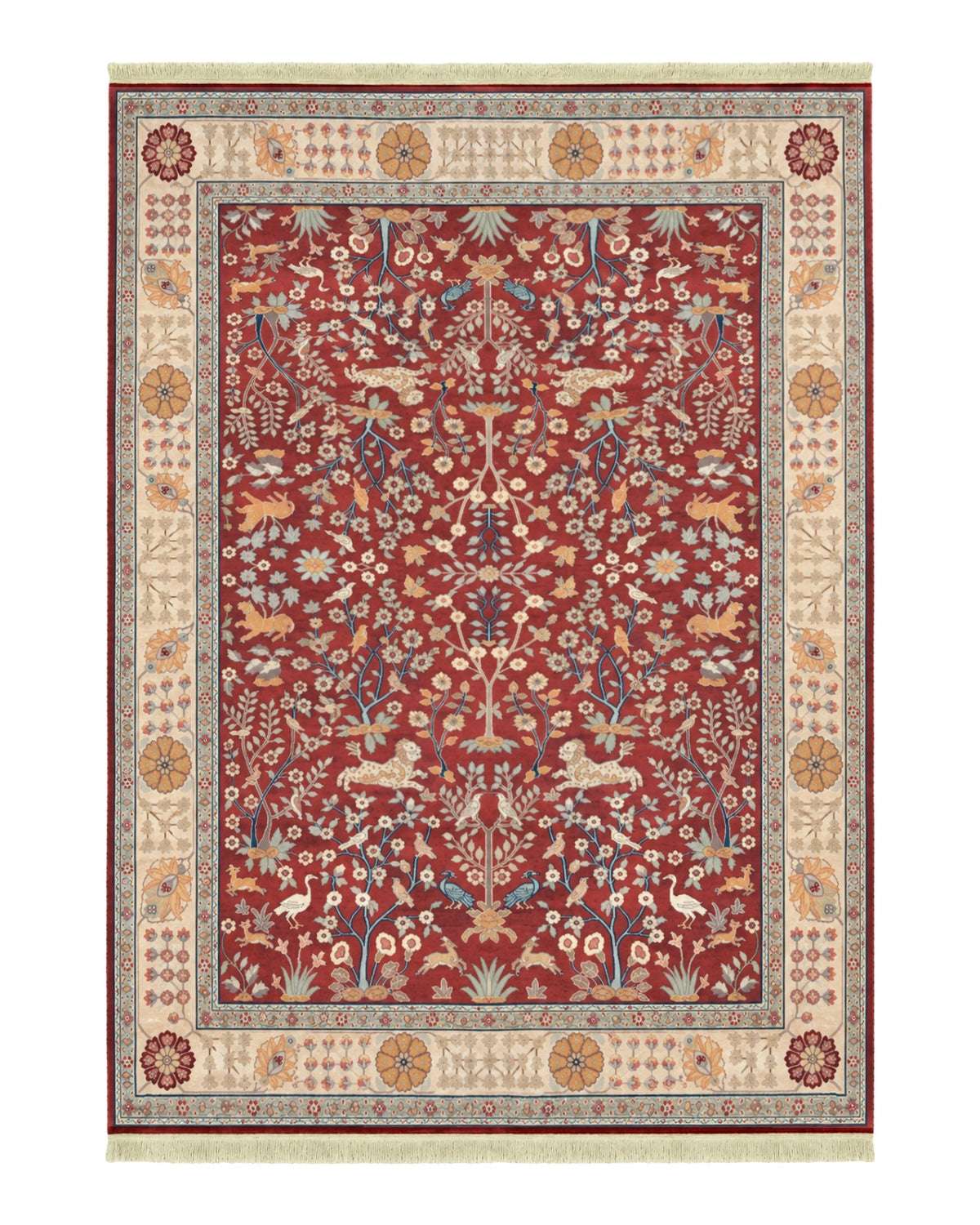
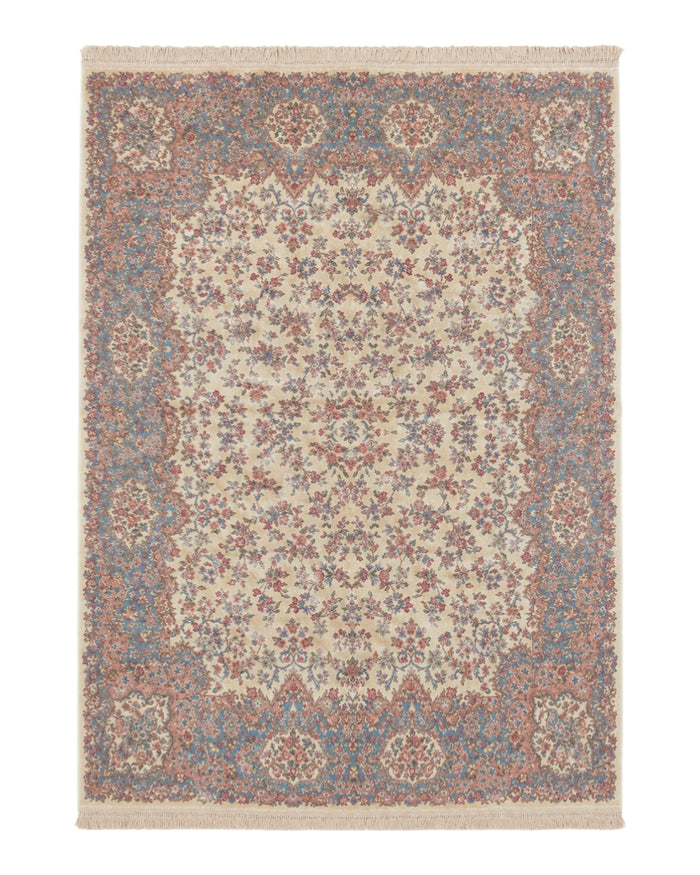
Karastan rugs are wool rugs woven on power looms in Leaksville (now Eden), North Carolina, in designs drawn from Persian, Turkish, Turkoman and Chinese rugs. First made in 1928, they were among the first machine-made rugs to capture the look of a hand-knotted Oriental rug, down to a pattern that shows clearly on the back. For more than ninety years they were a fixture of American homes, and vintage Karastans are now collected in their own right. This guide explains what a Karastan is and how the many designs and collections fit together, and it links to a full entry on each.
| Made in | Leaksville (now Eden), North Carolina, USA |
|---|---|
| First rug | 1928 |
| Construction | Woven on adapted Axminster power looms; not hand-knotted |
| Pile | Worsted wool |
| Hallmark | The design is woven through to the back |
| Classic line | The Original Collection, or 700 Series |
| Wool rugs made until | 2021, when wool weaving at Eden ended |
What a Karastan is
A Karastan is a machine-woven rug, but not an ordinary one. The mill adapted the Axminster loom, a power loom that inserts each tuft of colored yarn separately, so that it could weave dense worsted-wool pile in many colors, with the pattern carried through to the back much as on a hand-knotted rug. The finished rugs were washed to soften their colors and give them the gentle sheen of an older Oriental rug. The result was a durable, faithful version of a famous Persian design at a price most American families could afford. See How a Karastan Is Made.
A short history
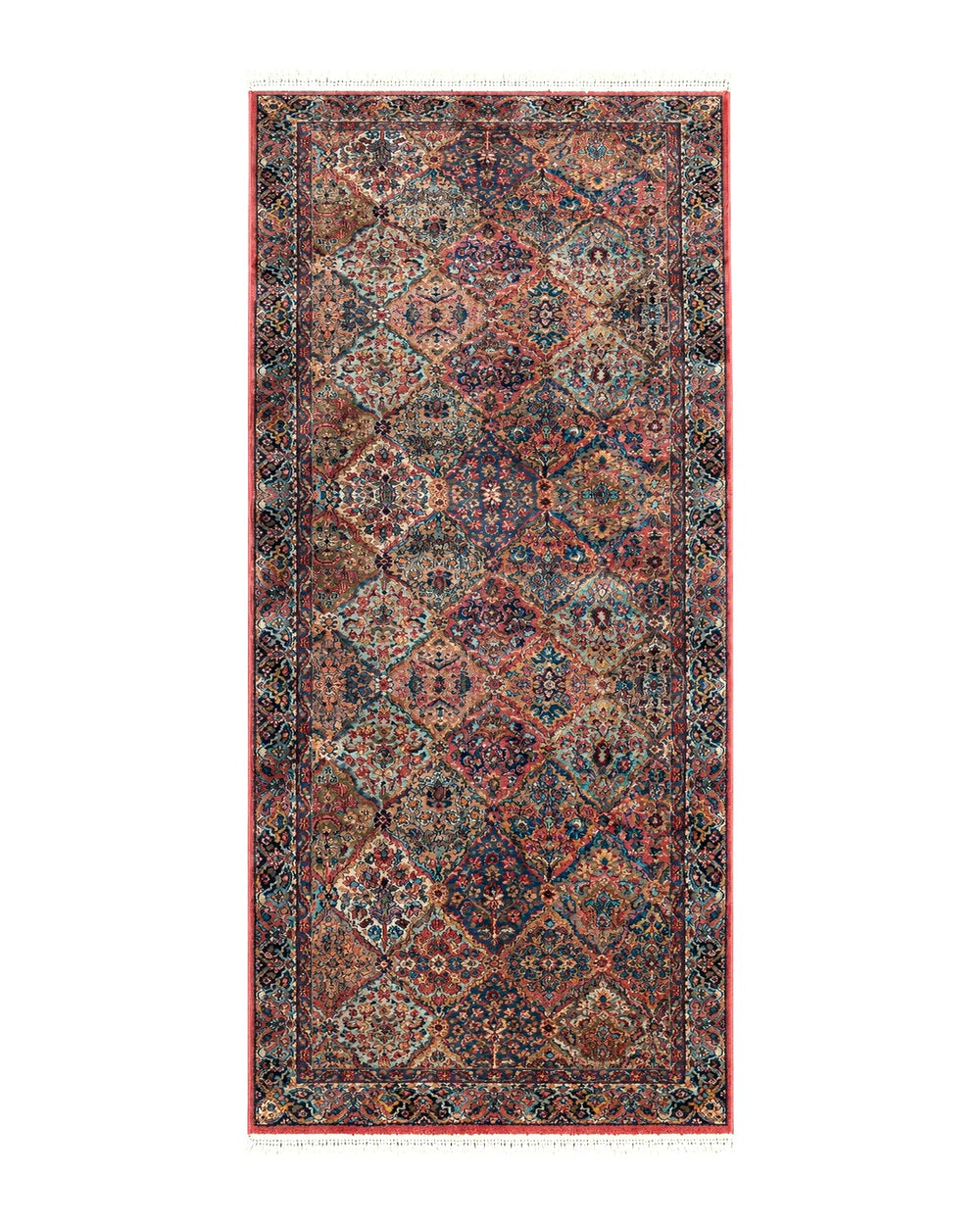
The mill at Leaksville belonged to Marshall Field & Company, the Chicago department store. The first Karastan was woven in 1928, and at the Chicago World's Fair of 1933 and 1934 a Karastan was laid where millions of visitors walked across it, earning the name "the Wonder Rug of America." In 1937 the company introduced pattern #717, the Multicolor Panel Kirman, which became its best-selling design for decades. The mill later became part of Fieldcrest and, from 1993, of Mohawk Industries, which ended wool rug weaving at Eden in 2021 (see Does Karastan Still Make Wool Rugs?). See The History of Karastan.
The Original Collection (700 Series)
Karastan's classic designs form the Original Collection, known by pattern numbers in the 700s. Most are named after the Persian rugs that inspired them, and they fall into a few families:
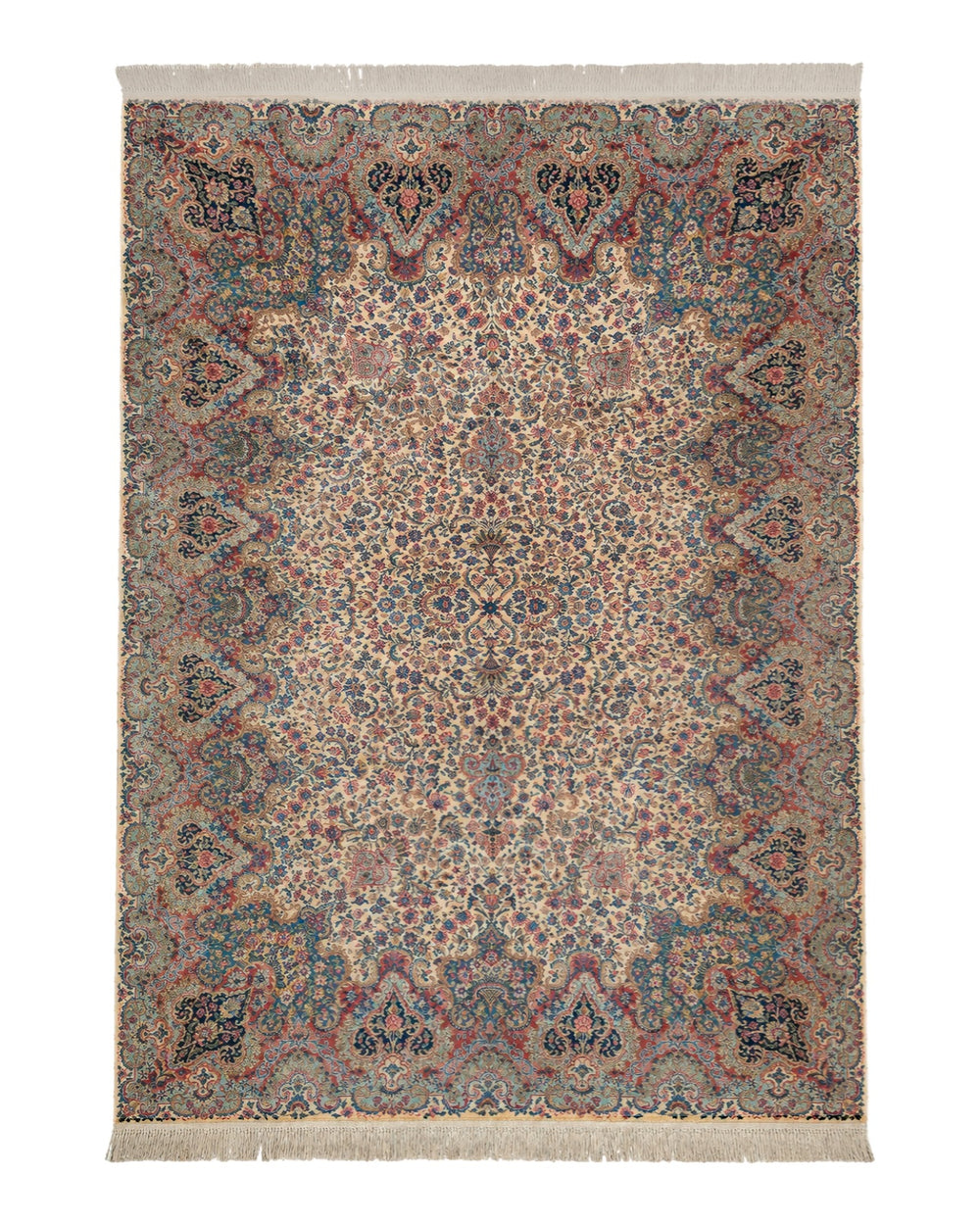
- Kirman designs, including #717 Multicolor Panel Kirman, #762 Red Medallion Kirman and #788 Ivory Kirman. See Karastan Kirman Rugs and Karastan #717.
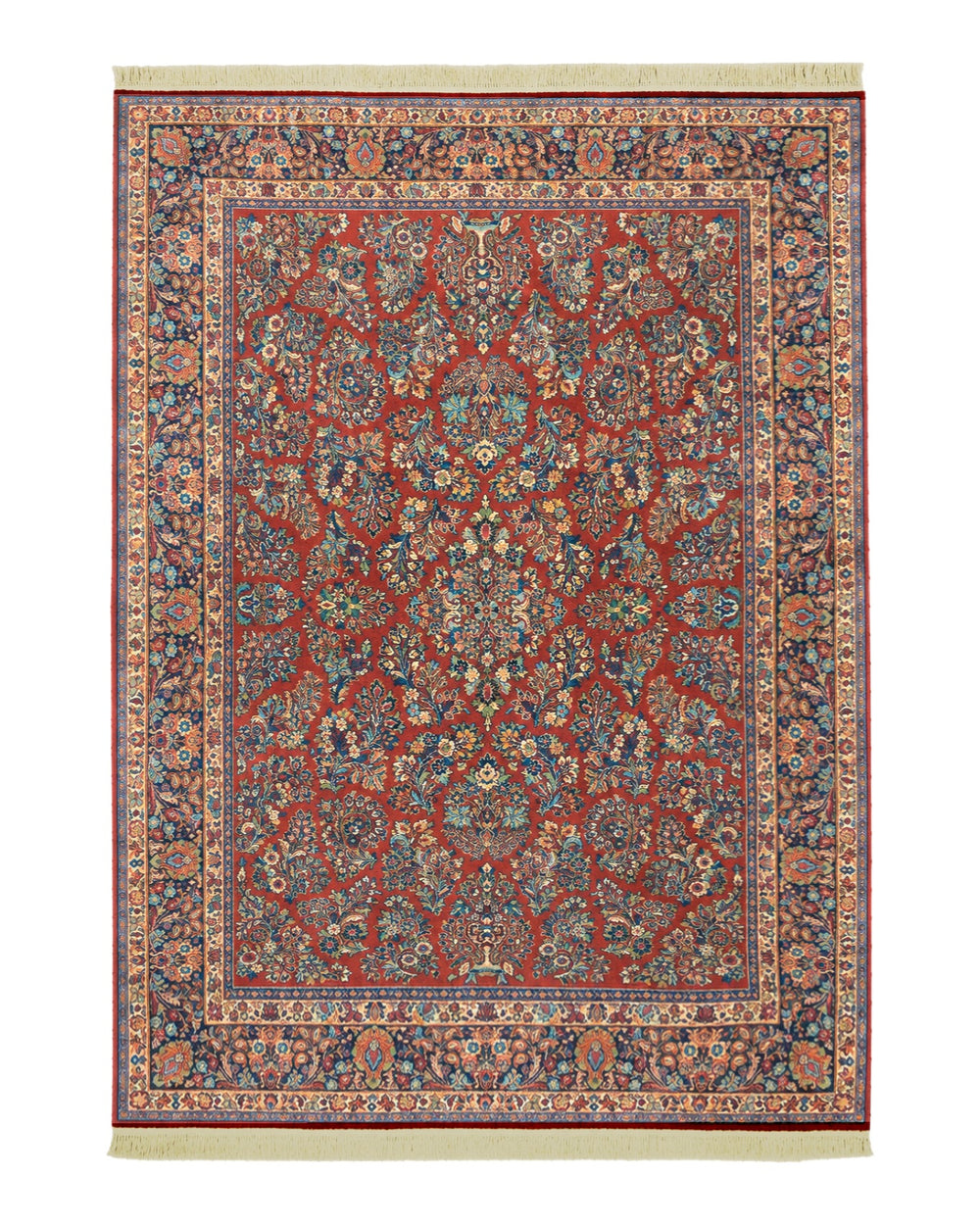
- Sarouk designs, including #785 Red Sarouk and #760 Ivory Sarouk. See Karastan Sarouk Rugs.
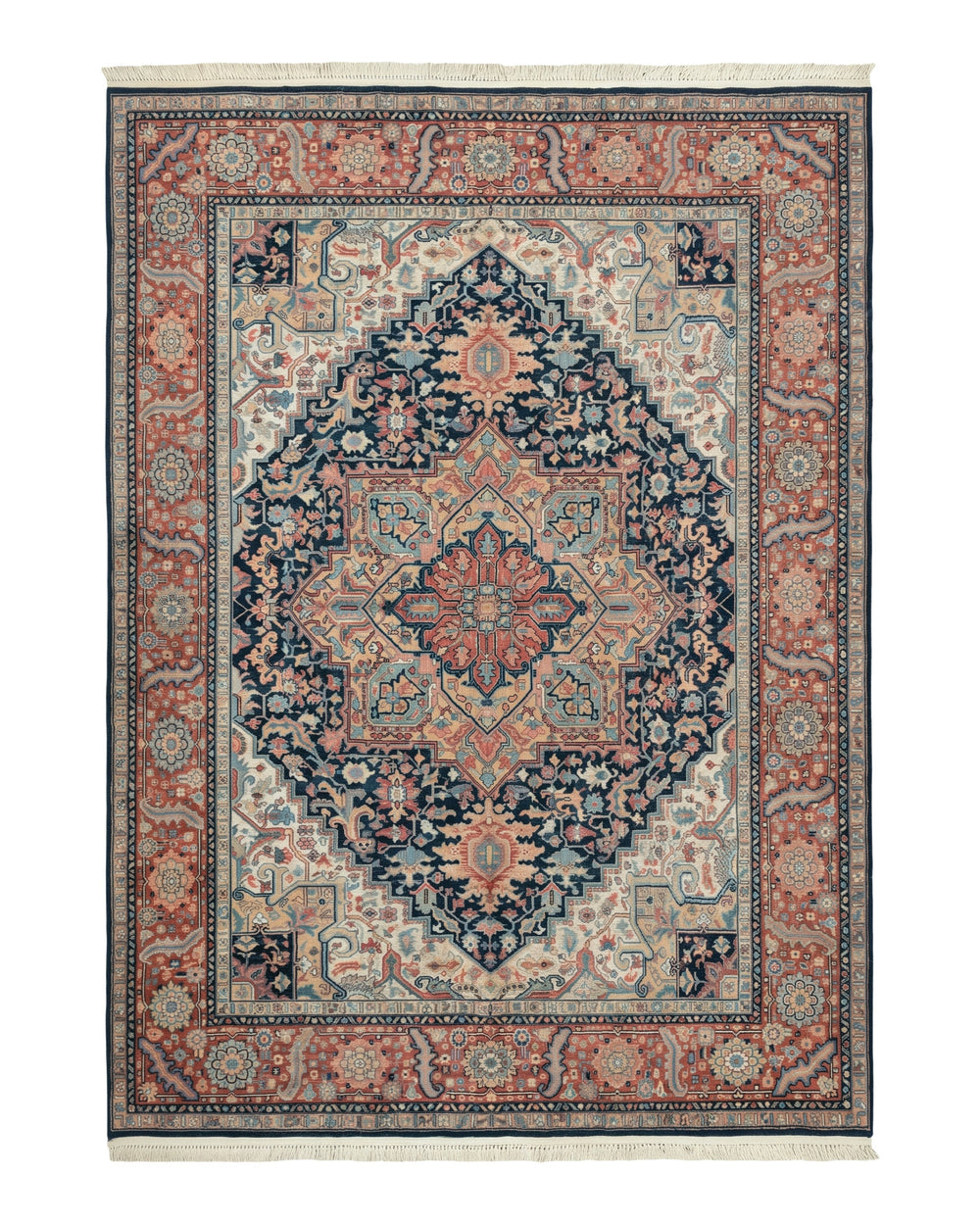
- Heriz designs, including #700/701 Navy Heriz and #726 Heriz. See Karastan Heriz Rugs.
- Serapi designs, including #736 Medallion Serapi. See Karastan Serapi Rugs.
- Tabriz designs, including #738 Tabriz. See Karastan Tabriz Rugs.
- Pictorial and other designs, including #723 Persian Hunting, #737 Bergama, #735 Bijar and #722 Bokhara. See Karastan #723 and Other 700 Series Designs.
For an overview of the whole series, see The Karastan Original Collection.
Later collections
Over the decades Karastan added many named collections, each with its own numbering:
- Williamsburg: designs adapted from antique rugs in the collections of Colonial Williamsburg.
- Garden of Eden (509 series): floral, trellis and Savonnerie-inspired designs.
- Antique Legends (2200 series): designs based on antique rugs, in softened colors.
- Samovar Teawash (900 series): designs with a tea-washed, aged look.
- Chahar Mahal (600 series): Persian village and garden designs.
- English Manor: designs in the English country-house tradition.
- Smaller lines such as Classic Traditions, Persian Renaissance and Yuruk. See Other Karastan Collections.
Two related labels were sold under the Karastan name: Kara Shah, power-loomed in Belgium, and the mid-century Lanamar line.
Reading the label
Most Karastans carry a cloth label on the back giving the Karastan name and a pattern number. The number identifies both the collection and the design: #700/717, for example, is design 717 of the Original Collection, and 509/1733 is design 1733 of the Garden of Eden collection. See Karastan Pattern Numbers Explained and How to Identify and Date a Vintage Karastan.
Buying and living with a Karastan
A well-kept Karastan can give many decades of service. Value depends on the design, the era, the size, the colors and, above all, the condition. Karastans also came in their own range of sizes, some of which are now hard to find. See What a Vintage Karastan Is Worth, Karastan Sizes and Runners, Caring for a Karastan Rug and Karastan vs. Hand-Knotted Persian Rugs.