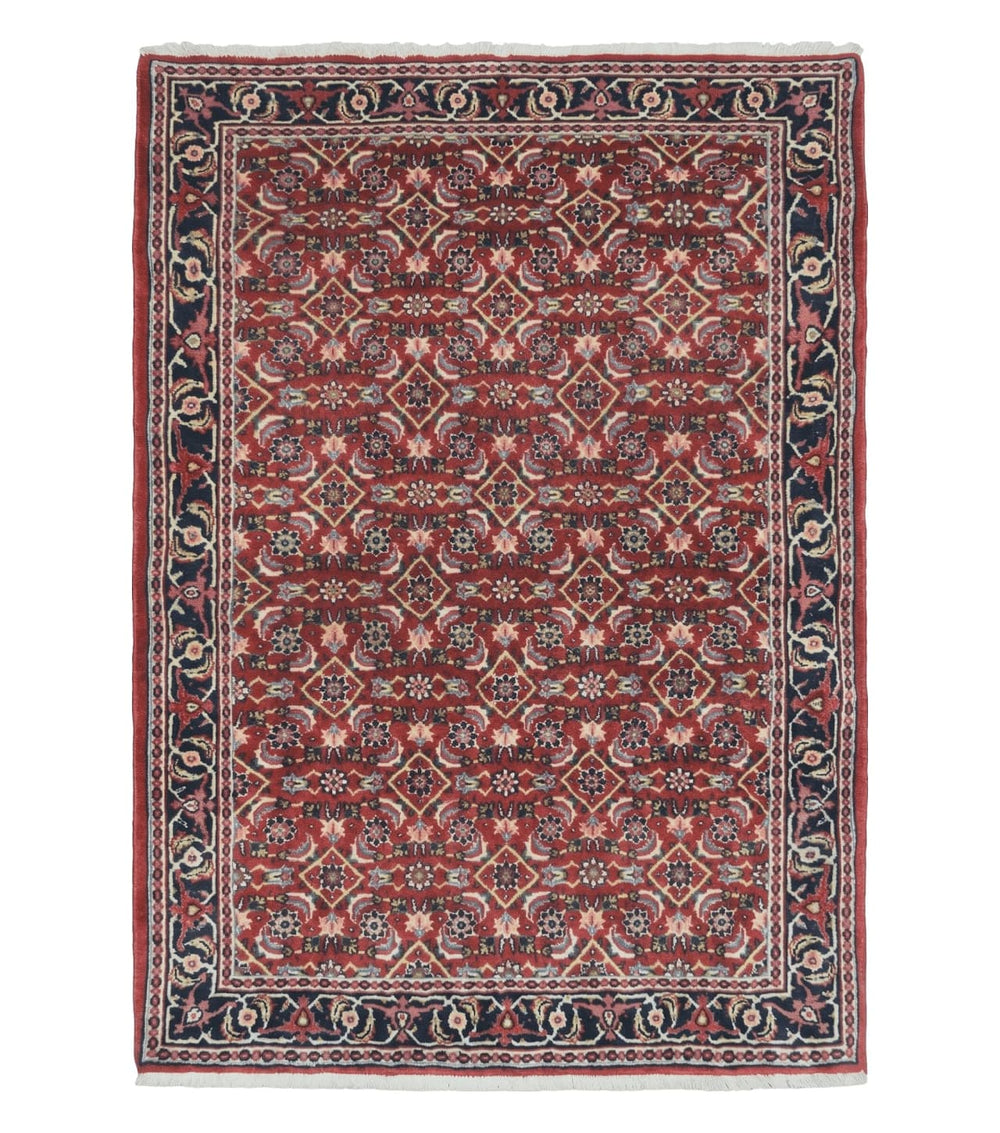
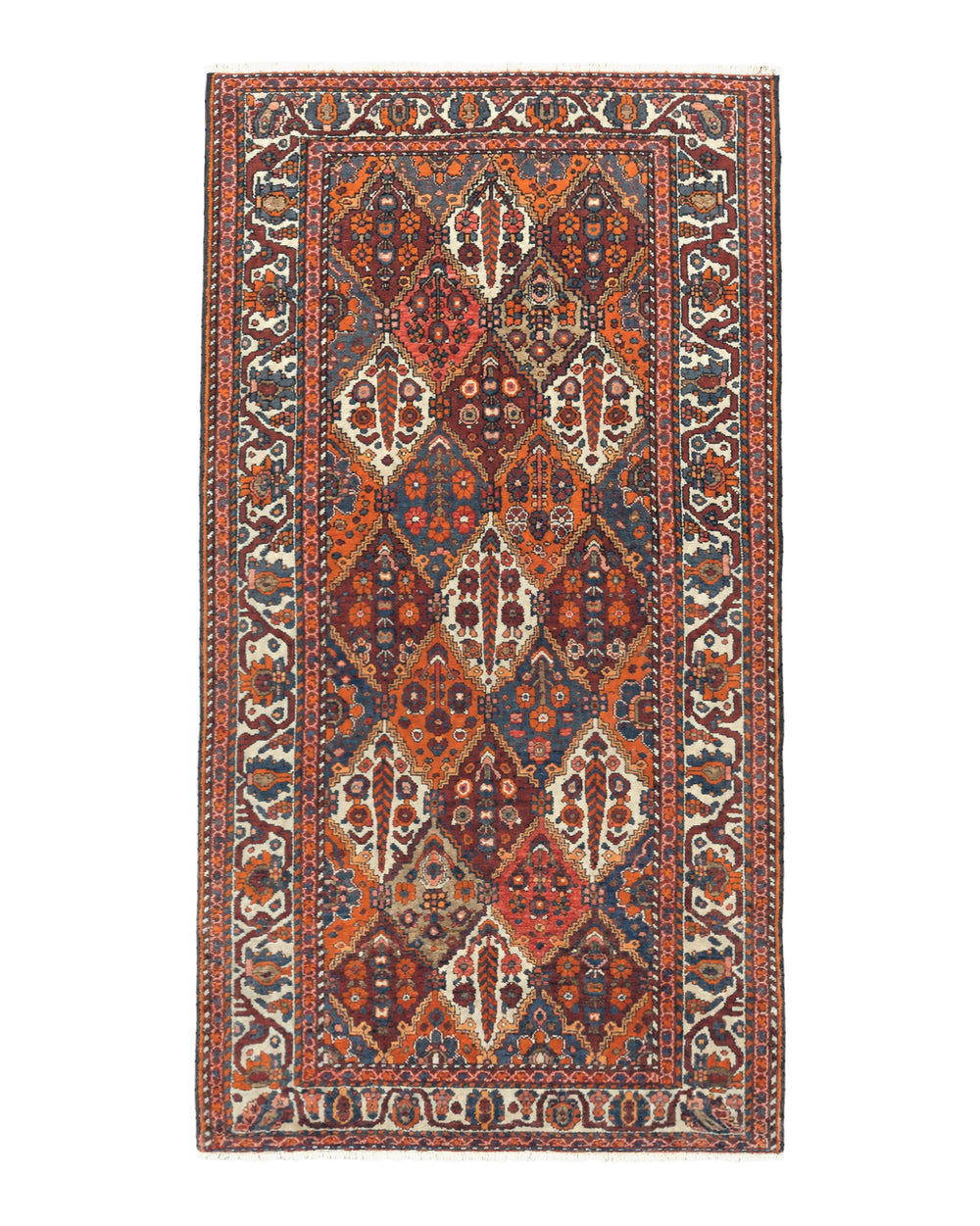
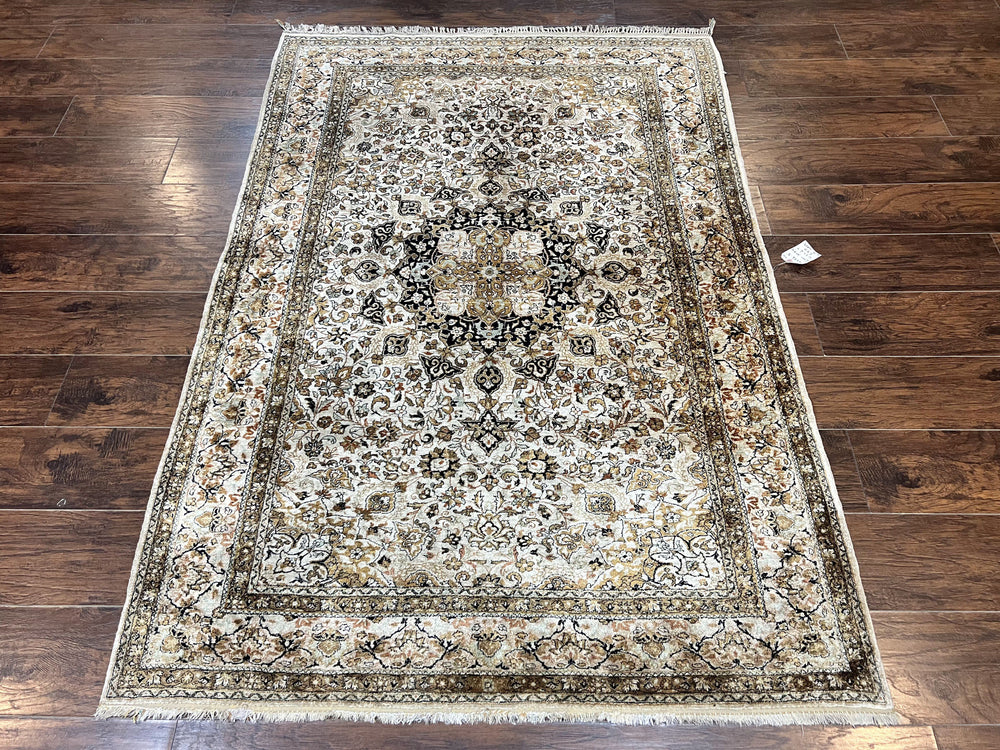
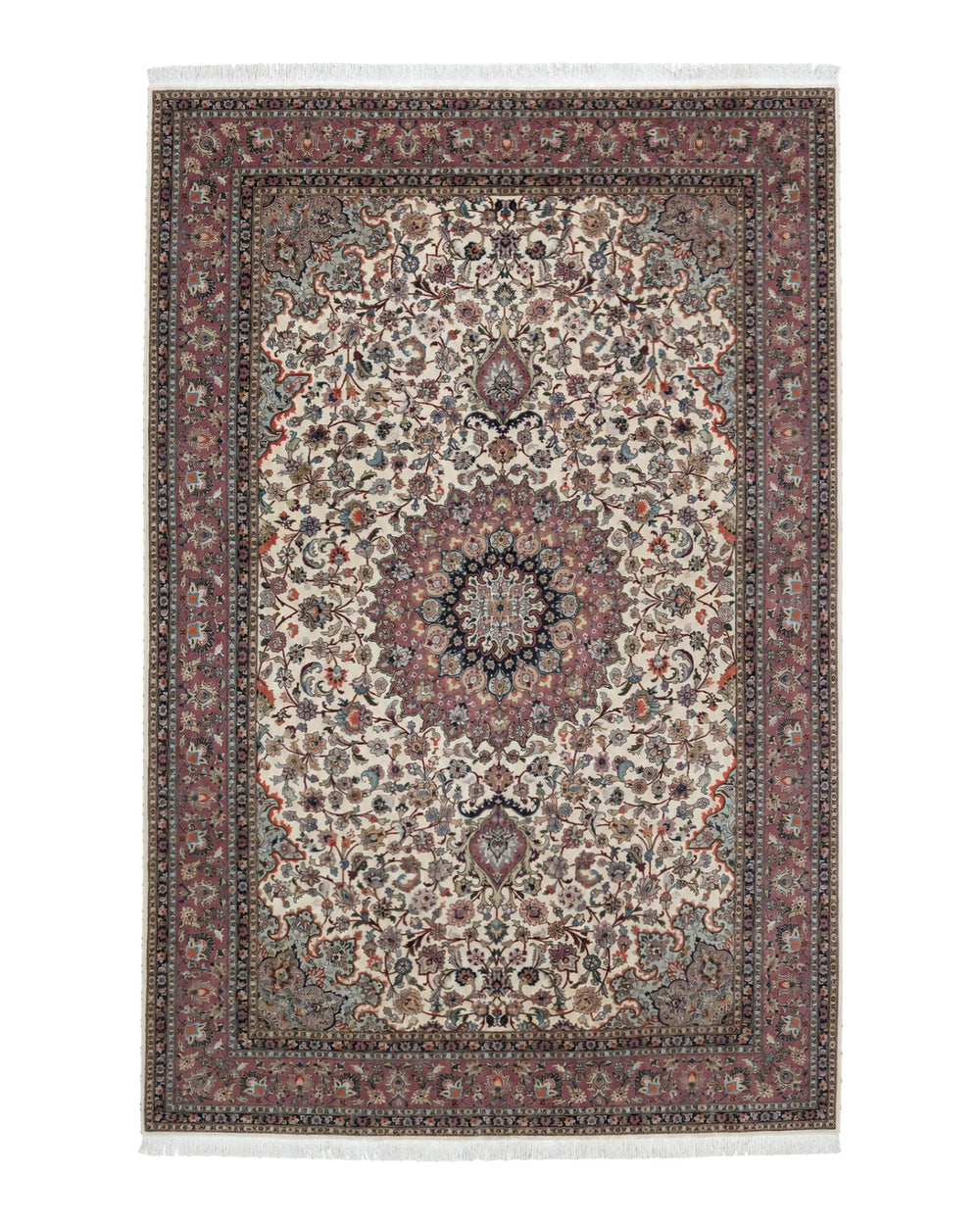
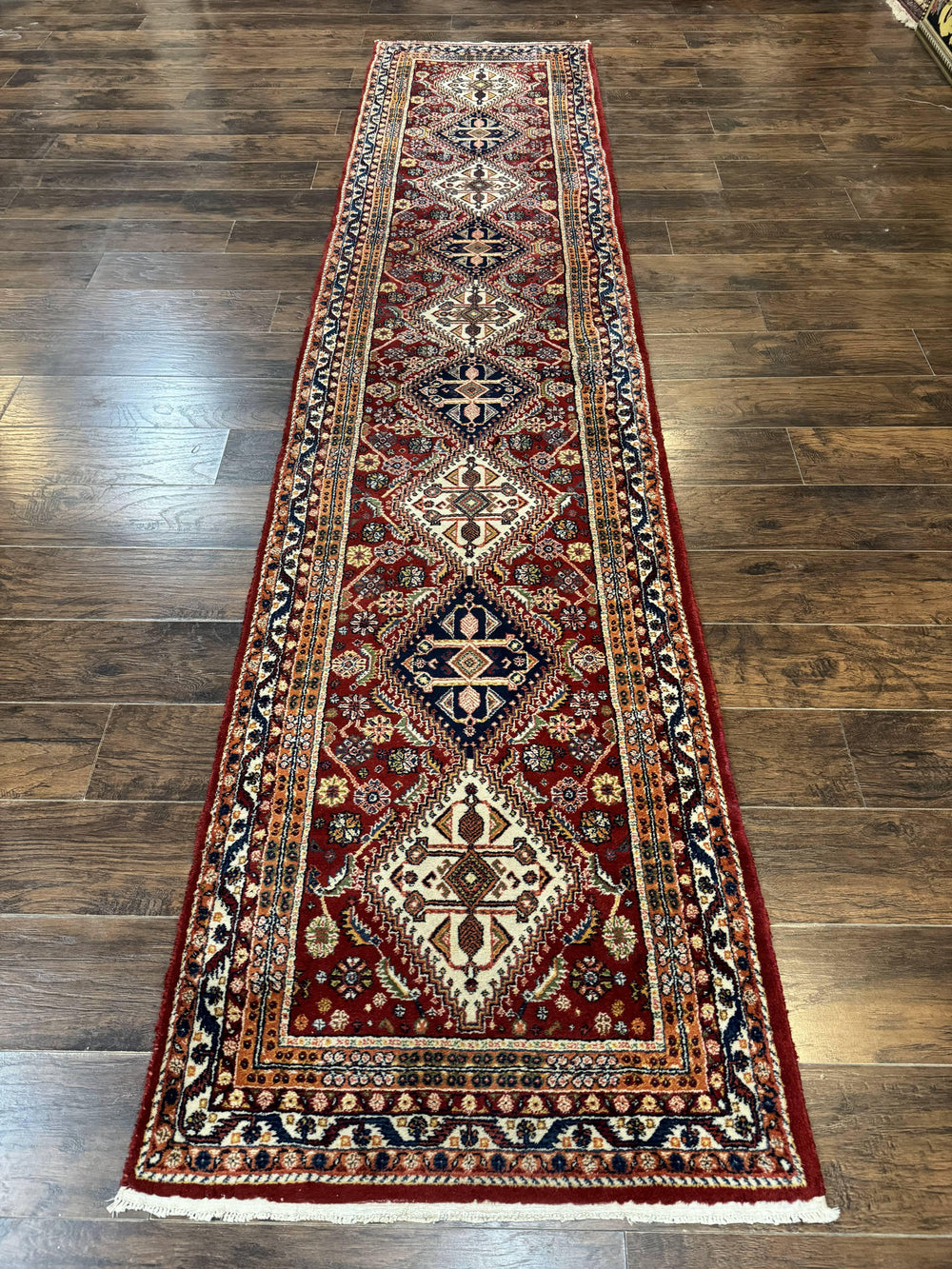
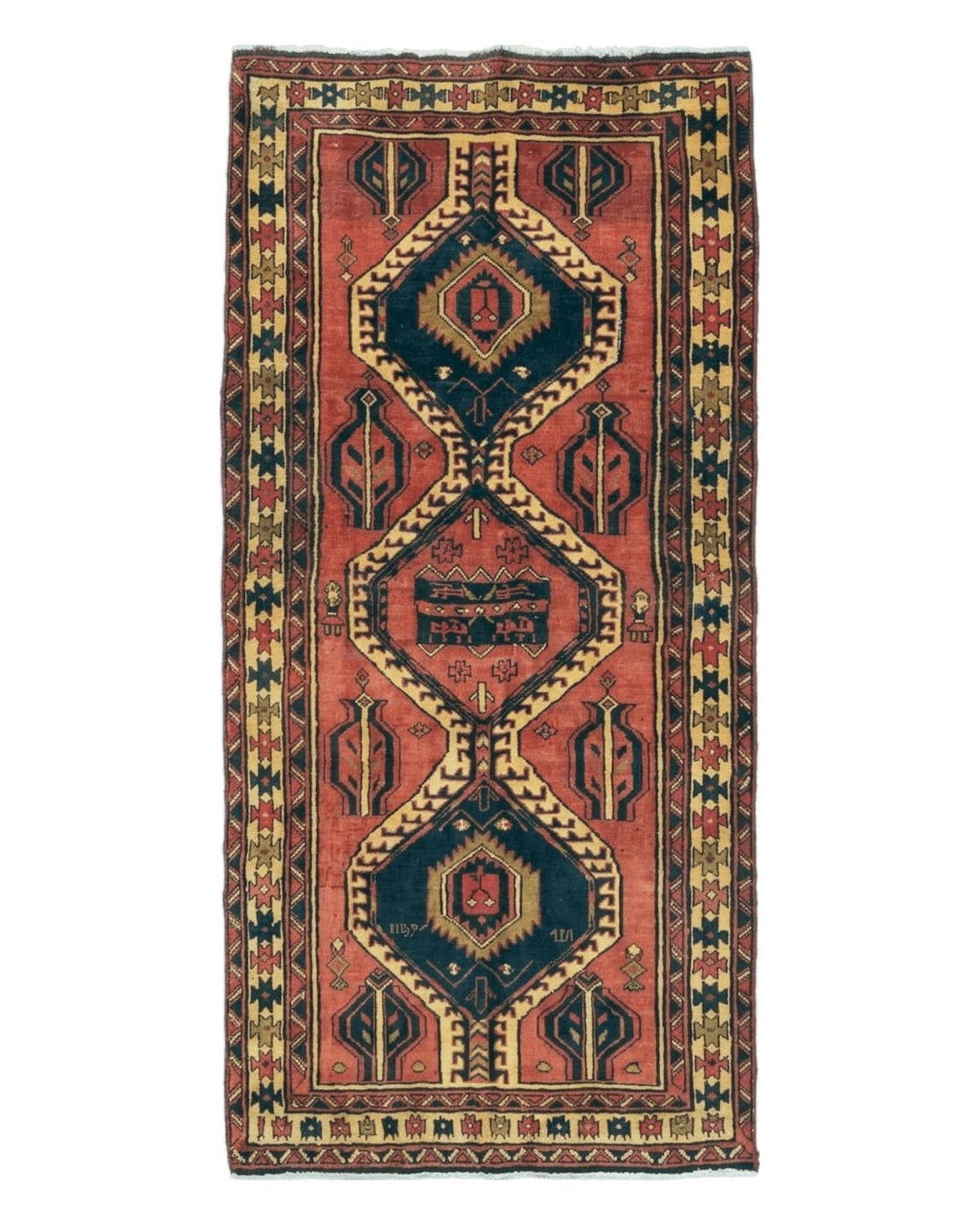
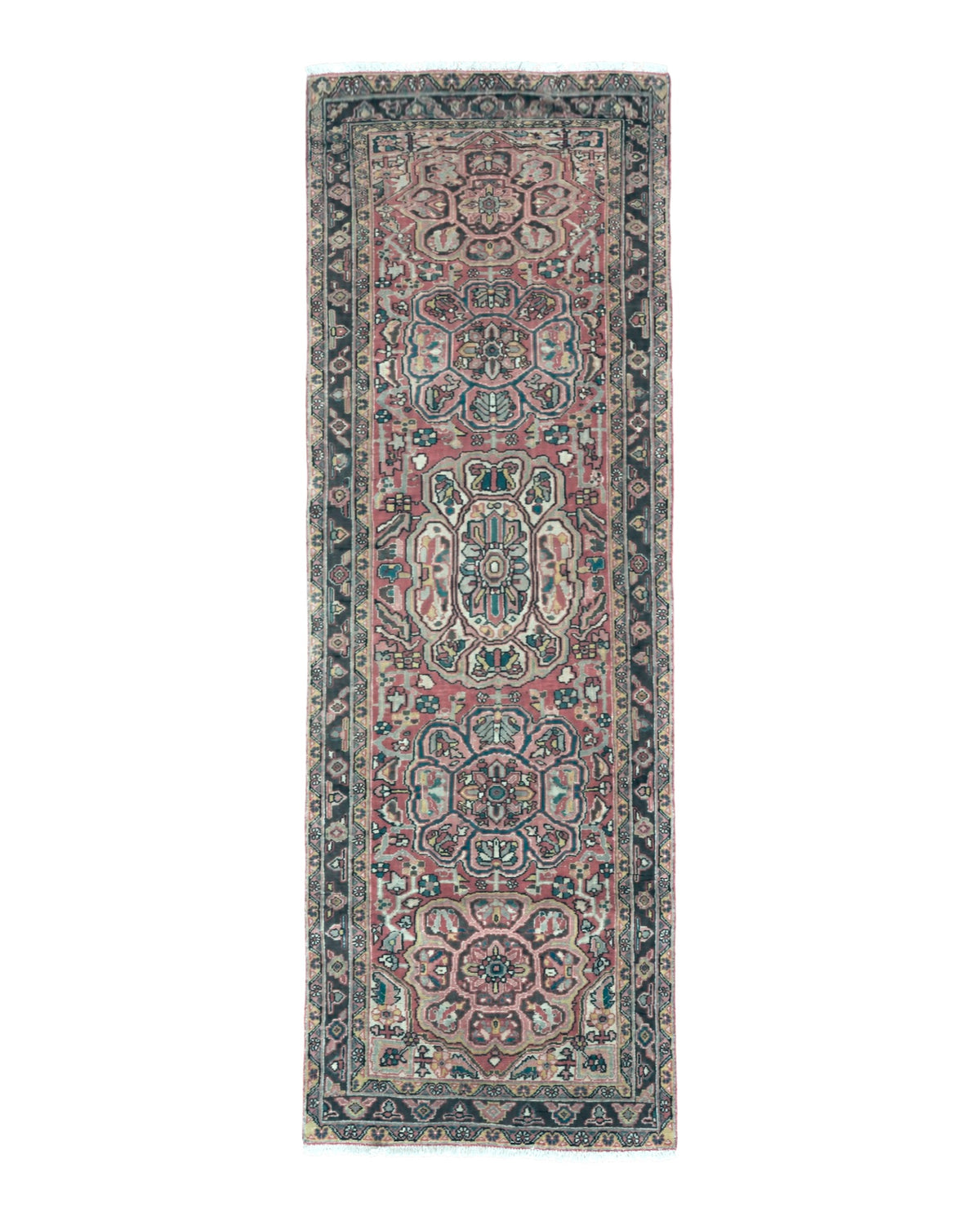
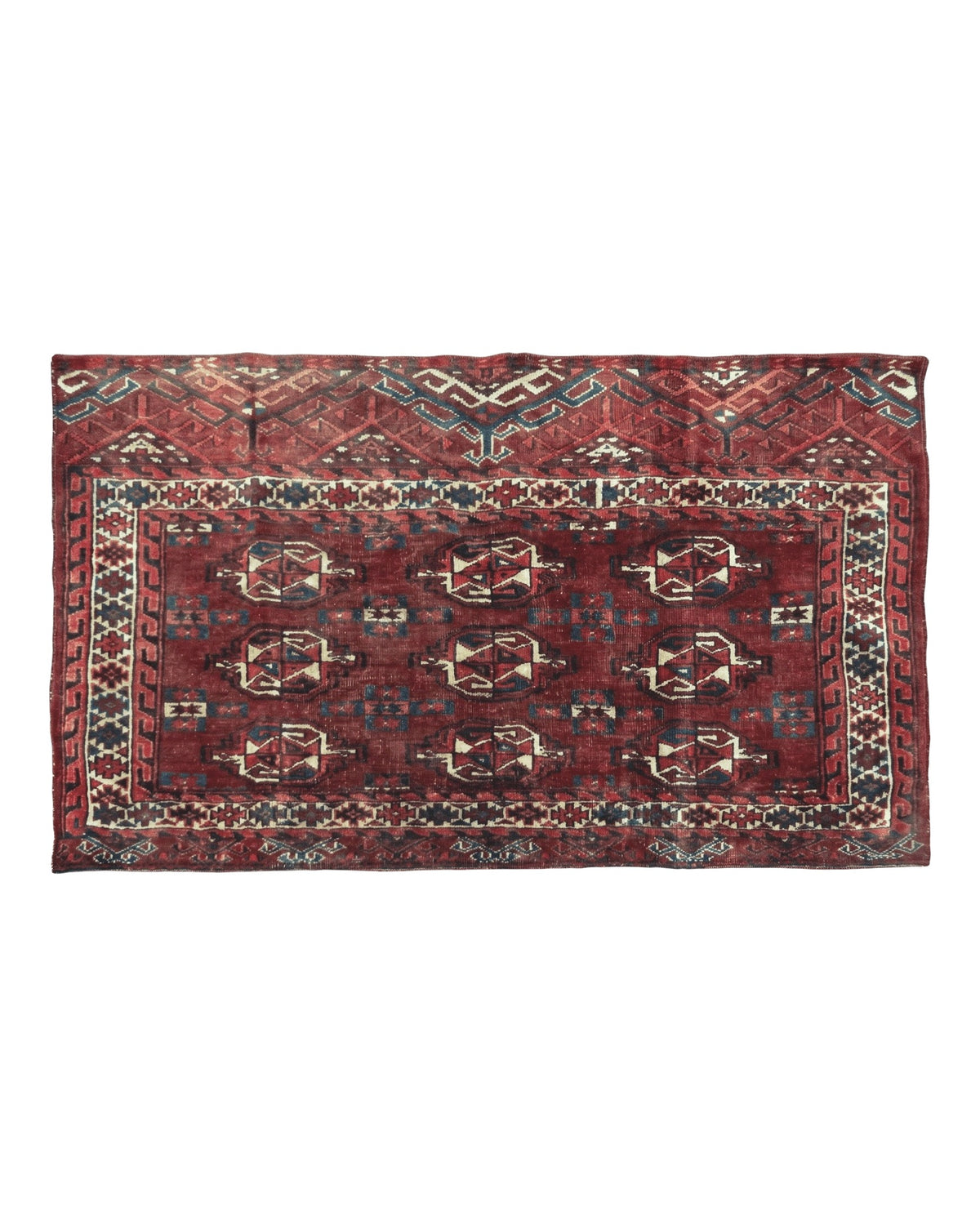
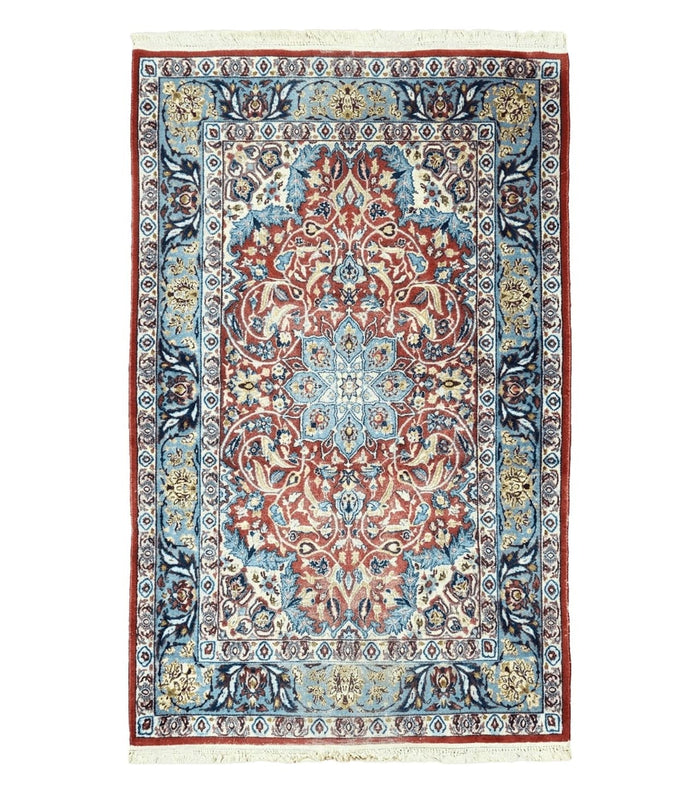
A Persian rug is a hand-knotted pile rug woven in Iran, the country historically known as Persia. Each one is made knot by knot on a loom, usually from wool on a cotton foundation, and takes weeks to years to finish depending on its size and fineness. Persian rugs are named after the town, village or tribe that wove them, such as Tabriz, Heriz or Qashqai, and each name brings its own designs, colors and construction.
| Where | Iran (historically Persia) |
|---|---|
| How | Hand-knotted pile, tied knot by knot on a loom |
| Usual materials | Wool pile on a cotton foundation; also silk, and wool on wool for many tribal rugs |
| Knots | Asymmetric (Persian) or symmetric (Turkish), depending on the region |
| Named after | The town, village or tribe that wove it |
| Three traditions | City (workshop), village and tribal |
What makes a rug "Persian"
Two things define a Persian rug: where it was woven and how it was made. It must be woven in Iran, and it must be hand-knotted, meaning each tuft of pile is a separate knot tied around the foundation threads by hand.
The word is also used loosely. Rugs woven in India, Pakistan or China in traditional Persian designs are often sold as "Persian-style" or named Indo-Persian, Pak-Persian or Sino-Persian. These can be beautiful, well-made rugs, but they are a different thing from a rug woven in Iran. Our entry on Indo-Persian, Sino-Persian and Pak-Persian rugs explains these names.
A short history
Carpet weaving in Persia goes back well over two thousand years. The oldest surviving knotted pile carpet, the Pazyryk carpet, dates to around the 5th century BC; it was found in a frozen burial mound in Siberia, and its designs are often linked to the Persian world of its time.
The art reached its height under the Safavid dynasty in the 16th and 17th centuries. Shahs sponsored royal workshops in cities such as Isfahan, Kashan, Tabriz and Kerman, where court artists drew the designs and master weavers knotted them in wool and silk. Many of the medallion, floral and garden designs still woven today trace back to this period.
In the late 19th century, demand from Europe and America brought a great revival. Merchants in Tabriz and elsewhere organized production for export, and many of the antique rugs found today, Heriz, Sarouk, Kashan and Tabriz among them, date from this era and the decades after it.
How a Persian rug is made
Every Persian rug starts with a set of warps, strong threads stretched vertically on a loom. The weaver ties a knot of colored yarn around a pair of warps, cuts it, and moves to the next pair, following a drawn pattern or working from memory. After each row of knots, one or more wefts are passed horizontally and beaten down to lock the knots in place. The cut ends of the knots form the pile, the soft surface you walk on, which is finally sheared to an even height.
A fine rug can have several hundred knots in every square inch. Even a skilled weaver ties only a few thousand knots a day, which is why a large, fine rug can take a team of weavers many months.
The main types of Persian rugs
For every type in one place, see Types of Persian Rugs: A Complete Guide. Persian rugs fall into three broad traditions, explained fully in City, Village and Tribal Rugs:
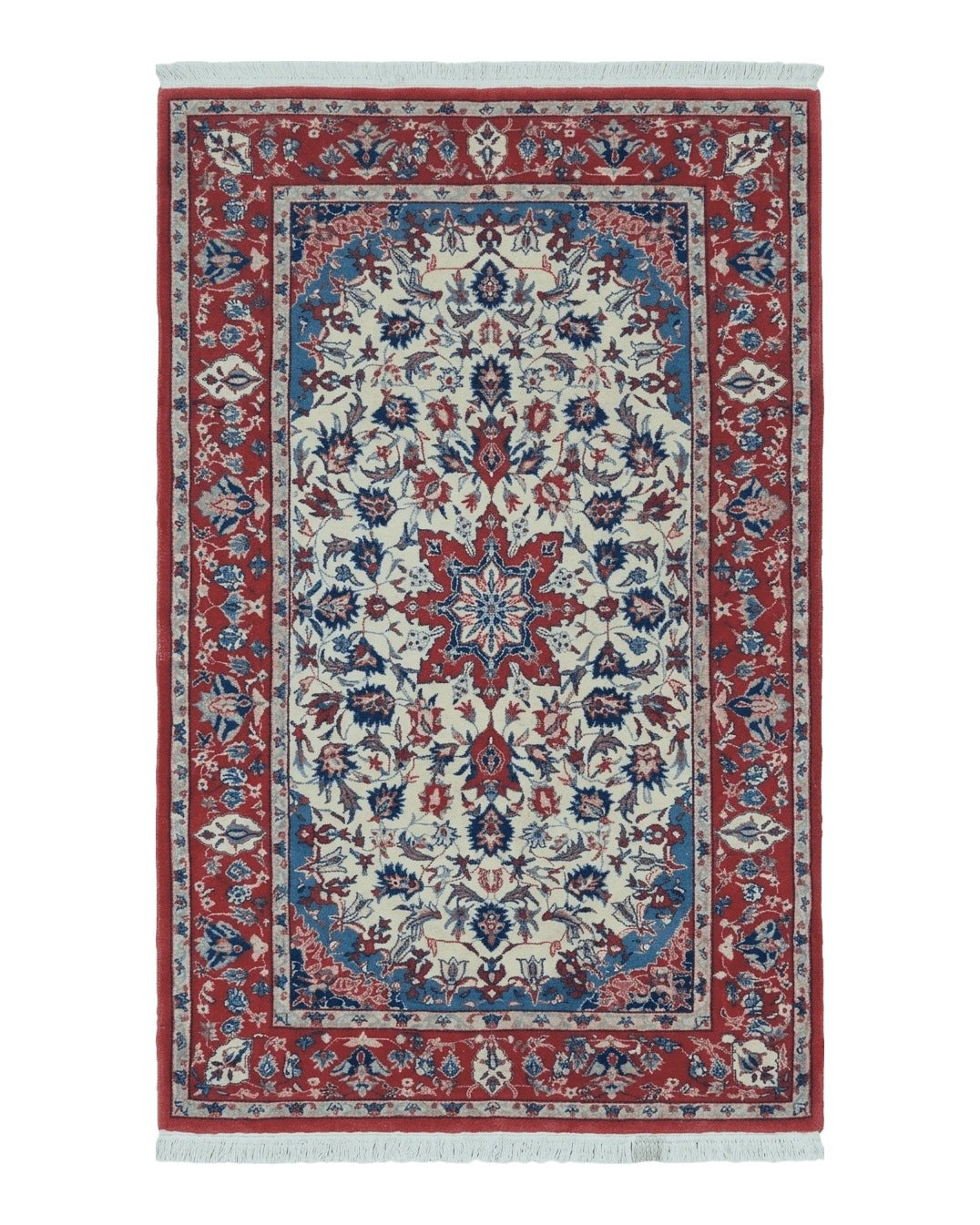
- City rugs are woven in urban workshops from a drawn design, often finely knotted with flowing floral patterns. Examples: Tabriz, Kashan, Isfahan, Nain, Qum and Kerman.
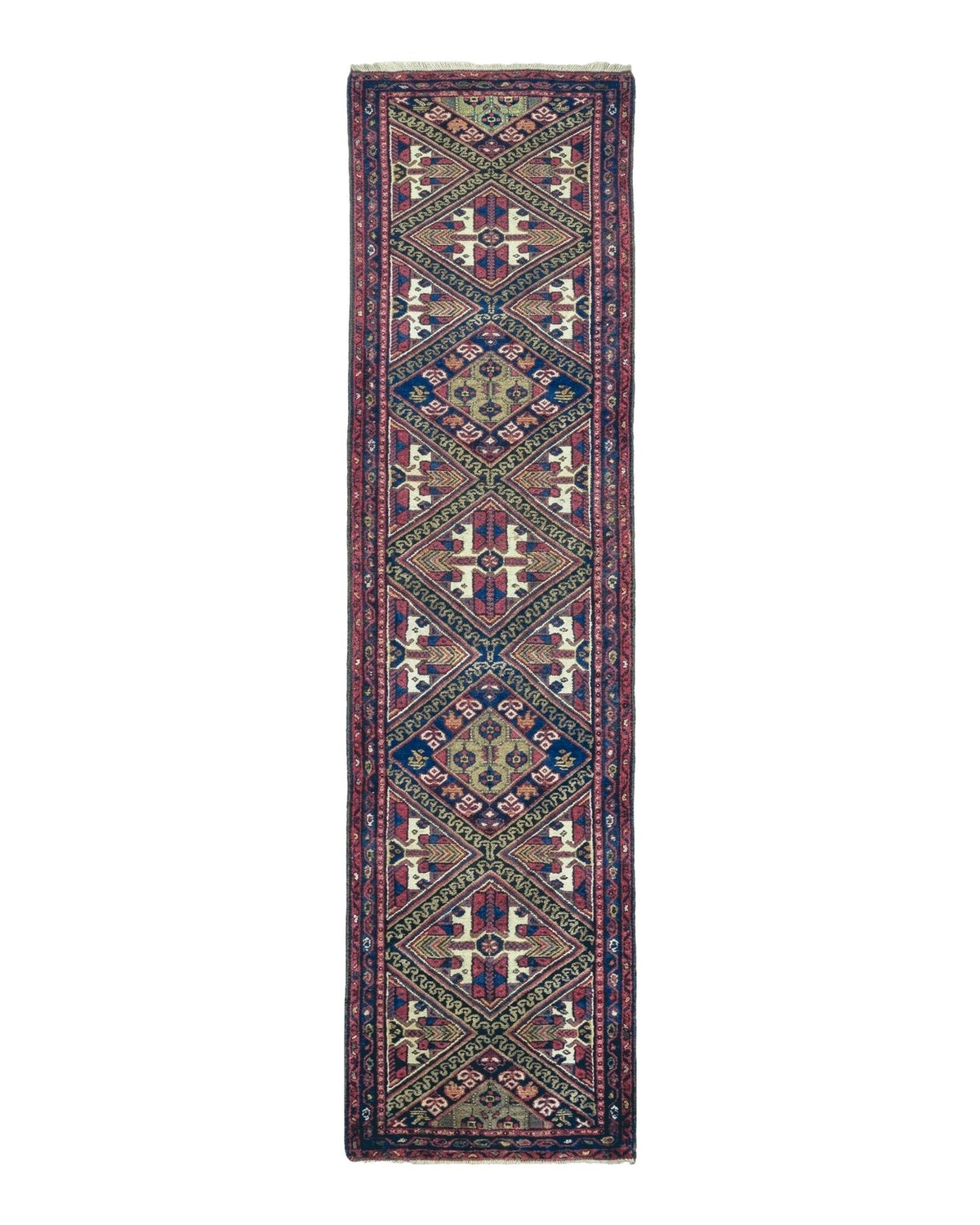
- Village rugs are woven in homes, often from memory, with bolder, more geometric designs and sturdy construction. Examples: Heriz, Hamadan, Bidjar, Sarouk and Mahal.
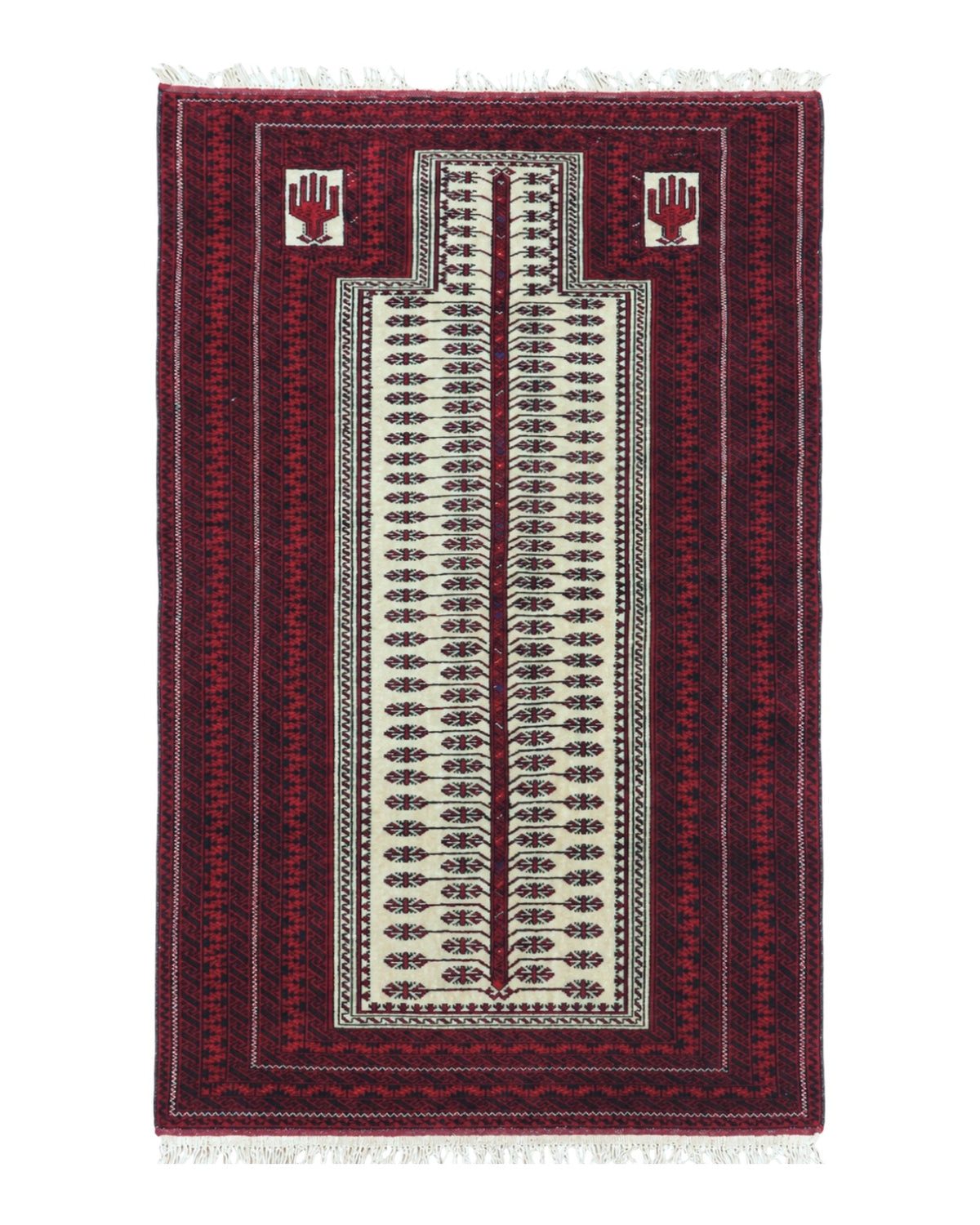
- Tribal rugs are woven by nomadic and semi-nomadic peoples on portable looms, usually wool on wool, with expressive designs and natural dyes. Examples: Qashqai, Bakhtiari, Afshar and Baluch.
Common designs
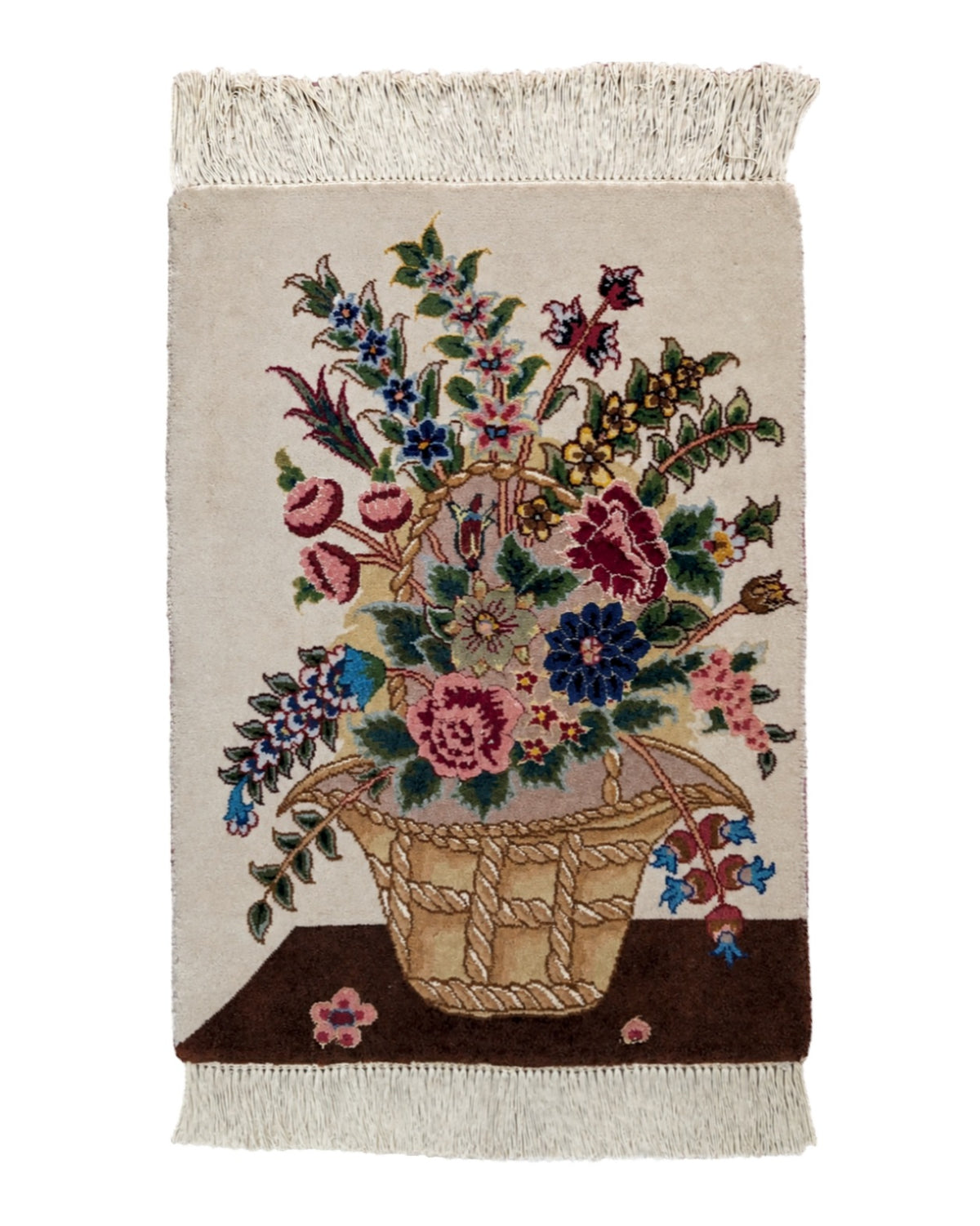
Most Persian rugs use one of a handful of layouts: a central medallion with matching corners; an all-over repeating pattern such as the Herati or Mina Khani; a garden or panel design dividing the field into compartments; or a pictorial scene. Around the field run one main border and several narrower guard borders. The same layout can look completely different from one region to the next, which is part of what makes each type recognizable.
Materials and color
Most Persian rugs have a wool pile on a cotton foundation, a combination that is soft, hard-wearing and keeps its shape. Fine city rugs may add silk highlights, and some, especially from Qum and Isfahan, are woven entirely in silk. Tribal rugs are often wool on wool, since nomads used the wool of their own flocks.
Traditional colors came from plants and insects: madder root for reds, indigo for blues, and plants such as weld or pomegranate rind for yellows and browns. Synthetic dyes arrived in the late 19th century. Good-quality modern dyes are stable and attractive, while the gentle color variation of hand-dyed wool, called abrash, is especially valued on older rugs.
How to recognize a genuine Persian rug
- Turn it over. On a hand-knotted rug the design shows clearly on the back, knot by knot, and the knots are slightly irregular. A machine-made rug has a perfectly uniform back, and a hand-tufted rug usually has a fabric or latex backing glued over it.
- Look at the fringe. On a hand-knotted rug the fringe is the ends of the warp threads running through the rug, not a strip sewn on afterwards.
- Expect small irregularities. Slight differences in width, motifs that change part-way through, or color bands of abrash are signs of handwork, not faults.
- Ask about origin and age. A reputable seller can tell you where a rug was woven and roughly when.
Our guide to hand-knotted, hand-tufted and machine-made rugs covers this in detail.
Why Persian rugs last
Because each knot is tied around the foundation, the pile cannot pull out the way a glued tuft can. Good wool contains natural lanolin, which helps it resist dirt and spring back underfoot. With normal care, a well-made Persian rug lasts for generations, and many of the rugs we sell are already 50 to 100 years old or more.